


- Name
- Dreamcast
- Abbreviation
- DC
- Release Date
- November 27, 1998
- Manufacturer
- Sega (Company)
- Launch price
- $199.99
- Install base
- 9,130,000
- Online service
- Yes
- Aliases
- Sega Dreamcast,Katana,Dural,White Belt,Black Belt,Guppy,Shark
Dreamcast
The Dreamcast is the fifth and final console developed by Sega. As the first 128-bit system, it was the first to offer truly arcade-quality 3D graphics. It is famous for being the first console to include worldwide online capability, its game library, and its unexpectedly short life span.
Platform Images Related Pages
Overview
The Sega Dreamcast is a 128-bit console released in 1998 and the successor to the Sega Saturn. The Dreamcast was based on the powerful Sega Naomi arcade system (released 1998), the successor to the Sega Model 3 arcade system (released 1996). The Dreamcast uses a Hitachi CPU processor, the first with a 128-bit vector graphics engine, along with an NEC GPU graphics processor. It had a new disc format in the shape of the GD-ROM; these discs held up to a gigabyte of data, considerably more than a Compact Disc (Object). The Dreamcast was Sega (Company)'s last entry to the console hardware market as their support for the console ended as early as 2001, less than two years after the USlaunch, and is largely attributed to the arrival of the hotly anticipated and wildly successful PS2. Despite its tragically short life, the Dreamcast is held in high regard by nostalgic fans for the raft of superb exclusive titles released in that time.
History
1995 - 1998: Before the Dreamcast
The Saturn (Platform) originated in 1995 at the first E3. Since Sony's arrival in the game hardware market, their rivals began playing a major defensive against the juggernaut that was the PlayStation. The growing popularity of the PlayStation (Platform) brought a lot of support from Japan (Location), and the Saturn (Platform) began to slip behind in sales. Due to this, Sega began to fear that Sony would gain momentous support in the US and would leave them lagging seriously behind. In order to keep up, Sega made a marketing decision, which has infamously become widely considered to be a historic mistake in its battle for supremacy. At E3, Sega announced that the Saturn was released the same day as the press conference in the US. Their strategy was to release the console early so they could get a strong base before Sony released their console in September. This plan backfired due to the anger of developers and retailers. Many developers were mad because they wanted their games to be released with the Saturn's launch, and many popular retailers (like Wal-Mart and KB Toys) were so angry for lack of information that most considered not selling any more Sega consoles in their stores. The Saturn sold 80,000 units before the PlayStation launched, but the PlayStation sold over 100,000 units during its first week, making Sega's strategy a failure. Even though the Saturn was managing to keep up in Japan, it completely bombed in the US. The only territory where the Saturn had any success was Japan, where it was Sega's most successful console in its home country. Overseas, however, things did not get better for Sega over the next two years. At E3 1997 (Concept), Bernie Stolar announced "The Saturn is not our future". This announcement, for all intents and purposes, killed the Saturn's overseas chances, and made people even more angry because of this. Thus, Sega began work on a new console.
Development
The company wanted to create a truly next-generation console, with features ahead of its time and far superior hardware to that of the popular PlayStation as well as the Nintendo 64. As a result, the Dreamcast, based on the powerful Sega Naomi arcade system, was the first console to truly offer arcade-quality 3D graphics, considerably more powerful than any other home system when it launched in 1998. Unfortunately, the desire to get the Dreamcast moving quickly and have a fast production process may have eventually led to its demise, since, as the technology behind it being considerable powerful for a 1998 system, it was far too expensive to produce, forcing Sega to sell it at a loss. In addition, this may have put it at a mid-way point between generations, competing against the much weaker Playstation and N64 in its early years, before eventually competing against the PS2 which had comparable graphical capabilities (though both consoles were weaker than the Xbox (Platform) and Gamecube by 2001). There were initially two competing models of the Dreamcast. Tatsuo Yamamoto of IBM Austin was to lead a team of eleven developing the "Black Belt" version of the console, which was to have a Hitachi SH4 processor and a 3dfx Voodoo 2 graphics chip. At various stages in development, the US model was nicknamed "Shark" and "Dural". Meanwhile, the Japanese hardware team led by Hideki Sato settled on the same processor, but a PowerVR2 graphics chip created by VideoLogic and manufactured by NEC. This "White Belt" version was nicknamed "Guppy" and "Katana" before the name Dreamcast was decided. The Japanese model was chosen in Summer 1997 because 3dfx had unwittingly leaked its entire contract with Sega in April, who had been keeping the project a secret. 3dfx filed a lawsuit against Sega for breach of contract, but this was settled out of court.
Success
On November 27, 1998, The Sega (Company) Dreamcast launched in Japan. The console was in high demand throughout the region, causing it to sell out in all stores during its first few weeks of launch. It was selling so well that Sega couldn't keep up with the demand. According to reports, NEC was unable to create enough processors for the Dreamcast so Sega was unable to make as many consoles as they would liked. Seeing how successful the Dreamcast had done in Japan, Sega began work on an American release. Sega of America was hard at work on getting buzz for the American Dreamcast launch. Sega even created their own holiday called "Dreamcast Day", set for September 9, 1999, burning 9-9-99 into everyone's memory as the day they'd get to experience the next generation of gaming for the first time. The subsequent European release date was on October 14, 1999. The Dreamcast continued to sell well in North America until 2000. In fact, the Dreamcast even managed to outsell the PS2 in North America in 2000 (possibly due to PS2 shortages), shortly before the console was discontinued. However, this was not enough to resolve the problems Sega were facing, as outlined below.
Downfall
At E3 1999 (Concept), Sega was showing the Dreamcast and its games to the American market. However, Sega's biggest threat, Sony, unveiled the Playstation 2, showing the complete layout and design of the console. From what Sony showed, it was clear that the Playstation 2 was a more powerful system in comparison to the Dreamcast. Due to this, consumers decided to skip the Dreamcast and wait for the PS2 to come out. These turn of events began to shake the foundation of the Dreamcast. Even though the PS2 had the most attention at that moment, the Dreamcast had a successful launch, selling 300,000 pre-orders, which was more than the original Playstation. The Dreamcast had a vast variety of launch games like Sonic Adventure (Game), Soul Calibur, and NFL 2K. For a while it seemed that Sega would continue to be a competitor in the gaming market. Then in March of 2000, Sony released the PS2 worldwide to considerable hype. One major plus that the PS2 had was the game console doubled as a DVD player. Back then, DVDs weren't popular because standalone DVD players were too expensive for the average consumer. Since the PS2 was less expensive than a stand alone DVD player, the PS2 sold very well and helped boost the DVD platform. There were instances reported where people didn't even buy the console for games (the launch didn't have as many good games as the Dreamcast), and solely used the console for the DVD player functionality. To show support of this, the best selling item for the PS2 in Japan was the Matrix DVD. This made the PS2 look more like an entertainment device than an actual console. Since the Dreamcast couldn't play DVDs, people overlooked the system and Dreamcast consoles were beginning to sit on shelves. One other problem the Dreamcast had was copious amounts of pirating. Because of the Dreamcast's poor copy protection, it was easy for people to copy games onto regular CD-ROM's and have the console recognize them as actual games. Because of this, game sales were decreasing. Despite the considerable hype for the PS2, the Dreamcast in fact managed to outsell the PS2 in North America (possibly due to PS2 shortages) in 2000. However, this was not enough to make up for the losses in both hardware (selling at a loss) and software sales (much of which was being pirated), sealing the fate of Sega. Sega got some relief when Sony was only able to sell half their inventory of PS2 consoles. Since the PS2's inventory was so weak, Sega decided to take action and try to move mass quantities of units. Unfortunately, this plan backfired as well. In March 2001, Peter Moore (Person) (the head of Sega of America at the time) announced that the Dreamcast hadn't been meeting expectations. The sales had been sadly lagging and their warehouses were filled with unsold Dreamcast consoles and games. Sega decided to sell off the remaining number of consoles at a vastly discounted price and cut their losses. As part of this restructuring Sega announced that the Dreamcast would be discontinued and that they would exit the hardware business. Furthermore they would also be porting several of their key Dreamcast exclusives to rival platforms. The change was meant to happen slowly with Sega continuing to release software for the system into 2002. However with Sega games now on other platforms third parties weren't all that thrilled to be supporting it. By fall of 2001 the new game output was dismal with only a handful of exclusives, most of which tanked and were never heard from again.
Hardware
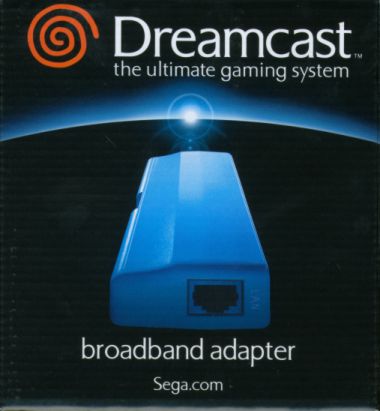
Back in 1998, the Dreamcast was an advanced console for its time, surpassing the capabilities of all other consoles available at the time of its release and being the first 128-bit console to be released. The console has 4 controller slots and a 56k modem built into the console for SegaNet. A broadband adapter for a faster connection was also available for $50, allowing the Dreamcast to be connected to an Ethernet network. However, most games only supported multiplayer via the modem.
 The Dreamcast supported multiple television connections. It shipped with standard A/V cables, and S-video, component RGB cables, and an RF connector were available separately. In addition, Sega released a VGA adapter that allowed the Dreamcast to be played on a computer monitor at a resolution of 640x480, four times the standard resolution. Certain games could not be played through the VGA adapter, however.
GD-ROMs were the default medium for games, since they could store up to 1.0 GB of data and them being a proprietary medium would, in theory, prevent unlicensed games and bootlegs. CD-ROMs containing Audio-CD and MIL-CD data were also supported, until the latter was removed during the final Dreamcast main-board revisions starting in the fall of 2000 in an effort to prevent exploits.
For saved game data and downloadable content, it used VMU memory cards that could hold up to 128 KB of space. These VMUs connect to the controller and have an LCD screen that shows pictures relating to the game that you're playing. For some games, minigames relating to the games are saved onto the VMU which could be played without the use of the Dreamcast, making it a handheld console as well.
The Dreamcast supported multiple television connections. It shipped with standard A/V cables, and S-video, component RGB cables, and an RF connector were available separately. In addition, Sega released a VGA adapter that allowed the Dreamcast to be played on a computer monitor at a resolution of 640x480, four times the standard resolution. Certain games could not be played through the VGA adapter, however.
GD-ROMs were the default medium for games, since they could store up to 1.0 GB of data and them being a proprietary medium would, in theory, prevent unlicensed games and bootlegs. CD-ROMs containing Audio-CD and MIL-CD data were also supported, until the latter was removed during the final Dreamcast main-board revisions starting in the fall of 2000 in an effort to prevent exploits.
For saved game data and downloadable content, it used VMU memory cards that could hold up to 128 KB of space. These VMUs connect to the controller and have an LCD screen that shows pictures relating to the game that you're playing. For some games, minigames relating to the games are saved onto the VMU which could be played without the use of the Dreamcast, making it a handheld console as well.
Accessories
 The Dreamcast had a lot of accessories. Here's a list of them:
- VMU Memory Cards
- Rumble Packs
- VGA Adapter (to play the Dreamcast on your computer screen in 480p)
- Mouse and keyboard
- Fishing rods (for fishing games)
- Microphones (for games like Seaman (Game))
- Lightguns
- Arcade sticks (both single stick controllers for fighting and arcade-style games and a twin stick controller for Virtual On: Oratorio Tangram)
- Camera
- Maracas (for Samba de Amigo)
- Train controls (for a Japanese train simulator)
There was supposed to be a MP3 player, DVD player, and Zip drive, but they were canceled due to the discontinuation of the Dreamcast.
Games
The Dreamcast was well known for its vast assortment of games, specifically during the launch of the console. For the Sonic fans, there was Sonic Adventure (Game), which was Sega's first successful attempt into bring Sonic's gameplay to 3D. For the fighting fanatics, there was Soul Calibur, which was a 3D fighter (similar to Tekken (Game)) that uses swords as their main weapons. This game became a big success, scoring 10's from many game reviewers (IGN and Gamespot) and is considered to be the superior version in comparison to the arcade game. For sports fans, there was NFL 2K (Game), the football title. When EA announced that they would not develop for the Dreamcast due to the failure of the Saturn, this caused Sega to make their own sports titles. NFL 2K was the Dreamcast's answer to Madden and also made other sports titles for the NBA and NHL as well as Virtua Tennis (Game), their own tennis game. Later installments would include online play. Due to a lack of third party support, Sega focused on their first party titles. Sega would continue to release their 2K sports line and would add online play to the 2K1 installments. Sega ported many of their popular arcade games over to the Dreamcast like Crazy Taxi (Game) and House of the Dead. Along with their arcade games came their original, innovative titles for the platform. One of them was Samba de Amigo, a rhythm game where you use a controller shaped like Maracas to move your arms around to meet a certain position. Space Channel 5 (Game) was another rhythm game where you go around space killing aliens while dancing to pop music. Chu Chu Rocket was a puzzle game where you lead a group of mice away from cats. Although the Dreamcast didn't have a high amount of third party support, the people who did develop for the system released top-notched games. The biggest company to do this was Capcom (Company). Capcom was well known for its fighters released for the Dreamcast. They would make definitive home ports of their popular arcade fighters ( Marvel vs. Capcom 1 and 2) along with releasing brand new fighters exclusive for the console ( Power Stone (Game)). The biggest game released for the Dreamcast was Shenmue (Game). It was in development since the Sega Saturn and was made by Yu Suzuki (Person). It was considered to be the most expensive game (costing $70 million) and the most graphically superior game at the time. The game added some new elements like free-roaming gameplay and time-based gameplay. It was hyped to be the killer app for the Dreamcast that would ruin the PS2. When the game was first released in 2001, it came with mixed reviews. Some game reviewers loved the game, giving it 9's and 10's. They consider it a gaming achievement with its deep story and innovative gameplay. Others completely hated the game, giving it low scores. They complained about the slow gameplay and cheesy voice acting. Due to the mixed reviews, the game sold poorly. A sequel was released in Japan for the Dreamcast in 2001, but it never came to the US. In 2002, Sega made a deal with Microsoft to release the sequel for the Xbox in 2002.
Online
The Dreamcast was the first console to have fully functioning online play. The system came with a 56K modem and for families who didn't have an ISP Sega created the SegaNet service (although players with an ISP already could use their own). Although online play wasn't available until fall of 2000, players could surf and browse the web through the console from day one. Some games even offered a rudimentary form of downloadable content. In Sonic Adventure, for instance players could download holiday themes for levels.
Legacy
 Even though the Dreamcast was discontinued prematurely, the legacy of the console lives on. Due to the Dreamcast failing, Sega had to drop from the console race and begin to make games for other consoles. Most of those games, early on, were ports of Dreamcast games. The two Sonic Adventure games were ported over to the Nintendo GameCube, which was shocking at the time due to Sega and Nintendo's strong rivalry during the 90s. The GameCube even got Phantasy Star Online, being one of the only GameCube games to support online play.
Sony, the people whom many claimed to cause Sega to leave the hardware business, got Virtua Fighter 4 (Game) for the PS2. Peter Moore, Sega of America's president at the time, left Sega to join Microsoft and help with their new console, the Xbox. Due to him being a part of Sega, he got Sega to make games on the Xbox. They got some exclusive games like Jet Set Radio Future, Panzer Dragoon Orta (Game), and Shenmue II (Game).
Many popular Dreamcast games would be later ported to HD platforms such as the Xbox 360 (Platform), Playstation 3, and the PC (Platform). In 2011, Sega released the Sega Dreamcast Collection for the Xbox 360 and PC, which brought over Sonic Adventure, Crazy Taxi, Sega Bass Fishing, and Space Channel 5: Part 2 with upgraded visuals and rendered at a high-definition resolution. Sega would later release other HD remakes of Dreamcast games such as Sonic Adventure 2 (Game) and Jet Set Radio. Sega has also started to bring Dreamcast games over to iOS and Android (Platform) platforms with the release of Crazy Taxi.
Sega continues to make games for current-gen platforms and handhelds and will continue to make games on next-gen platforms such as the Wii U (Platform), the Xbox One (Platform), and the PlayStation 4 (Platform).
Even though the Dreamcast was discontinued prematurely, the legacy of the console lives on. Due to the Dreamcast failing, Sega had to drop from the console race and begin to make games for other consoles. Most of those games, early on, were ports of Dreamcast games. The two Sonic Adventure games were ported over to the Nintendo GameCube, which was shocking at the time due to Sega and Nintendo's strong rivalry during the 90s. The GameCube even got Phantasy Star Online, being one of the only GameCube games to support online play.
Sony, the people whom many claimed to cause Sega to leave the hardware business, got Virtua Fighter 4 (Game) for the PS2. Peter Moore, Sega of America's president at the time, left Sega to join Microsoft and help with their new console, the Xbox. Due to him being a part of Sega, he got Sega to make games on the Xbox. They got some exclusive games like Jet Set Radio Future, Panzer Dragoon Orta (Game), and Shenmue II (Game).
Many popular Dreamcast games would be later ported to HD platforms such as the Xbox 360 (Platform), Playstation 3, and the PC (Platform). In 2011, Sega released the Sega Dreamcast Collection for the Xbox 360 and PC, which brought over Sonic Adventure, Crazy Taxi, Sega Bass Fishing, and Space Channel 5: Part 2 with upgraded visuals and rendered at a high-definition resolution. Sega would later release other HD remakes of Dreamcast games such as Sonic Adventure 2 (Game) and Jet Set Radio. Sega has also started to bring Dreamcast games over to iOS and Android (Platform) platforms with the release of Crazy Taxi.
Sega continues to make games for current-gen platforms and handhelds and will continue to make games on next-gen platforms such as the Wii U (Platform), the Xbox One (Platform), and the PlayStation 4 (Platform).
Launch Titles
The following are Dreamcast's U.S. launch titles released on September 9, 1999.
 * Blue Stinger (Game)
- Millennium Soldier: Expendable
- CART: Flag to Flag
- The House of the Dead 2 (Game)
- Hydro Thunder (Game)
- Monaco Grand Prix (Game)
- Mortal Kombat Gold (Game)
- NFL 2K (Game)
- NFL Blitz 2000 (Game)
- Pen Pen Tri-Icelon
- Power Stone (Game)
- Ready 2 Rumble Boxing (Game)
- Sonic Adventure (Game)
- Soul Calibur
- TNN Motorsports Hardcore Heat (Game)
- Tokyo Xtreme Racer (Game)
- Trickstyle (Game)
Games view all →]
- !Sqrxz! (Game)
- 4 Wheel Thunder (Game)
- 4x4 Evolution (Game)
- 90 Minutes (Game)
- Advanced Daisenryaku 2001 (Game)
- Advanced Daisenryaku: Europe no Arashi - Doitsu Dengeki Sakusen (Game)
- AeroWings (Game)
- AeroWings 2: Air Strike (Game)
- After... (Game)
- Aikagi: Hidamari to Kanojo no Heyagi (Game)
- Air (Game)
- AirForce Delta (Game)
- Alice Dreams Tournament (Game)
- Alice Sisters (Game)
- Alice's Mom's Rescue (Game)
- Alien Front Online (Game)
- Alone in the Dark: The New Nightmare (Game)
- Andro Dunos (Game)
- Andro Dunos II (Game)
- Angel Wish (Game)
- Animastar (Game)
- Aqua GT (Game)
- Arcade Racing Legends (Game)
- Armada (Game)
- Army Men: Sarge's Heroes (Game)
- Atari Anniversary Edition (Game)
- Baldr Force (Game)
- Ball Breakers (Game)
- Bang Bang Busters (Game)
- Bang! Gunship Elite (Game)
- Bangai-O! (Game)
- Bass Rush Dream (Game)
- Battle Beaster (Game)
- Battle Crust (Game)
- Bikkuriman 2000 Viva! Pocket Festival (Game)
- Biniax (Game)
- Bittersweet Fools (Game)
- Black/Matrix Advanced (Game)
- Blade (Game)
- Blue Stinger (Game)
- Blue Submarine No. 6: Time And Tide (Game)
- Bokomu no Tatsujin (Game)
- Boku no Tennis Jinsei (Game)
- Boku, Doraemon (Game)
- Bomber Hehhe! (Game)
- Bomberman Online (Game)
- Border Down (Game)
- Bounty Hunter Sara: Holy Mountain no Teiou (Game)
- Breakers (Game)
- Bust-A-Move 4 (Game)
- CART: Flag to Flag (Game)
- Caesars Palace 2000 (Game)
- Cannon Spike (Game)
- Capcom vs. SNK 2: Mark of the Millennium (Game)
- Capcom vs. SNK: Millennium Fight 2000 (Game)
- Capcom vs. SNK: Millennium Fight 2000 Pro (Game)
- Cardcaptor Sakura: Tomoyo's Video War (Game)
- Carrier (Game)
- Castle Fantasia: Seimadaisen (Game)
- Castle Shikigami 2 (Game)
- Castlevania: Resurrection (Game)
- Centipede (Game)
- Championship Surfer (Game)
- Chaos Field (Game)
- Charge n Blast (Game)
- Cherry Blossom (Game)
- Chicken Run (Game)
- Chou Hatsumei Boy Kani Pan: Bousou Roboto no Nazo!? (Game)
- ChuChu Rocket! (Game)
- Cleopatra Fortune (Game)
- Coaster Works (Game)
- Comic Party (Game)
- Communication Logic Battle Daisessen (Game)
- Confidential Mission (Game)
- Conflict Zone (Game)
- Cool Cool Toon (Game)
- Cool Herders (Game)
- Cosmic Smash (Game)
- Crazy Taxi (Game)
- Crazy Taxi 2 (Game)
- Culdcept (Game)
- Cyber Troopers Virtual-On: Oratorio Tangram (Game)
- D+Vine [Luv] (Game)
- D2 (Game)
- DUX (Game)
- Dance Dance Revolution 2ndMIX (Game)
- Dance Dance Revolution CLUB VERSION Dreamcast Edition (Game)
- Dancing Blade Katteni Momotenshi II: Tears of Eden (Game)
- Dancing Blade Katteni Momotenshi! (Game)
- Dave Mirra Freestyle BMX (Game)
- Daytona USA (Game)
- Dead or Alive 2 (Game)
- Dead or Alive 2: Hardcore (Game)
- Death Crimson 2: Meranito no Saidan (Game)
- Death Crimson OX (Game)
- Deep Fighter (Game)
- Dejiko no Maibura (Game)
- Demolition Racer: No Exit (Game)
- Dengen Tenshi Taisen Mahjong Shangri-La (Game)
- Denpa Shounen Teki Kenshou Seikatsu Soft: Nasubi no Heya (Game)