


- Name
- GameCube
- Abbreviation
- GCN
- Release Date
- September 14, 2001
- Manufacturer
- Nintendo (Company)
- Launch price
- $199.99
- Install base
- 21,740,000
- Online service
- Yes
- Aliases
- GCN,NGC,GC,Project Dolphin,Panasonic Q,Nintendo GameCube
GameCube
The Nintendo GameCube is a video game console released by Nintendo on September 15, 2001 in Japan, November 18, 2001 in North America, May 3, 2002 in Europe, and May 17, 2002 in Australia.
Platform Images Related Pages
Overview
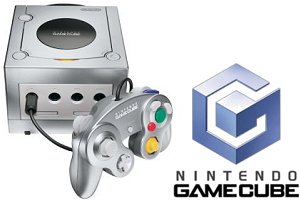 The Nintendo GameCube is Nintendo (Company)'s successor to the Nintendo 64 (Platform) and predecessor to the Nintendo Wii. The GameCube was released in Japan on September 14, 2001, in North America on November 18, 2001, in Europe on May 3, 2002, and in Australia on May 17, 2002.
The GameCube sold a total of 21.74 million units worldwide, coming in third place in the so-called "console war" slightly behind Microsoft's Xbox (Platform), but far behind Sony's PlayStation 2 (Platform). The console is officially abbreviated to the acronym "GCN" ("GameCube by Nintendo").
A version of the GameCube with DVD playback capability was released by Panasonic, but the "Panasonic Q Edition" GameCubes weren't available outside of Japan.
The Nintendo GameCube is Nintendo (Company)'s successor to the Nintendo 64 (Platform) and predecessor to the Nintendo Wii. The GameCube was released in Japan on September 14, 2001, in North America on November 18, 2001, in Europe on May 3, 2002, and in Australia on May 17, 2002.
The GameCube sold a total of 21.74 million units worldwide, coming in third place in the so-called "console war" slightly behind Microsoft's Xbox (Platform), but far behind Sony's PlayStation 2 (Platform). The console is officially abbreviated to the acronym "GCN" ("GameCube by Nintendo").
A version of the GameCube with DVD playback capability was released by Panasonic, but the "Panasonic Q Edition" GameCubes weren't available outside of Japan.
 The GameCube also saw a fair share of games, although its most popular games were first-party; Super Mario Sunshine (Game), The Legend of Zelda: The Wind Waker, Metroid Prime (Game), F-Zero GX, and Animal Crossing (Game), to name a few. Games released only on the GameCube at the time of release have a triangle in the upper left corner that says "Only For," implicating that the game was only available on the GameCube. The final "major release" on the GameCube was also first-party, with The Legend of Zelda: Twilight Princess being one of the most highly-anticipated titles in the console's run, though it is more well known for the version that was ported to the Wii.
As games were no longer on cartridges Nintendo released a series of memory cards where players would save their progress. Memory cards are available in 59 block (of which several were packaged with games including Animal Crossing), a 256 block, and a 1024 block versions.
The GameCube also saw a fair share of games, although its most popular games were first-party; Super Mario Sunshine (Game), The Legend of Zelda: The Wind Waker, Metroid Prime (Game), F-Zero GX, and Animal Crossing (Game), to name a few. Games released only on the GameCube at the time of release have a triangle in the upper left corner that says "Only For," implicating that the game was only available on the GameCube. The final "major release" on the GameCube was also first-party, with The Legend of Zelda: Twilight Princess being one of the most highly-anticipated titles in the console's run, though it is more well known for the version that was ported to the Wii.
As games were no longer on cartridges Nintendo released a series of memory cards where players would save their progress. Memory cards are available in 59 block (of which several were packaged with games including Animal Crossing), a 256 block, and a 1024 block versions.
Marketing
The first advertising campaign for the Nintendo GameCube was simply a rotating cube that would morph into the GameCube logo. A voice would then whisper, "GameCube." This was usually shown at the end of a commercial for a GameCube game.
 Another well known advertising campaign was the "Who Are You?" advertising campaign. This was used to market a wide variety of Nintendo games. The "Who Are You?" logo was graffiti lettering. Most of the commercials and print ads were games developed or published by Nintendo, but some third-party developers were able to use the campaign as well. The idea behind the campaign was that players were the character that they played, with print ads showing pieces of the main character taped onto a photograph of a person (e.g. the helmet of Samus Aran taped onto a ballerina to promote Metroid Prime).
There was a distinct difference in the way Nintendo of Japan marketed the GameCube and how it was marketed in western markets. Although in western markets, the GameCube was advertised as a console for experienced gamers; in Japan, it was marketed to appeal to younger and newer players, as a way of gaining back the child audience they lost to their competitors in the previous console cycle. However, it failed, and the GameCube was a commercial flop in Japan. However, due to being marketed to a different audience outside Japan, the GameCube became a very successful console in other countries.
Another well known advertising campaign was the "Who Are You?" advertising campaign. This was used to market a wide variety of Nintendo games. The "Who Are You?" logo was graffiti lettering. Most of the commercials and print ads were games developed or published by Nintendo, but some third-party developers were able to use the campaign as well. The idea behind the campaign was that players were the character that they played, with print ads showing pieces of the main character taped onto a photograph of a person (e.g. the helmet of Samus Aran taped onto a ballerina to promote Metroid Prime).
There was a distinct difference in the way Nintendo of Japan marketed the GameCube and how it was marketed in western markets. Although in western markets, the GameCube was advertised as a console for experienced gamers; in Japan, it was marketed to appeal to younger and newer players, as a way of gaining back the child audience they lost to their competitors in the previous console cycle. However, it failed, and the GameCube was a commercial flop in Japan. However, due to being marketed to a different audience outside Japan, the GameCube became a very successful console in other countries.
Hardware
Due to pressures from developers, the GameCube was Nintendo (Company)'s first console to introduce a disc medium instead of cartridges, the games were recorded on mini DVDs. The disc can hold 1.5 gigabytes of data - 190 times more than what an N64 game cartridge can hold. Technologically speaking, the GameCube was more powerful than the PS2 at about half the size of the Xbox (Platform).
Colour Schemes
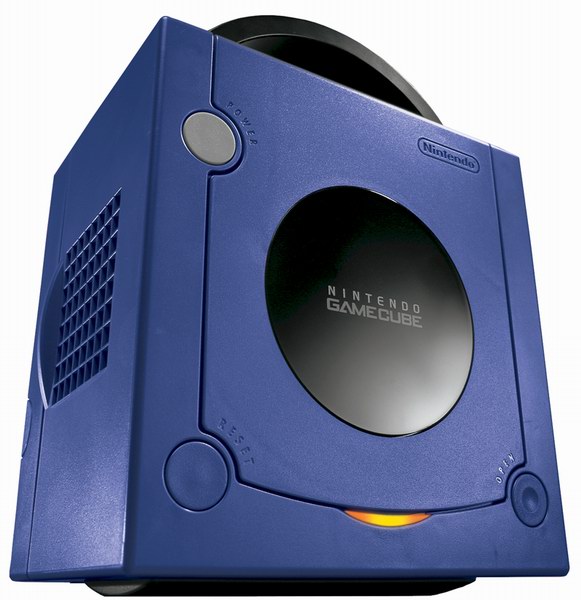 Like Nintendo's previous console, the Nintendo 64, and many of the company's handheld consoles, the GameCube was released in a variety of colours. The two most common colours were Indigo and Jet Black (Indigo being the default color). Later, a Platinum color scheme was released and marketed as limited edition. "Orange Spice" GameCubes were also made available, but were primarily available in Japan. The GameCube's model numbers (DOL-001 and DOL-101) were a reference to Dolphin, the GameCube's codename. Official accessories and peripherals also had model numbers beginning with DOL.
Peripherals
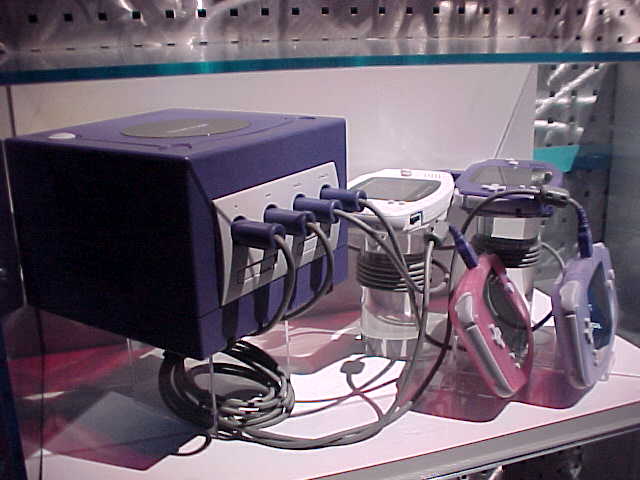 * Broadband adapter * Allowed online gaming via an Ethernet cable and a broadband internet connection. Online multiplayer gaming was accessed via each supporting game's in-game menus.
- Modem adapter * Allowed online gaming via a dial-up modem.
- Game Boy Player (Accessory)* Later on, Nintendo released the Game Boy Player (Accessory) which allowed backward compatibility with Game Boy (Platform), Game Boy Color (Platform) and Game Boy Advance games.
- Game Boy Advance (Platform)* The GameCube allows direct connectivity with Nintendo’s handheld, the Game Boy Advance (Platform), via a link cable.
- e-Readerhttps://www.giantbomb.com/a/uploads/original/3/35607/2927665-9139822864-gbplr.gif * There were also some games that supported e-Reader connectivity, allowing players to scan in extra game features. Supported games include Animal Crossing (Game) and Pokémon Channel.
Online
Although only a few games have online play for the GameCube (such as the Phantasy Star Online franchise), the GameCube offers LAN support that allows eight GameCubes to be connected together to play a multiplayer game. Using this, fans created unofficial online services for the GameCube, such as Warp Pipe, that used LAN technology for online play.
Controller
 The inputs on a GameCube controller consist of a large, green A-button, a small, red B-button, two gray X- and Y- buttons, two analog sticks (with the larger being gray and simply called "the analogue stick" and the smaller being yellow and called "the C-stick", in reference to the C-buttons on the N64 controller), a D-pad, two shoulder buttons, and a purple Z-button on top of the controller next to the right shoulder button. Some Wii games support the use of the GameCube controller (this is taken advantage of in Virtual Console and WiiWare games as well).
The wireless version of the controller was called the Wavebird. It allowed players to play from up to 20 feet away. It had the same button layout than the original controller except for an on and off button and a bulkier feel. The controller came with a wireless receiver. To play, the player had to tune his controller to one of the 16 radio channels that the little wheel at the bottom of the controller offered. Then, he had to put the same channel number on the receiver, plug the receiver into the GameCube's controller socket, turn on his controller and a light on the receiver would tell the player that it was receiving a signal. The controller worked with two AA batteries and in order to conserve battery life, rumble is not included. It was released in summer of 2002 for the price of 34.95 dollars.
The inputs on a GameCube controller consist of a large, green A-button, a small, red B-button, two gray X- and Y- buttons, two analog sticks (with the larger being gray and simply called "the analogue stick" and the smaller being yellow and called "the C-stick", in reference to the C-buttons on the N64 controller), a D-pad, two shoulder buttons, and a purple Z-button on top of the controller next to the right shoulder button. Some Wii games support the use of the GameCube controller (this is taken advantage of in Virtual Console and WiiWare games as well).
The wireless version of the controller was called the Wavebird. It allowed players to play from up to 20 feet away. It had the same button layout than the original controller except for an on and off button and a bulkier feel. The controller came with a wireless receiver. To play, the player had to tune his controller to one of the 16 radio channels that the little wheel at the bottom of the controller offered. Then, he had to put the same channel number on the receiver, plug the receiver into the GameCube's controller socket, turn on his controller and a light on the receiver would tell the player that it was receiving a signal. The controller worked with two AA batteries and in order to conserve battery life, rumble is not included. It was released in summer of 2002 for the price of 34.95 dollars.
Technical Specifications
Central Processing Unit
 * 435 MHz IBM Gekko PowerPC CPU
- PowerPC 750CXe based core
- 180 nm IBM copper-wire process
- 50 new vector instructions
- 32-bit ALU 64-bit FPU, usable as 2x32-bit SIMD
- FPU:1.9Gflops
- 64-bit enhanced PowerPC 60x front side bus to GPU/chipset, 162 MHz clock, 1.3 GB/s peak bandwidth
- 64 KiB L1 cache (32 KiB I/32 KiB D), 8-way associative, 256 KiB on-die L2 cache, 2-way associative
- 1125 DMIPS (dhrystone 2.1)
System Memory
- 43 MB total non-unified RAM
- 24 MB MoSys 1T-SRAM main system RAM, 324 MHz, 64-bit bus, 2.7 GB/s bandwidth
- 3 MB embedded 1T-SRAM
- Split into 1 MB texture buffer and 2 MB frame buffer
- 10.4 GB/s texture bandwidth (peak), 7.6 GB/s frame buffer bandwidth (peak), about 6.2 ns latency
- 16 MB DRAM used as buffer for DVD drive and audio, 81 MHz, 8-bit bus, 81 MB/s bandwidth
Connectivity
- 4 controller ports, 2 memory card slots
- MultiAV analog audiovisual port: interlaced YPbPr (composite, Y/C() and RGB video, stereophonic analog audio
- Digital audiovisual port: digital interlaced or progressive scan YCBCR video, stereophonic I²S sound
- Resolutions: 480i, 576i, 480p
- High-speed Serial Ports: 2
- High-speed Parallel Ports: 1
- Power supply output: DC12 volts x 3.25 amperes
- Physical measurements: 110 mm (H) x 150 mm (W) x 161 mm (D); [4.3"(h) x 5.9"(W) x 6.3"(D)]
Graphics Processing Unit
- 162 MHz "Flipper" LSI, 180 nm NEC eDRAM-compatible process, Co-developed by Nintendo and ArtX
- 8Gflops
- 4 pixel pipelines with 1 texture unit each
- TEV "Texture EnVironment" engine
- Fixed-function hardware transform and lighting (T&L), 12 million polygons/s in-game
- 648 megapixels/s (162 MHz x 4 pipelines), 648 megatexels/s (648 MPx 1 texture units) (peak)
- Peak triangle performance: 20,250,000 32pixel triangles/s raw and with 1 texture and lit
- 337,500 triangles a frame at 60fps
- 675,000 triangles a frame at 30fps
- 8 texture layers per pass, texture compression, full scene anti-aliasing
- 8 simultaneous hardware light
- Bilinear, trilinear, and anisotrophic texture filtering
- Multi-texturing, bump mapping, reflection mapping, 24-bit z-buffer
- 24-bit RGB / 32-bit RGBA color depth
- 720 x 480 interlaced or progressive scan
- Integrated audio processor: Custom 81 MHz Macronix DSP
- Instruction Memory: 8 KiB RAM, 8 KiB ROM
- Data Memory: 8 KiB RAM, 4 KiB ROM
- 64 channels 16-bit 48 kHz ADPCM
- Dolby Pro Logic II encoded within stereophonic output
Storage Media
- Matsushita (2.000 MB/s-3.125 MB/s) CAV mini-DVD-like 8 cm optical disk, average access time: 128 ms; capacity: 1.5 GB
- Memory cards of 59 blocks (4Mbit), 256 blocks (16 Mbit), 1024 blocks (64 Mbit), and 2043 (128Mbit) blocks.
Launch Titles
Japan - September 14, 2001
North America - November 18, 2001
- All-Star Baseball 2002 (Game)
- Batman: Vengeance (Game)
- Crazy Taxi (Game)
- Dave Mirra Freestyle BMX 2 (Game)
- Disney's Tarzan Untamed
- Luigi's Mansion
- Madden NFL 2002 (Game)
- NHL Hitz 20-02
- Star Wars: Rogue Squadron II - Rogue Leader
- Super Monkey Ball (Game)
- Tony Hawk's Pro Skater 3
- Wave Race: Blue Storm
Europe - May 3, 2002
- Batman: Vengeance (Game)
- Bloody Roar: Primal Fury
- Burnout (Game)
- Cel Damage (Game)
- Crazy Taxi (Game)
- Dave Mirra Freestyle BMX 2 (Game)
- Donald Duck Quack Attack
- ESPN International Winter Sports
- Disney's Tarzan Freeride
- FIFA 2002 World Cup
- Driven (Game)
- Luigi's Mansion
- ESPN International Winter Sports 2002 (Game)
- Sonic Adventure 2: Battle
- International Superstar Soccer 2 (Game)
- Star Wars: Rogue Squadron II - Rogue Leader
- Super Monkey Ball (Game)
- Tony Hawk's Pro Skater 3
- Wave Race: Blue Storm
- XG3: Extreme G Racing
Easter Eggs
- Starting the console with no disc in the tray plays the Gamecube menu music. It's a looping string of high, ambient notes. This piece of music sped up to 16 times its original tempo is the Famicom Disk System (Platform) startup tune.
- Holding down the Z button while starting up the system will replace the typical noises with the noise of giggling children and squeaking rubber.
- Holding down the Z button on all four controllers while starting up the system will replace the typical noises with noises such as a woodblock, drums, and a "hwaaa!"
Games view all →]
- 007: Agent Under Fire (Game)
- 007: Everything or Nothing (Game)
- 007: From Russia with Love (Game)
- 007: Nightfire (Game)
- 1080° Avalanche (Game)
- 2002 FIFA World Cup (Game)
- 4x4 Evo 2 (Game)
- ATV: Quad Power Racing 2 (Game)
- Aggressive Inline (Game)
- Alien Hominid (Game)
- All-Star Baseball 2002 (Game)
- All-Star Baseball 2003 (Game)
- All-Star Baseball 2004 (Game)
- Amazing Island (Game)
- American Chopper 2: Full Throttle (Game)
- Animal Crossing (Game)
- Animaniacs: The Great Edgar Hunt (Game)
- Aquaman: Battle for Atlantis (Game)
- Army Men Air Combat: The Elite Missions (Game)
- Army Men RTS (Game)
- Army Men: Sarge's War (Game)
- Asterix and Obelix: Kick Buttix (Game)
- Atomic Betty (Game)
- Auto Modellista (Game)
- Avatar: The Last Airbender (Game)
- BMX XXX (Game)
- Backyard Baseball (Game)
- Backyard Baseball 2007 (Game)
- Backyard Basketball 2007 (Game)
- Backyard Football (Game)
- Bad Boys: Miami Takedown (Game)
- Baldur's Gate: Dark Alliance (Game)
- Barbarian (Game)
- Barnyard (Game)
- Baten Kaitos Origins (Game)
- Baten Kaitos: Eternal Wings and the Lost Ocean (Game)
- Batman Begins (Game)
- Batman: Dark Tomorrow (Game)
- Batman: Rise of Sin Tzu (Game)
- Batman: Vengeance (Game)
- Battalion Wars (Game)
- Battle Stadium D.O.N (Game)
- Beach Spikers (Game)
- BeyBlade VForce: Super Tournament Battle (Game)
- Beyond Good & Evil (Game)
- Big Air FreeStyle (Game)
- Big Mutha Truckers (Game)
- Billy Hatcher and the Giant Egg (Game)
- Bionicle (Game)
- Bionicle Heroes (Game)
- Bionicle: Legend of Mata-Nui (Game)
- Black & Bruised (Game)
- Bleach GC: Tasogare ni Mamieru Shinigami (Game)
- BloodRayne (Game)
- Bloody Roar: Primal Fury (Game)
- Blowout (Game)
- Bobobo-bo Bo-bobo: Dassutsu! Hajike Royale (Game)
- Bomberman Generation (Game)
- Bomberman Jetters (Game)
- Bomberman Land 2 (Game)
- Bratz: Forever Diamondz (Game)
- Bratz: Rock Angelz (Game)
- Buffy the Vampire Slayer: Chaos Bleeds (Game)
- Burnout (Game)
- Burnout 2: Point of Impact (Game)
- Bust-a-Move 3000 (Game)
- Cabela's Big Game Hunter 2005 Adventures (Game)
- Cabela's Dangerous Hunts 2 (Game)
- Cabela's Outdoor Adventures (Game)
- Call of Duty 2: Big Red One (Game)
- Call of Duty: Finest Hour (Game)
- Capcom vs. SNK 2: Mark of the Millennium (Game)
- Captain Tsubasa: Ougon Sedai no Chousen (Game)
- Carmen Sandiego: The Secret of the Stolen Drums (Game)
- Cars (Game)
- Casper: Spirit Dimensions (Game)
- Castle Shikigami 2 (Game)
- Catwoman (Game)
- Cel Damage (Game)
- Chaos Field (Game)
- Charlie and the Chocolate Factory (Game)
- Charlie's Angels (Game)
- Chibi-Robo! (Game)
- City Racer (Game)
- Cocoto Kart Racer (Game)
- Cocoto Magic Circus (Game)
- Cocoto Platform Jumper (Game)
- Codename: Kids Next Door - Operation: V.I.D.E.O.G.A.M.E. (Game)
- Conan (Game)
- Conflict: Desert Storm (Game)
- Conflict: Desert Storm II: Back to Baghdad (Game)
- Crash Bandicoot: The Wrath of Cortex (Game)
- Crash Nitro Kart (Game)
- Crash Tag Team Racing (Game)
- Crazy Taxi (Game)
- Croket! Ban-Ō no Kiki o Sukue (Game)
- Cubivore: Survival of the Fittest (Game)
- Cubix: Robots for Everyone Showdown (Game)
- Curious George (Game)
- Custom Robo (Game)