


- Name
- Nintendo 64DD
- Abbreviation
- 64DD
- Release Date
- December 1999
- Manufacturer
- Nintendo (Company)
- Launch price
- $299.99
- Install base
- 15,000
- Online service
- No
- Aliases
Nintendo 64DD
The Nintendo 64 Disk Drive was an expansion for the Nintendo 64 allowing the use of magnetic disks that offered greater storage capacity and the ability to be written to.
Platform Images Related Pages
Overview
In 1995 Shoshinkai game show (Space World today) in Japan (Location), Nintendo (Company) first announced their plans to release the 64DD (Dynamic Drive) system. In 1997 Shigeru Miyamoto (Person) gave more details about the systems abilities and forthcoming games, of which most were never released. The disc drive add-on connected to the Nintendo 64 (Platform)’s EXT port located underneath the console. It wasn’t until 1999, towards the end of the N64’s production life, that 64DD add-on became available to the public. The 64DD was never available outside of Japan.
Unfortunately, Nintendo created the system using a technology that was all but defunct by the time of its release. Offering an alternate format to the cartridge which utilized rewritable magnetic discs rather than the CD-ROM format of Nintendo’s main rivals. While the technology may have seemed fanciful to audiences outside of Japan, Nintendo already had experience utilizing disk drives with their systems (i.e. the Famicom Disk System (Platform)). The format also shared with cartridges the benefit of difficulty in pirating while alleviating the space constraints of traditional cartridges and the loading times endemic to the CD-ROM based systems of the time. However, production costs for the magnetic discs used with the system remained higher than that of CD-ROM media. As a result, and 3rd party developer interest sank since the ubiquitous CD-ROM disk could be made for pennies and while a great deal more space than was available via the 64DD.
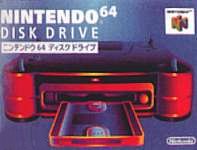 Nintendo offered the 64DD through a mail order subscription service in Japan that cost subscribers ¥2,500 a month, for a 12-month contract. What they got for that price was the 64DD hardware unit, including a 4MB RAM expansion pack, a modem cartridge including the cables, software, and access to the RAND net online service. Further, games and additional software programs were to be shipped out to clients periodically
The magnetic disc had a storage capacity of 64MB and was a lot like Zip discs for PCs. The main advantage of using these discs is that they are encased in a tough shell, so they were a lot more durable than a CD and were a lot cheaper to manufacture than the N64 cartridge (still a lot more than the CD though), also load times were very quick, rarely exceeding five second loading times, with three or four seconds being the average speed for a game to load up. Along with the magnetic disc, the 64DD also had some interesting features that promised to revolutionize the gaming industry and Nintendo‘s N64 platform.
The system was obviously designed to play new and original 64DD game releases, and nine full 64DD games were actually released (four of which were different versions of Mario paint) for the system. But it wasn’t the new game releases that got video games players interested and intrigued with 64DD platform. It was the concept of the expansion kit disc’s, that provided further content for previously released Nintendo 64 games. The only expansion kit released that utilized the power of both systems was the F-Zero X Expansion Kit. With many others being proposed, but never released.
The 64DD’s online feature was made possible by Nintendo creating the RAND network, which was a little bit like satellite view for the Super Nintendo. Everything you needed to get the 64DD online was included in the starter pack on its release in late 1999. Part of this package was the Nexus developed internet modem that plugged into the N64’s cartridge slot. Once you were connected to the internet you could take advantage of number of options, which included a web browser, access to a member’s only information page, an online message board for communicating with other 64DD users, the option of sending messages to the actual game programmers, beta testing, listening to music online (that was of a CD quality) and an online magazine that covered news, sports and weather. When it came to online gaming they had the choice, to either play against other people or simply observe others playing games or applications. The most popular feature on the RAND net, was its ability for users to share and swap what they had created using the Mario Artist creative programs with other 64DD subscribers.
Nintendo offered the 64DD through a mail order subscription service in Japan that cost subscribers ¥2,500 a month, for a 12-month contract. What they got for that price was the 64DD hardware unit, including a 4MB RAM expansion pack, a modem cartridge including the cables, software, and access to the RAND net online service. Further, games and additional software programs were to be shipped out to clients periodically
The magnetic disc had a storage capacity of 64MB and was a lot like Zip discs for PCs. The main advantage of using these discs is that they are encased in a tough shell, so they were a lot more durable than a CD and were a lot cheaper to manufacture than the N64 cartridge (still a lot more than the CD though), also load times were very quick, rarely exceeding five second loading times, with three or four seconds being the average speed for a game to load up. Along with the magnetic disc, the 64DD also had some interesting features that promised to revolutionize the gaming industry and Nintendo‘s N64 platform.
The system was obviously designed to play new and original 64DD game releases, and nine full 64DD games were actually released (four of which were different versions of Mario paint) for the system. But it wasn’t the new game releases that got video games players interested and intrigued with 64DD platform. It was the concept of the expansion kit disc’s, that provided further content for previously released Nintendo 64 games. The only expansion kit released that utilized the power of both systems was the F-Zero X Expansion Kit. With many others being proposed, but never released.
The 64DD’s online feature was made possible by Nintendo creating the RAND network, which was a little bit like satellite view for the Super Nintendo. Everything you needed to get the 64DD online was included in the starter pack on its release in late 1999. Part of this package was the Nexus developed internet modem that plugged into the N64’s cartridge slot. Once you were connected to the internet you could take advantage of number of options, which included a web browser, access to a member’s only information page, an online message board for communicating with other 64DD users, the option of sending messages to the actual game programmers, beta testing, listening to music online (that was of a CD quality) and an online magazine that covered news, sports and weather. When it came to online gaming they had the choice, to either play against other people or simply observe others playing games or applications. The most popular feature on the RAND net, was its ability for users to share and swap what they had created using the Mario Artist creative programs with other 64DD subscribers.
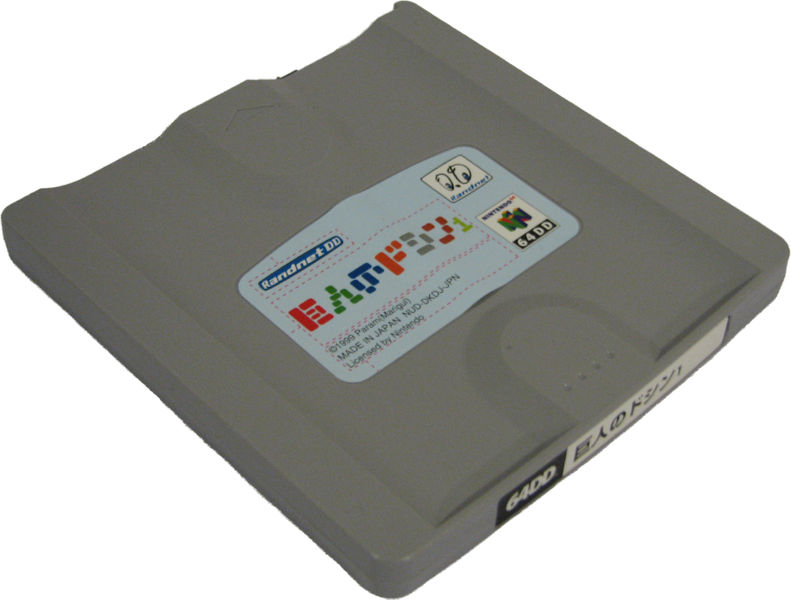 In February of 2001, the RAND net service was canceled. Even though it enjoyed moderate success, with a cult status in Japan, the somewhat limited user base just wasn’t enough to justify its continued existence as a platform. The service was offered for free after the cancellation date was announced by Nintendo up until the plug was finally pulled. Once the RAND net service was disabled, Nintendo began buying back all the related software and hardware, which would be useless with out the service, but all other DD hardware and software could be kept.
The 64DD add-on only managed to sell 15,000 units in Japan and was classified as a commercial failure for Nintendo. Often being compared to all the add-ons Sega piled onto the Genesis/Mega Drive (e.g. Sega 32X (Platform)). Nintendo didn’t completely walk away from this empty handed though, and if anything the 64DD was more of an experiment giving them a chance to trial new ideas (online games and internet access), some of which became standard features in Nintendo's future products and consoles.
The 4MB RAM cartridge took on a new life of its own, being released to the rest of the world as an expansion pack for the N64 console and was bundled in with selected titles to help enhance the graphical performance of the system. The 64DD was an interesting concept for its time, which had massive potential, and maybe things would have turned out a lot differently if the system wasn’t delayed for such a long period of time and more support was given to the platform by 3rd party developers.
In February of 2001, the RAND net service was canceled. Even though it enjoyed moderate success, with a cult status in Japan, the somewhat limited user base just wasn’t enough to justify its continued existence as a platform. The service was offered for free after the cancellation date was announced by Nintendo up until the plug was finally pulled. Once the RAND net service was disabled, Nintendo began buying back all the related software and hardware, which would be useless with out the service, but all other DD hardware and software could be kept.
The 64DD add-on only managed to sell 15,000 units in Japan and was classified as a commercial failure for Nintendo. Often being compared to all the add-ons Sega piled onto the Genesis/Mega Drive (e.g. Sega 32X (Platform)). Nintendo didn’t completely walk away from this empty handed though, and if anything the 64DD was more of an experiment giving them a chance to trial new ideas (online games and internet access), some of which became standard features in Nintendo's future products and consoles.
The 4MB RAM cartridge took on a new life of its own, being released to the rest of the world as an expansion pack for the N64 console and was bundled in with selected titles to help enhance the graphical performance of the system. The 64DD was an interesting concept for its time, which had massive potential, and maybe things would have turned out a lot differently if the system wasn’t delayed for such a long period of time and more support was given to the platform by 3rd party developers.
Unreleased Titles
Prior to its fate as a commercial failure, the 64DD had a variety of titles being worked on for it. The following is a list of games and their fate
- Dragon Warrior VII (released as a Playstation Title)
- Hybrid Heaven (Game) (Eventually released as an N64 cartridge)
- Mission Impossible (Eventually released as an N64 cartridge)
- Mother 3 (Game)(released as a Game Boy Advance Title)
- Pokémon Snap (Game) (released on cartridge)
- Pokemon Stadium (Released on N64, Exclusively in Japan.)
- Pokemon Stadium 2 (Released on N64. Retitled as Pokémon Stadium (Franchise) for North America)
- Super Mario 64 2 (Ultimately canceled after significant work was put into it as a Gamecube title. Some have speculated that Mario Galaxy was a direct result of such work)
- Super Mario RPG 2 (Released as Paper Marioon cartridge)
- Resident Evil 0 (Game) (Release on Gamecube)
- Ultra Donkey Kong (Released as Donkey Kong 64 (Game) on cartridge)
- Ura-Zelda (Split into two. with Majora's Mask being the "new game" released on cartridge and Zelda: Master Quest being the enchanted remake released on Gamecube)
- Zelda 64 (Released a Ocarina of Time on N64.)
In addition, add-ons for Quest 64and Automobile Lamborghiniwere also in the works. Four additional Mario Artist titles were planned.
Collectibility
Due to its extremely limited release only in Japan the system is highly sought after by collectors. The games usually sell for around $80-$100 but can also go for over $200. The system itself is much harder to come by and usually sells for $1000+ if in good condition with all inserts.
Games view all →]
- Doshin the Giant (Game)
- F-Zero X Expansion Kit (Game)
- Japan Pro Golf Tour 64 (Game)
- Kyojin no Doshin Kaihō Sensen Chibikko Chikko Daishūgou (Game)
- Mario Artist: Communication Kit (Game)
- Mario Artist: Paint Studio (Game)
- Mario Artist: Polygon Studio (Game)
- Mario Artist: Talent Studio (Game)
- Pocket Monsters RPG (Game)
- Randnet Disk (Game)
- SimCity 64 (Game)
- Super Mario 64 2 (Game)