5 ★ (11)
4 ★ (11)
3 ★ (6)
2 ★ (4)
1 ★ (5)


Shenmue is an open-world action-adventure game developed by Sega AM2 and originally published for Dreamcast (Platform) in December 1999. It was conceived, produced and directed by Yu Suzuki (Person), the head of Sega's AM2 development team at the time. The game is set in the city of Yokosuka, Japan (Location) during the mid-1980s and begins with the murder of martial arts master Iwao Hazuki (Character), leading Iwao's teenage son Ryo to seek revenge against his father's mysterious killer. During Shenmue's development, Sega coined the phrase "Full Reactive Eyes Entertainment (Concept)" (or FREE) in order to describe what they considered to be a completely new genre unique to Shenmue. The game is also notable for introducing the term "Quick Timer Event," referring to its mechanic of timed contextual on-screen button prompts which drive certain action scenes.
Shenmue and Shenmue II (Game) were collected in an HD remaster simply titled Shenmue I & II, which was released in 2018.

The game begins as eighteen-year-old Japanese high school student Ryo Hazuki (Character) returns to his home in Yokosuka on a snowy November afternoon in 1986. After noticing an unfamiliar black sedan parked near the front gate, Ryo discovers his family's live-in housekeeper Ine Hayata (Character) lying on the ground and witnesses fellow ju jitsu student Masayuki Fukuhara (Character) being violently ejected from the Hazuki family dojo.
Ryo enters the building and finds his father Iwao, the master of the dojo, as he is confronted by a pair of suit-wearing thugs led by an imposing man dressed in a green changshan robe. The group's leader, a ruthless Chinese cartel member named Lan Di (Character), demands that Iwao hand over an object called the "Dragon Mirror (Object)," but Iwao flatly refuses. Lan Di then proceeds to attack and savagely beat Iwao with an impressive display of Chinese martial arts. Seeing his father critically injured, Ryo attempts to intervene, but he is swiftly incapacitated by Lan Di with a single strike.

Even in defeat, Iwao is still defiant towards Lan Di. Presented with an opportunity for coercion, Lan Di lifts up Ryo by his neck and threatens to kill him if his father does not relinquish the mirror. Iwao finally relents to save his son's life, revealing that the artifact is buried beneath a nearby cherry tree on the same property. As his two henchmen retrieve the mirror outside, Lan Di asks Ryo's father if he remembers a man named Sunming Zhao, claiming Iwao killed this man in the Chinese village of Mengcun. Ryo's father struggles to his feet and unleashes a desperate final attack, which is easily countered before Lan Di inflicts the killing blow against Iwao; he then departs with the Dragon Mirror in hand, leaving a wounded Ryo to listen to his dying father's last words.
Four days later, Ryo has mostly recuperated from his injuries after resting at home, but he is still wracked with grief and rage over his father's murder. After waking from an intense nightmare in which he again witnesses Iwao's final moments, Ryo resolves to track down his father's killer and exact his revenge.
Shenmue's open-world gameplay is divided between three primary modes: Free Quest, Free Battle, and Quick Time Events. In addition to the main gameplay modes, Shenmue also contains several minigames, including two based on classic Sega arcade titles. At a certain point in the story, Ryo gains a part-time job and access to a forklift, which can be used both to earn money and to participate in forklift races with his co-workers.

The world of Shenmue operates on a simulated day/night cycle. Ryo begins each day at his family home on the edge of Yamanose (Location), an outer suburb of Yokosuka. After waking at 8:30 AM, Ryo is free to roam throughout the city until Ine's imposed curfew at 11:30 PM, at which point he will automatically return home for the evening. Ine also provides a daily allowance of ¥500 for Ryo to spend on a wide variety of goods and services in town. Most NPCs and local businesses follow their own particular schedules, requiring players to take note of these cycles in order to manage their own time more effectively.
The majority of Shenmue's gameplay takes place in Free Quest mode. In this mode, Ryo explores the city of Yokosuka while searching for clues that will help him track down Lan Di (Character) and avenge his father's death. Throughout his investigation, Ryo interacts with several of Yokosuka's local inhabitants; besides basic conversation, he can assist some NPCs with tasks in exchange for information or even provoke fights with certain unsavory characters to gain new leads. Ryo records any important information in his journal, which the player may refer to at any time.
The player can also choose to simply explore Shenmue's detailed environments without progressing the story further, as there are several activities and events to be discovered in Yokosuka that don't impact the game's main narrative. However, Shenmue does have an overall time limit: if the in-game calendar reaches April 15, 1987, the story ends with Ryo's death in the game's "bad" alternate ending.

The game's more elaborate fights occur in Free Battle mode. These special encounters pit Ryo against one or more enemy NPCs, and the gameplay temporarily switches to resemble that of a fighting game or brawler. Ryo's "Hazuki Style" is heavily based off of Akira Yuki's Bajiquan (or "Hakkyoku-ken") style from Virtua Fighter (Franchise), another franchise developed by Sega AM2. In addition to Ryo's starting set of moves, he can learn new fighting techniques by acquiring special "Move Scrolls" found around Yokosuka, as well as meeting other martial artists willing to share their expertise.
During Free Battle, Ryo's health is represented by twelve colored orbs arranged in a circle. These orbs are initially green; as Ryo takes damage, the first orb in the meter will change color to yellow and eventually disappear. Once all twelve orbs are depleted, Ryo will be knocked unconscious and lose the battle. Players can recover lost health by remaining still for a few moments.
After completing the game, players can attempt a special "70-Person Free Battle Time Attack" challenge mode separate from Shenmue's main story.

Shenmue's Quick Timer Events (or QTEs) are context-sensitive events that occur at specific points throughout the game, typically during action-oriented cutscenes. When a QTE begins, a button prompt will momentarily flash on the screen, giving players a short window of time (usually less than one or two seconds) in which to press the corresponding button on their controller. If the player is successful, this is reflected in the cutscene by Ryo executing an action dependent on the context, such as dodging an incoming attack. If the button prompt is missed, Ryo will fail to react quickly and suffer the consequences. Even after missing a prompt, players usually have a chance to recover by pressing the next button in the sequence correctly. However, failing too many button prompts during a QTE may require the player to restart the event from the beginning or even abort the QTE entirely, after which Free Quest mode resumes.
There are no randomly generated QTEs in Shenmue, and the individual button prompts for each on-screen action do not change between playthroughs. However, since it is possible to extend the length of most QTEs by missing some of the prompts, the specific sequence of on-screen events and their corresponding button prompts within a single QTE can play out slightly differently depending on the player's performance.
A variety of optional arcade-style minigames can be played by Ryo as he explores Yokosuka. These are all coin-operated with a price of ¥100 per play.
|
|
Ryo can gamble at Dobuita's Slot House to earn tokens and special prizes. For a fee, the nearby fortune teller will reveal which slot machines to play for the best payout chance.
Shenmue's open world is divided into five main areas containing all of the game's interactive environments and NPCs. Ryo can only explore as far as Dobuita during Shenmue's first disc.
Ryo typically begins each day at his family home located on the outskirts of Yamanose. The property's entrance is marked by a wooden gate at the top of a winding drive leading down the mountain. In addition to the Hazukis' house and dojo, the grounds also host a koi pond and an assortment of plants and trees, including a prominent cherry blossom tree.
The single-floor dwelling holds nine accessible rooms, a foyer and three hallways. Ryo, Ine, Fukuhara and Iwao each have their own separate bedrooms. A kitchen sits near the center of the house adjacent to a family room with a television and a kotatsu. A living room with a sofa and chairs is positioned at one corner of the house, and a Buddhist altar can be found in another room near the opposite side. The house's single small bathroom contains a squat toilet.
The Hazuki dojo is ostensibly one large room with a wooden floor for martial arts training; a few kakemono paper scrolls bearing inspirational phrases are hung along the walls of this candle-lit chamber. Later in the story, Ryo discovers a secret passage inside the dojo leading to a basement level containing many artifacts collected by Iwao over the years, including the Phoenix Mirror (Object).

A tiny suburb of Yokosuka perched on the side of a mountain. Besides a cluster of several residences, the only landmark of note is a small shrine to Inari, a prominent Shinto (Concept) figure often depicted as a red fox. A little girl named Megumi often visits the shrine to care for her adopted kitten, which was orphaned on the day of Iwao's murder. Because Megumi's mother doesn't allow pets inside their house, the kitten sleeps in a cardboard box next to the shrine; Ryo can also interact with the kitten in different ways.
The path from Yamanose leads to the base of the mountain and the larger suburb of Sakuragaoka. This residential area contains both free-standing houses and the Sakura Heights apartment complex, as well as Sakura Park and the Abe Store, a locally managed convenience store. Ryo can purchase items inside the store or play two capsule toy machines just outside to add to his collection.
An urban commercial district directly modeled after the real-world Dobuita Street in Yokosuka, Japan. A wide array of shops and services can be sampled here, many of which also accept US dollars as payment due to Dobuita's close proximity with Yokosuka's large American naval base. The Tomato Convenience Store (Location) near the center of Dobuita operates twenty-four hours a day and carries a greater selection of items than Sakuragaoka's modest Abe Store. The You Arcade is a popular hangout spot and contains several playable arcade games, as well as two capsule toy machines outside. Gamblers can even try their luck at the Slot House to win special prizes.
Dobuita has a thriving nighttime bar scene primarily supported by the many sailors and dock workers living in Yokosuka. Some of these inebriated patrons often participate in street brawls, much to the dismay of several local residents and business owners.
The Harbor District becomes accessible during disc two once Ryo establishes his initial contact with Master Chen (Character) via telephone. This area also contains the Old Warehouse District, including "old" Warehouse #8 where Chen resides with his son Guizhang.
Yokosuka's notorious "Mad Angels" biker gang operates out of the Harbor District. Their members frequently extort money from harbor workers in order to fund their other illegal activities, such as smuggling goods between Yokosuka and Hong Kong (Location).
A second Tomato Convenience Store is located inside the Harbor Lounge in Amihama.
Shenmue provides many opportunities for Ryo to find or buy collectible items throughout the game, including capsule toys, audio cassettes and even Sega Saturn software. These items are included for entertainment purposes only and are not required to make progress in the main story.

For the price of ¥100, players can try their luck at one of several gachapon capsule toy machines in order to collect miniature figurines and toys, most of which are based on characters featured in other Sega (Company) franchises.
Some capsule toys are relatively common, which may lead to acquiring duplicates, while others are exceedingly rare. There are also certain toys not found in any capsule machine which require meeting special criteria to obtain.
Toys from the Virtua Fighter (Franchise) series can be obtained from a machine located in front of the Abe Store in Sakuragaoka (Location). With the exception of Wooden Man, each of these can also be won as a fifth-place prize in any store's raffle drawing.
Toys from Sonic the Fighters (Game) can be obtained from a machine located in front of the Abe Store in Sakuragaoka (Location). With the exception of Eggman, each of these can also be won as a fifth-place prize in any store's raffle drawing.
Toys from Virtua Fighter Kids (Game) can be obtained from a machine located in front of the You Arcade in Dobuita (Location). With the exceptions of two Dural toys, each of these can also be won as a fifth-place prize in any store's raffle drawing.
|
Various Sega-related toys can be obtained from two "Exciting Sega World" machines located in front of the You Arcade in Dobuita (Location) and inside the Harbor Lounge in Amihama's New Yokosuka Harbor District. With the exception of six rare toys, each of these can also be won as a fifth-place prize in any store's raffle drawing.
Several vehicle-based toys can be obtained from a machine inside the Harbor Lounge in Amihama's New Yokosuka Harbor District.
|
|
|
Several harbor-related toys can be obtained from a machine inside the Harbor Lounge in Amihama's New Yokosuka Harbor District.
|
Most of the following toys can be obtained from any capsule toy machine in Shenmue:
|
|
*Only obtainable from Virtua Fighter Kids or Exciting Sega World machines
More collectible toys and other unique items can be earned as prizes from a few of the other businesses located around Yokosuka.
Sakuragaoka's Abe Store hosts a raffle which can be entered by purchasing Chocolate, Caramel or Potato Chips. After making a selected purchase, Ryo has a chance to win one of several unique toys by drawing fourth place or better. Fifth place earns a random toy from Virtua Fighter, Sonic the Fighters, Virtua Fighter Kids or Exciting Sega World.
* Dural (Character) Gold (Grand Prize)
|
* R-360 (4th Prize #1)
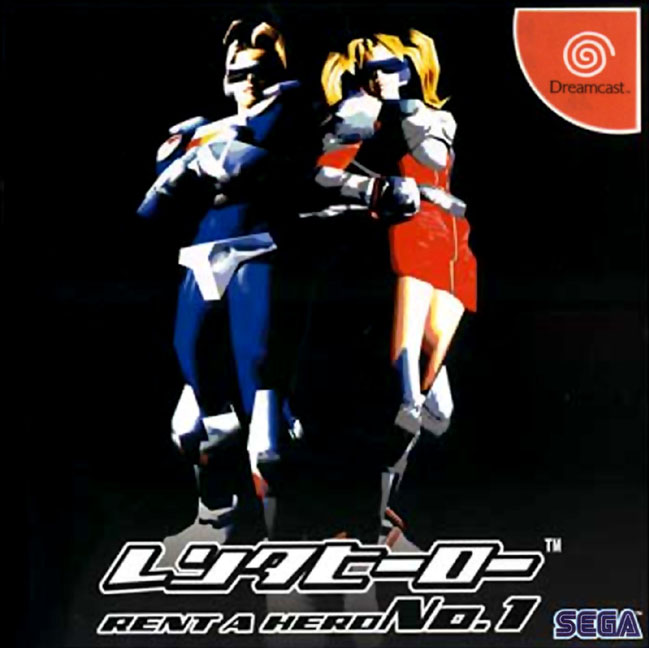
Space Harrier (Game) (4th Prize #2) Rent-A-Hero (4th Prize #3) Bonanza Brothers (4th Prize #4) |
Shenmue's two Tomato Convenience Stores in Dobuita (Location) and the Harbor District also host raffles, which are entered by purchasing Chocolate, Caramel, Potato Chips or any available audio cassettes. After making a selected purchase, Ryo has a chance to win a special non-toy prize by placing third or better. Fourth place earns one of a set of four unique capsule toys which vary by location, and fifth place earns a random toy from Virtua Fighter, Sonic the Fighters, Virtua Fighter Kids or Exciting Sega World.
| Non-Toy Prizes | Dobuita Toys | Amihama Toys |
|---|---|---|
* Radio Cassette Player (1st)
|
* B.B. Ultra (4th #1)
Hot Dog (Object) Truck (4th #2) Metal Sonic (Character) (4th #3) Super Sonic (4th #4) |
* Crane (Object) (4th #1)
Ferry (Object) (4th #2) Forklift (Object) Blue (4th #3) Forklift (Object) Red (4th #4) |
Miniature versions of five arcade machines can be won at You Arcade in Dobuita (Location) by beating their current high scores. Players can also obtain two special tokens by completing Space Harrier (Game) or Hang-On with a single credit.
| High Score to Beat | One-Credit Challenge |
|---|---|
* Mini Darts (300 in Darts 7)
|
* Harrier Token (Space Harrier)
Hang-On (Game) Token (Hang-On) |
At Dobuita's Slot House, scoring a single-color line (either all red or all green) of three 7s on a slot machine will win a special prize based on that machine's per-play cost. Ryo also receives two certificates after winning a certain total number of tokens.
| Triple-7s | Total Tokens Earned |
|---|---|
* Cherry (Object) (1-token game)
|
* Matsuyama Prize (10,000 tokens)
Mitsuzuka Prize (50,000 tokens) |
By placing in the top five during a forklift race, Ryo will receive one of five special Forklift toys (No. 1 through 5) based on his finishing position.
Several toys can only be obtained by trading Slot House prizes through Shenmue's extra "Passport Disc".
* Big Philip (Cherry)
|
* Pop (Cherry)
Rap (Cherry) Mary (Mini Jukebox) John (Mini Pool) Kelly (Mini Pool) Philips (Mini Pool) |
* Poochi (Mini Pool)
Pyonta (Mini Pool) Robins (Mini Pool) Kuro (Mini Slot Game) Tora (Mini Slot Game) |
Series creator Yu Suzuki (Person) described the origins of Shenmue during his "Classic Game Postmortem" talk at the 2014 Game Developers Conference (Concept). After joining Sega (Company) in 1983, Suzuki spent several years developing flashy arcade titles that focused on very time-limited play sessions, with an ideal average length of three minutes per play. Eventually he decided to create a longer-form console game without such limits; one that encouraged extended sessions of play.
In 1995, Suzuki began researching existing console games from which he could draw inspiration for his new project. Because his personal experience with longer games at that time was limited to graphical- and text-based adventure titles released in the early-to-mid 1980s, Suzuki closely observed turn-based RPG franchises that had enjoyed success in the late 1980s and early 1990s, such as Dragon Quest (Franchise) and Final Fantasy (Franchise). However, he noted some key shortcomings in the simple presentation of these games, particularly how players were restricted to rigid grid-based movement while traversing the world and interacting with NPCs. Based on his observations, Suzuki decided to focus on creating an RPG-like experience with superior realism and more natural character movements.
The culmination of Suzuki's initial research was the development of an internal prototype game called "The Old Man and the Peach Tree" running on Sega's Saturn (Platform) hardware. Suzuki and his AM2 team developed this prototype in polygonal 3D while testing features like camera control, real-time combat and a conversation system.
The game itself involves a player character named Taro searching for a kung fu grandmaster known as Ryu. Taro instead meets an old man who claims to know Ryu and says that he will share the grandmaster's location if Taro brings him a peach. By the end of the prototype, Taro watches the old man skipping stones across a lake to kill fish, leading him to realize the old man is actually grandmaster Ryu.

Using their prototype as a reference point, Suzuki and his team began work in 1996 on a full-length, fully 3D console RPG for commercial release under the working title "Virtua Fighter RPG: 'Akira's Story'". Their initial goals for the project included full voice-acted dialogue, a cinematic presentation for key story scenes, and a robust combat system allowing several characters to participate in a battle simultaneously. AM2 also borrowed heavily from their own prior work on the Virtua Fighter (Franchise) series by re-purposing its 3D engine and animations to help drive the new game's action sequences. One of the original playable characters from Virtua Fighter, Akira Yuki (Character), was chosen to be VFRPG's protagonist, and he was redesigned as a teenager to reflect his relative inexperience at the outset of the game's narrative.
Suzuki had previously traveled to China (Location) in 1993 for research during Virtua Fighter 2's development, which had a profound impact on VFRPG's setting and story. He conceived a basic plot presented in four separate acts, each with its own central theme. The first act would use the theme of "Sadness" to depict the death of Akira's father and numerous other setbacks. "Departure" would define the second act as Akira overcomes his grief and travels to China to seek vengeance. In the third act, "Fight," Akira would achieve victory over his father's killer after a fierce battle. Finally, the game's conclusion would involve "Starting Afresh"; with his goal of revenge fulfilled, Akira loses purpose before embarking on a new journey with a friend.

Once the overarching story structure was in place, Suzuki created an orchestral suite with four movements to reflect each act's central theme, which he played for a scenario writer before asking their assistance to further develop the game's story. He then assembled a multi-faceted writing team including a screenwriter, a playwright and a film director among others as part of his "borderless development" approach intended to help avoid a completely gameplay-focused script. This team of writers created eleven story chapters linked to different locales in China, which were then used as the basis for eleven pieces of concept art representing each chapter and location.
By 1997, Sega's console division had begun developing their next-generation successor to Saturn which would eventually become the Dreamcast (Platform). This prompted Suzuki to shift development of his game onto Sega's new hardware specification in order to better fit his ambitions of creating a lengthy 3D RPG experience. At one point VFRPG was planned to be a "forty-five hour" epic, including an estimated five hours of cutscenes.
Because the Dreamcast was still in early development, Suzuki had to predict what he believed would be the system's final performance capabilities. Despite a lack of firm hardware specs, the AM2 team continued to flesh out VFRPG with new features that would eventually become open-world gameplay.
Suzuki changed his game's title to "Shenmue" in 1998, partially because Sega felt a new franchise would better promote sales of their looming next-gen console. Sweeping changes were also made to the anticipated release schedule; the initial plan had been to release two of the story's eleven total chapters as the first game in a series. However, developing an open world had proven more time-consuming than Suzuki and his team had expected, and so the decision was made to handle each chapter as its own individual release beginning with "Shenmue: Chapter 1: Yokosuka".
With the project's rebranding, Suzuki also rethought the core design of his game, eventually settling on a set of three keywords that would reflect his new goals for the overall experience: "leisurely," "fully" and "gently". In addition, Shenmue's four main gameplay features would express those keywords: open world gameplay, cinematic presentation, Quick Time Events and the Free Battle system. Suzuki desired for players to engage extensively with his open world by freely choosing between multiple gameplay modes, including the exploration of a vast city containing numerous side quests and minigames, as well as meeting a large number of NPCs with lengthy voice-acted dialogue options.
Shenmue's dramatic cutscenes are "fully" rendered using 3D in-engine cinematics in order to maintain a consistent presentation and elicit a greater emotional response from the player. The game "gently" and seamlessly transitions between its cutscenes and normal gameplay by utilizing disc streaming. With the inclusion of QTEs, Shenmue offers players a fusion of both gameplay and cinematic presentation while also dynamically adjusting difficulty based on a player's performance. Free Battle allows players to "leisurely" select from several possible opponents and attacks at once across large arenas with its improved auto-tracking camera system.
As the game's final form took shape, Suzuki and AM2 struggled with an expanding headcount and skyrocketing expenses as they continued to add features. Professional interior designers were brought on to help create the rooms and furniture making up the game's detailed indoor areas. Every NPC was assigned a scripted daily schedule dictating when they wake up, where they go to work and eat, and how they spend their leisure time before returning home to sleep. An algorithmically driven "magic weather" system was derived using Yokosuka's actual meteorological records from a three-year period starting in 1986. Due to the enormous amount of program and audio data required for a game of its scope, AM2 had to devise new data compression techniques that would allow Shenmue's first installment to fit onto a reasonable number of discs.
Suzuki's team spent much of 1999 tracking and eliminating programming bugs in Shenmue before its scheduled Japanese release at the end of the year. The team's bug fixes were all managed in a gigantic Excel spreadsheet containing over ten thousand actionable items at its maximum size. By the end of Shenmue's development, the team had ballooned to around three hundred people. The game's total budget including marketing expenses was estimated by Suzuki at $47 million, an unprecedented amount for a single game's development costs at the time.
Upon its initial release, Shenmue was praised for its innovations in realism, interactivity and open-ended gameplay, but also received criticism for its slow pacing and stilted English voice acting. Despite attracting a strong cult following and sales in excess of one million units, Shenmue was considered a commercial failure for Sega, mostly due to its unprecedented development costs. However, the original game was followed by a sequel released for Dreamcast in 2001 only in Europe and Japan, which was later ported to Xbox (Platform) in 2002 for all territories.
Shenmue III (Game) was crowd-funded via Kickstarter and developed by Yu Suzuki's independent studio Ys Net (Company). The third game in the series was released in November 2019, nearly twenty years after the original.