


- Name
- Namco
- Abbreviation
- Founded
- 1 June 1955
- Location
- Ōta, Tokyo,Japan
- Website
- http://www.namco.co.jp/
- Aliases
- Namcot
Namco
Ōta, Tokyo,Japan
Namco is a Japanese developer and publisher who found enormous success with console video games and in the early days of arcades, through to the present. In 2005, they merged with Bandai.
Company Images Related Pages
'
History
'

Namco headquarters.
Namco was originally founded in 1955 in Tokyo (Location) as Nakamura Manufacturing Ltd. by Masaya Nakamura. They began as a company that ran two rocking horse rides in a department store in Yokohama (Location), Japan. This eventually expanded to the Tokyo area and in 1959 they changed their name to Nakamura Manufacturing Co., Ltd (Na-M-Co), which would serve as the Namco name. In the 1960s they established their own production facility for constructing rides and continued to operate more elaborate rides. They were also able to acquire a license to Disney (Franchise)'s characters for use in them. In 1970, they developed their first coin-operated machine, Racer, a primitive driving simulator. In 1972, the company began use of the Namco name. In 1974, they acquired the struggling Atari Japan for $500,000, giving Namco the exclusive publishing rights to Atari's games in Japan for 10 years. In 1978, they released their first video game, Gee-Bee. In the same year, they established Namco America in Sunnyvale, California (Location), which operated to license Namco's games to American distributors such as Midway Games (Company) and Atari (Company). In 1980, they released the monumental Pac-Man. While unpopular in Japan, it saw tremendous success in North America where it was seen as a breath of fresh air in a market filled with sci-fi games such as Space Invaders (Game) or Asteroids (Game). It became a pop culture sensation and went on to sell over 350,000 units. They continued their success with games such as Xevious (Game), Galaga (Game) and Dig-Dug. In 1984, they began developing titles for the Nintendo Famicom under the name 'Namcot', which would prove to be a successful venture, eventually accounting for 40% of Namco's revenue. After the Video Game Crash of 1984, which split Atari into two seperate entities, Namco sold off their share of Atari to Warner Communications. By the early 90s, Namco had acquired a string of arcade distributors making it the largest arcade operator in the United States. They also ventured into amusement parks in Japan, establishing Namco Wonder Eggs in 1992 and later Empire of Eggs. In 1996 they merged the two parks, creating Namco Wonder Eggs 2. They also opened large arcades named Wonder Park, Wonder City and Wonder Tower in Sagamihara, Yokohama and Kyoto, respectively. They also continued to have arcade and home console hits such as Ridge Racer (Game), Time Crisis (Game) and Tekken (Game). In 2003, they offered to merge with Sega (Company), which rose Sega's stockprice by 15%, but the offer fell through and Namco withdrew plans after Sammy offered to merge with Sega. In September of 2005, they merged with Bandai to form Namco Bandai Holdings, and their games development merged to form Namco Bandai Games.
Franchises

Pac-Man is an icon almost synonymous with video games.
Namco have had a decent amount of successful franchises. Pac-Man, arguably their most popular, is comprised of over 35 games.
- Ace Combat (Franchise)
- Babylonian Castle Saga (Franchise)
- Baraduke (Franchise)
- Dead To Rights
- Dig-Dug
- Galaxian (Franchise)
- Katamari Damacy (Franchise)
- Klonoa (Franchise)
- Mr. Driller
- Pac-Man
- Point Blank (Franchise)
- Ridge Racer (Franchise)
- Rolling Thunder (Franchise)
- Soul Calibur
- Splatterhouse (Franchise)
- Taiko no Tatsujin (Franchise)
- Tales (Franchise)
- Tekken (Franchise)
- THE iDOLM@STER
- Time Crisis (Franchise)
Note
Games attached to this page should only include those developed or published by Namco prior to the merger with Bandai in 2005. For any games beyond the merger, see Namco Bandai.
Developed Games
View all developed games
Ridge Racer (Game)
Ridge Racer is an arcade racing game that was considered innovative upon its release. It has spawned a successful franchise of games focused on over-the-top drift racing. Released for the powerful Namco System 22 arcade system, it was the first mass-market video game to use texture-mapped 3D polygon graphics and Gouraud shading.
Published Games
View all published games
Namco x Capcom (Game)
A strategic role-playing game that features characters from various Namco and Capcom games, such as Tekken, Soul Calibur, Ghosts 'n Goblins, and Mega Man Legends.
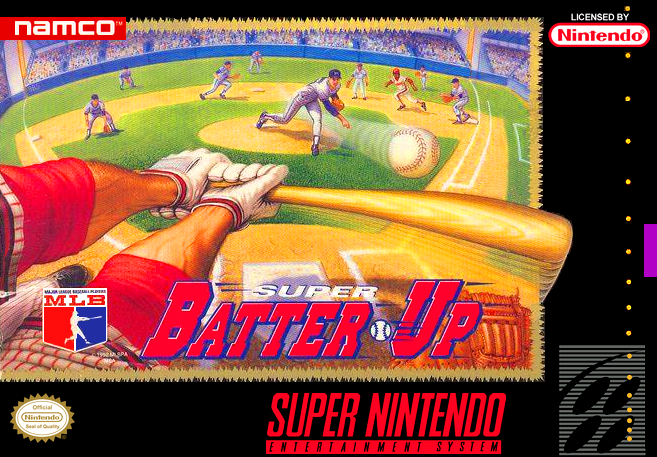
Super Batter Up (Game)
Namco's Super Batter Up is a baseball game and the US version of the first Super Famista.

Winning Run (Game)
Released by Namco in 1988, this was the first arcade driving game to use fully 3D polygon graphics. It was the inaugural title for the Namco System 21 "Polygonizer" arcade hardware, the first dedicated 3D gaming system.

Ace Combat 04: Shattered Skies (Game)
Ace Combat 4 is an arcade style combat flight game set in a fictional Earth-like universe in which a series of asteroid impacts have destabilized world politics and led to war between the nation of Erusea and the Independent State Allied Forces, or ISAF.

Splatterhouse: Wanpaku Graffiti (Game)
A bizarrely light-hearted "super-deformed" version of the ultra-gory Splatterhouse series beat-em-ups.

Klonoa 2: Lunatea's Veil (Game)
Klonoa 2 Is the sequel to the 2.5D platformer Klonoa: Door to Phantomile.