
Greetings and thank you for stopping by to read my 2017 Games of the Year list. I apologize for being late in getting my list published but I am sure as is the case with everyone else, 2017 was a very challenging year in multiple facets that made it hard for me to get my gaming priorities in order. Nonetheless, I have toughed out my own challenges in order to share my thoughts on what was an impeccable year of gaming that I was glad to play my fair share of games.
Showing 1-10 of 15 items

[#15] Fire Emblem Echoes at the surface looked to reign in on some of the eccentricities that started Awakening with its matchmaking mechanic and then further pushed it down hard with Fates that spanned three long-sprawling campaigns and questionable story and character writing. Gone are team-ups and matching characters together for boosts, along with the franchises famed weapon triangle system and other battle adages and in comes a more stripped down game with a neat overworld and dungeon crawling elements. At first, it felt like the Fire Emblem game that I wanted, a Fire Emblem game without the baggage. Eventually, Echoes turns up the fire and that’s where I felt the game’s burn. FE Echoes’s story and characters may be dry to some, I appreciated that it never got in your way compared to how in your face Fates was. The overworld element was neat as you go from point to point, seeing what places and battles are ahead. The dungeon crawling elements is also a neat function where you venture through a simple dungeon choosing to battle elements if you choose to while gaining items and/or promoting classes if there’s a Mila Statue. There are also optional side quests that you can partake that mostly consist of simple item gathering or dungeon challenges that gain you rewards and renown. I also welcome the streamlined class system, though it seems that’s more toward the game locking in characters as a part of their story and at the expense of Awakening and Fates free ability to swap a characters class at will to diversify their character’s skill sets. I feel the battles don’t lose their strategic impact with the loss of the weapon triangle. The strategy of avoiding characters with low magic resistance against magic enemies and vice versa still reigns true. My main problem with Echoes are its combination of map and enemy composition. There are many instances where the enemy composition and their map positions, the player only options is to not advance, but instead to hunker down. Other maps have the player go through many chokepoints in order to reach and confront the boss(es). All boss battles include a mage enemy that spawns additional enemies at every opportunity that always breaks the “this is unfair” needle constantly until they are defeated, which typically happens toward the end of the battle as they are always positioned next to the boss. It was fine to throw these type of challenging battles once in awhile, but to have them thrown in constantly just grinded my enjoyment of Echoes down considerably. It’s a shame because I love everything else that Echoes does. The dry, stripped feel of Echoes was a breath of fresh air that I felt was necessary for the franchise that I thought went in a dangerous direction with Fates. Echoes may not jive with those who enjoyed and built upon their play with Awakening and Fates with the lack of character class change freedom and no weapon triangle in play as this game is massive correction to what they were building upon. I wish I could place a stronger recommendation to FE fans that were looking for a cleaner game if they were unhappy with the Fates games; instead I’ll have to issue a buyer beware as Echoes truly pushes the limits on how challenging FE battles can be.
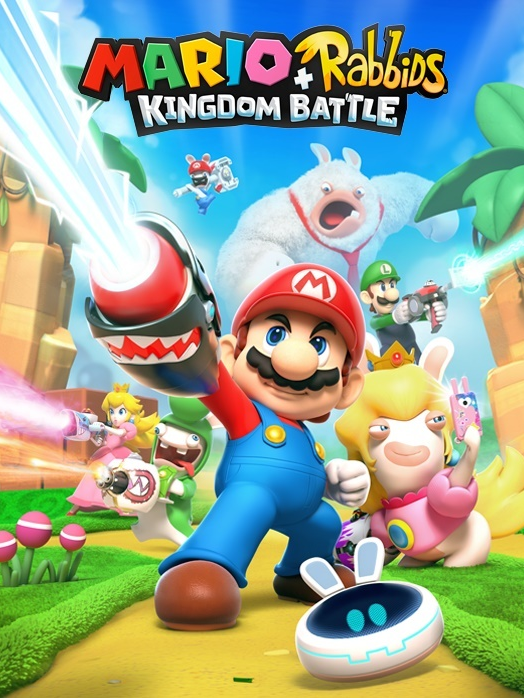
[#14] Mario + Rabbids Kingdom Battle immediately made a strong impression as I was amazed on how well the streamlined XCOM battle gameplay came out to be. I was looking forward to each impeding battle to survey the battlefield, pick the members best suited to tackle each battle, and see how it played out. It was all swell until the party limitations and battles becomes more outrageous that my amazement turned over into beeline to get through the battles and worlds as soon as possible. While it’s a shame that the game could not hold onto its early success, the game still left a positive impression that I felt to give it merit. It’s a bit comedic when the game plays out so well early on but then loses it as it builds upon its base. Early on, the battles were fun to play because it allowed the player to succeed in a variety of ways based on party composition, playstyle, and strategy around the battlefield and how the battles shaked out. It lost me when more members were introduced but yet the restriction of having Mario as a permanent member of your party of three and restricting having an all Mario party combined with the sudden ramp up in map size, complexity, and amounts of enemies to battle on stage. The adventure portion of the game also lost its novelty when the puzzles transition from small, simple ones to overly tedious ones that compounded my frustrations as I progressed. The battle controls, while not complex, is not quite as smooth and clear as it is as there were many instances where an mistaken input would take action with no way to double check or revert the mistaken action that took place. In spite of all of its flaws, there was strong promise with the battle system and RPG elements along with some neat story moments sprinkled throughout the game that I was still happy with the product. The game’s presentation is solid with colors abound all over added with an impressive soundtrack. I wouldn’t mind another attempt if Ubisoft was able to tweak out the party restrictions and smoothed out the battle challenges. Where else would you get an opera singing Rabbid completely dissing Mario in song?

[#13] Despite being placed low on this list, Sonic Mania exceeded my expectations considering that I was more or less lukewarm with the other Sonic games that I have played under my belt. What struck me so much with Sonic Mania is both its adherence to classic 2D Sonic yet pulling off awesome new content to produce a new game off of it. From afar, it’s fantastic to hear fans of the original games come back and sing praises for the game to take it back to its roots and celebrate a good Sonic game for once. For me, I was glad to partake what Sonic Mania delivered, faults and all. The biggest mental adjustment I had to make while playing Sonic Mania is that Sonic is less reliant on constant precision and recollection of the level that I grew accustomed to with the 2D Mario and the recent 2D Rayman games, and more about rolling through the stages as fast as you can. I always liked Sonic’s stages for having multiple paths depending on where you land at a certain part of a stage. Sometimes you maintain that top Sonic momentum and stay at the higher planes of the stages, other times you find yourself struggling to get out the bottom planes. Hidden in-between are a number of small secret rooms with rings and power-ups as well as finding and acquiring those darn chaos emeralds, in which I enjoyed the Sonic R-esque track collecting speed-ups to catch up to a UFO. I did what I could to enjoy Mania as much as I could in spite of my personal struggles in playing a Sonic game. Nonetheless, Sonic Mania still triumphs by sticking true to its roots while adding a colorful splash of awesome presentation in terms of how beautiful and bursting each level looked with a groovy, spectacular soundtrack to boot. I enjoyed the themes and level design of each act, finding out if there are any secrets and where the stage would led me next, as well as the easter eggs and nods to the previous Sonic games such as the Green Hill, Chemical Zone, Metal Sonic, the mini-games, and even a surprise boss fight involving Puyo Puyo. Mania threw out a lot of neat things that gave me newfound appreciation and enjoyment of the franchise.

[#12] Gravity Rush 2 is what Gravity Rush 1 should have been. I strongly felt Gravity Rush 1 was hampered by being shoehorned as a Vita showcase with a lot of control design issues that really hampered the promising gameplay. Many improvements I felt 2 had over 1 was a result of the game being on a console instead of a handheld. I immediately felt the game breaking out of its Vita shell and feeling more free-flowing as I flew through the various environments in GR2’s world. Sadly, in spite of all the apparent benefits and improvements as a result of the platform transition, the setbacks that made the game hard to play in GR1 sadly carry over and did made a considerable impact on my enjoyment of GR2. The promising aspects of GR1: the sensation of flying above town and to and from different areas, standing on the undersides of structures, and utilizing Kat’s powers for combat and assists, are more realized as I watched it in front of a television playing it through a PS4 controller. GR’s world also benefits from the transition and each area shows more flash and personality that could not be realized on the Vita. Aside the benefits derived from the platform transition, GR2’s other biggest improvement its better mission and side quest construction that better highlights and utilizes Kat’s abilities. My personal favorite Gravity Rush 2 moments always consist of tasks that makes sure of the beautiful transitions between the city hierarchies. The developers were not deaf to the combat and camera issues that plagued the first game and did their best to rectify, but I feel the tools and resolutions they came out did not fully solve those issues. The camera continues to be the biggest offender even if there is a quick realign button, but fails to keep up especially during tough aerial battles. The overall combat is slightly improved through the use of the different styles but again, fails once the combat requires constant action and precision. GR2’s story, while not bad and touches upon inequalities, doesn’t feel integral with the game even if it does pull a surprise stunt at the end. Gravity Rush 2 still manages to be an enjoyable experience with the numerous improvements and presentation that is more realized with in spite of the problems from the first game that they were quite able to fully resolve here. I can tell the developers made a strong attempt to make Gravity Rush 2 the best game they could develop with the power of the PS4 and though with its flaws, feels more of the game they hoped it would be in the first place.
[#11] It’s been refreshing to see the growth of strong, self-contained, short games that makes an impeccable statement to show with its short playtime in the past couple of years in the world of gaming. What Remains of Edith Finch continues that trend by telling an intriguing set of short stories encapsulated in a house over the mysterious passings of the Finch family. Though the quality and lengths of each short story vary, I came away impressed with the overwhelming amount of creativity and imagery throughout the game’s short time. I was immediately drawn in with the first stories where one family member who was hungry for food went into a surreal amorphous trip to stress how hungry she was and the other harking in a Tales from the Crypt style storytelling to detail her curse. Both stories gave an early hint of some sort of mythical curse that befell on the family. Subsequent stories were still engaging but lost the mysticism that the game’s earlier story alluded to turned into a bunch of crazy bad luck circumstantial instances. Other standout shorts are one involving the fish work and the interruption in the middle of the elder family member story was a nice touch. There were many small touches here and there that added to the game’s top-notch storytelling and charm with Edith’s soothing narration with her words appearing and interacting along with it. Edith sketching in portraits of her family members after retelling their stories in her journal was always neat to watch. I loved that each room served as an initial cue to what type of story and person’s story that we were going to delve into. The developers did a great job making you as a member of the family, playing out their stories and fates. While Edith Finch lacks the overall punch in my eyes to compete some of the other games further up my list, it more than makes up for it by telling an excellent batch of stories that showcases the developer’s excellent writing knacks and strong vision for what they wanted to produce.

[#10] Clap Handz continues to make it work somehow. Though the core Hot Shots Golf gameplay comes back the same tried and true three-click button mechanic, they changed up the player progression by having them play as their own created character and their stats reflecting on performances with the golf club used. Things look bleak as it took a lot of early grinding playing the same set of holes early on to even unlock other courses, but once the courses open up and your player builds up some significant stats, that’s where Everybody’s Golf opens up close to an arcade-like experience where you can easily plug in a good round to get your gaming fill for the day. Everybody’s Golf became my go too “cool down” game of the year, which I always appreciate have this type of game to fall upon per year. The two things I feel that makes Everybody’s Golf succeed in getting me back day to day are its single player and online tournaments. I love that they continually mix up both offline and online tournaments on a constant basis to keep things fresh and on your toes in terms of what tees, holes, and other intangibles are into play. Online tournament play works surprisingly well as they hold daily courses with bonuses that the game’s player always gravitates to. Battles against computer AI characters are still fun, but lose their steam here as you only get their clothes as awards for defeating them instead of unlocking them as a playable character per previous franchise custom. I looked forward to spending a little bit of my time playing the next set of offline and online tournaments with whatever conditions the game crops up. It helps that in spite of the gameplay remains strong in spite of being the same old three-click swing style that the Hot Shots franchise has run on since its inception, with the only neat addition is adding the third click for putting. The courses are still well designed and gives the player plenty of options to either play it safe or aggressively depending on the tee and conditions. Do you play it safe and land it on the wide, open fairway or do you think you can manage to land on the skinnier fairway landing point further away? Everybody’s Golf play does not get much deeper than it gets as an arcade sports game, but it does a great job with its engaging simplicity that gets you back in on a frequent basis. There comes a time with these type of games where they finally wear out their welcome. Eventually the leveling up comes to a grinding halt up to a certain point for your character, and the courses and challenge rotations just aren’t that enticing to play against anymore. Everybody’s Golf also suffers from a terrible grinding “end game” if you want to grind your character and custom clubs to score constant Albatrosses on Par 4s and 5s. Otherwise, this was my perfect game to just jump in, have fun, then jump out.

[#09] Super Mario Odyssey was not quite the “odyssey” that I hoped the game would typically carry on from its fantastic predecessors. I did not mind the aspect of Mario quickly jumping from one kingdom to another while in pursuit of rescuing Peach from Bowser and get a quick feel of collecting moons and using Cappy’s ability to capture enemies to use them for their particular objectives. What I felt was short changed in Odyssey with its mainline content is the lack of challenge and build-up to Bowser and that more of its appeal was on the number of kingdoms and the allure to find moons by any means necessary post-game. That’s not to say Super Mario Odyssey is bad, it’s an excellent game; I was not quite enamored with the finding power moons in a bunch of playgrounds feel even if I’m still playing the game today to collect them little by little. Odyssey’s greatest strength is allowing the player the freedom to attain power moons by their own leisure. There is no one way to acquire many of the moons scattered through each kingdom. Utilizing Cappy’s abilities in both its capture and Mario assistance is an awesome extension to Mario’s skillset and neat that it completely forgoes the usual Mario power-ups of mushrooms, fire flowers, feathers, stars, and extra lives. The decision to forgo lives and only losing ten coins upon loss of all health also helps making the player at ease and continue onward to their exploration without the additional tension of lives to account for. I also love the numerous cues that there is a possible moon nearby from a quick conversation to NPCs, to the sparkling glow around objects and NPCs, down to the use of the Joycon’s rumble. All of these goes to show the intellect and creativity that Nintendo has down pat in locking down the game they want player to play in. Keeping each kingdom’s area pretty small and packing what they can within the allotted space they had with each kingdom is another tip of the cap that helps players stay within an area without worrying about anything substantial somewhere elsewhere in many vast open-world games. My main grievance with Odyssey is its adventure portion of chasing after Bowser felt underwhelming from start to finish. The Terribles that serve as Bowser’s mini-bosses do not show as much personality and ingenuity that past Mario mini-bosses had and their battles are likewise equally as disappointing even with some impressive scenes sprinkled throughout the main game portion (Jump Up Odyssey, controlling Bowser at the end). Other inconveniences that I encountered were the use of a few abilities locked to motion controls (particularly the cap spin) and fighting the camera at times but that comes with the territory in 3D open world games. None of my gripes with the game are game-breaking or terrible to a point that would sour everyone’s experience, it just did not impress me as much as I thought it would do coming into it. It’s still a Mario game that showcases Nintendo’s continued creative and technical excellence and should be experienced by everyone. Your mileage may vary on how much you dig with Mario’s free, jam-packed playground style. I’m still playing to get more moons to unlock the final kingdoms and items, but not that into it where I can sink a considerable amount of time in a session to go through every nook and cranny crammed into its game.

[#08] If I were to solely judge Persona 5 just on its technical aspects, I would easily rank it as the best Persona game out of the three games I have played in the franchise. But Persona is solely not about how awesome it’s style is, or how engaging it’s persona and battle systems are, but a culmination of great style, gameplay, story, and characters. Persona 5’s style and gameplay easily holds up their end of the bargain and carries the bulk of the game’s excellence while the intangibles are oddly the ones that blocks its ceiling to being one of the true standout game of the year. Despite its glaring flaws, Persona 5 as a whole stills packs a strong punch that has a lot of great things to show during its lengthy playtime. Persona 5’s story and characters are a large reason why it could not reach to its full potential. Not to say neither portion of the game is terrible that would make anyone quit the game instantly, but both areas are lackluster compared to the highs reached in previous Persona entries and to other games released this year. The theme had a ton of promise with its rebellious tone against the atrocities to society and in particular, people in highly regarded and respected positions abusing their powers. I felt by the end the game’s sheer scope weighed down its rebellious bite in trying to shoo in all of its characters in play. The main cast of characters feel as if they are just in a gang with each forthcoming dungeon fighting against their adversaries who are written as just plain evil without any merit. There’s simply not much to find within P5’s story and characters that make them likeable or at least interesting to venture along with. In lieu of P5’s lackluster cast and story, it more than makes up for it with its abundance of excellent gameplay content to dive into. The usual side quests of meeting up with your team members and other important acquaintances on the MC’s spare time that rewards the player with meaningful benefits the stronger their connection with their confidants are. Momentos is another great side quest that is a neat side, self-contained dungeon on its own along with a neat gameplay tie-in with confidants. As if that wasn’t enough, there’s also a ton of mini-games that include fishing, batting cages, eating contests, etc. that also tie-in with the MC and confidant functions. That’s all on top of the game’s top-notch main gameplay of revamped dungeon mechanics along with some smart additions and tweaks to Persona’s tried and true press-turn battle system. There’s no shortage of what you can do with your time in P5. Sure, Persona 5 was a let down coming from the highs of Persona 4 but it was not a complete disappointment that a few would shout it was. The cast and stories around its theme could not carry its weight, but you cannot deny all of the wonderful improvements made on the gameplay front that the Persona team outdid themselves in this game. Along with their over-the-top efforts in presentation with the heavy red-colored theme, unbelievable menu looks and transitions, and awesome jazz/rock centric soundtrack still makes Persona 5 a worthy game of the year. It’s not the best Persona game, but I can easily say it’s the best playing Persona game of all.

[#07] The venerable map-drawing, dungeon-crawling, deceptively addicting JRPG returns flexing its muscles that somehow keeps it together despite undergoing drastic changes from EO4. The important areas that resonates with me so much in EO4 mostly retain their charms in EO5 with mixing and matching your party that can cover as many bases as you can against the hordes of enemies along with engaging floor designs that are fun to venture and map out on the 3DS touch screen. My biggest issue with EO5 is the particular areas that they flexed their muscles on make this Etrian Odyssey adventure more like a rugged, no-thrills business-like trip rather than a relatively challenging yet pleasant one. EO5 is a game that went back to its roots, removing the overworld labyrinth format that EO4 work on, and returning to the floor format that the first three games ran on. Also gone are the story-driven, hand-holding options that they worked into in their Untold versions of the first two Etrian games and only have the classic mode running with a choice of two difficulties. It’s also the game that they broke open the floodgates with tedious floor puzzles, the class skill trees that includes class-centric and race-centric skills to build on, and battles that can easily turn on you quickly. All of the changes make EO5 feel more of a challenge of veterans to chew on than newcomers, where the overwhelming amount of setup needed to start and to stick with the grind and the challenges with battles, party management, inventory management, and dealing with the floor’s puzzles, traps, and FOE paths could prove too tough to some. I felt the burn early and never lets up the pressure. Even with all of the information overload, Etrian Odyssey V can still produce that adventurer magic when things are rolling, such as rolling through battles with ease, getting through a tough section of a floor, succeeding in completing a mission or side quest, etc. EO5’s smarter tweaks and additions along with its classic RPG gameplay give the player the choice to spec their party that suits their playstyle, the union system in battle to give the player an additional play to aid them in battle, and more robust icons that increase the amount of detail the player can choose to detail their floor maps, which is needed considering some of the puzzles the game pulls in its later floors. It’s on you if you come unprepared on a floor or onto a battle, but sometimes the game’s floor puzzles and battles (especially the bosses and a few FOEs) pits you in unfavorable positions that ruins some of that adventurer high that still can be had here. As I finally defeated the final main boss that took close to two hours of time to defeat, I did not come away with an overwhelming feeling of triumph as I did at the end of EO4. It was more of an exhausted sigh, glad to have finally defeated that beast but felt the wear and tear of the game’s harsh difficulty throughout my EO5 journey. I hate to make a similar comparison with another gaming franchise on what I thought of between EO4 and EO5. If this makes any sense to anyone, I’d say Etrian Odyssey 4 is like Streets of Rage 2 while Etrian Odyssey 5 is like Streets of Rage 3. It’s still fantastic and retains most of what made the franchise work, but some choice designs and increased difficulty make it harder to enjoy.

[#06] The curse of a fighting game fan is knowing that sometime in the future, doesn’t matter how near or how far, you’ll know that half-step, upgrade release is around the corner. REV2 is the third iteration of Guilty Gear Xrd, which started with SIGN in late 2014 with REVELATOR following in mid-2016. REV2 is not the same massive jump content-wise that REVELATOR had from SIGN, the only content additions seen are two new characters, revamped tutorials, some end-story junk, and various balance changes. Though I am not a die-hard fighting fan, I can see that REV2 is a completely new game under the hood. That and a little bit of help from friendly group of duders helped make my experience with REV2 this year more realized. REV2’s new content is not much on a quantitative scale, the impact of the new content in is significant. The combination of adjusted mechanics, character changes, and adding in two characters breaks forces players to learn a combination of new strategies, attack routes, etc. as they learn what’s new/changed with their character and how others are using whatever characters they are playing as. In note of all the unseen intricacies, one of REV2’s impressive content feature is its revamped introductory training and training missions, which goes into rich detail on what little things that occur during battle, what to look for, then asking you to execute them. For those really struggling to come to grips with REV2, they even include an FAQ that gives new players tips on the fundamental aspects of the game. The developers care enough for those willing to try out their game all the information in the world in hopes they can at least get a solid beginning grip. Not much has changed aesthetically between the three Xrd games, which already looked great from SIGN and did not need much changing though there are small details such as the fighters having blue sparks as a visual indicator that they have BURST available and a few new songs added onto an established strong soundtrack. REV2 still plays great and continues that aggressive, fast-paced, in-your-face, climatic style the franchise has been known for that all of its battles look like a kung-fu movie laced with tons of caffeine. It’s fun to watch as a spectator and feels like a roller coaster trying to keep up while playing. Combined with a robust online with open public lobbies to find strangers to spar one-on-one or collaborate with friends in a private room that keeps Xrd as the gold standard on how a fighting game release should be. I’ll openly admit there was some weight that helped REV2 get its spot on my GOTY list. Though I have been absent from the group the past two months, my time sparring (and getting my ass whooped thoroughly) with the dedicated folks at the Giant Bomb FGC Discord group did have influence of REV2 making it on this year’s list. I still had to make my way out to them to participate, but in fighting with those duders in REV2 showed me a lot of the game that I probably would not seen had I not been proactive in the group. Without them, I would not have played as much of REV2 as I did with the GB FGC and would have passed it off as a mundane update that should not warrant any merit.