
Indie Game of the Week 246: Cathedral
by mento
I realize I'm about two explormer reviews away from an intervention at this point, but nevertheless the Indie Game of the Week franchise finds itself with another exploratory action-platformer dealie on the docket, this time courtesy of Swedish studio Decemberborn Interactive. Cathedral 's a throwback that wears its inspirations on its sleeve - Shovel Knight , if the screenshots weren't enough...

I realize I'm about two explormer reviews away from an intervention at this point, but nevertheless the Indie Game of the Week franchise finds itself with another exploratory action-platformer dealie on the docket, this time courtesy of Swedish studio Decemberborn Interactive. Cathedral's a throwback that wears its inspirations on its sleeve - Shovel Knight, if the screenshots weren't enough of a clue - but rather than the stage-based shenanigans of Yacht Club Games's dirt-conveyor Cathedral has a huge open-world full of the usual barriers to overcome with the correct traversal upgrades. Dropped into an ominous cathedral situated at the crest of an unknown world filled with peril, the mute armored hero soon finds themselves with a quest to obtain a bunch of orbs to open a large door to either their escape or a slumbering ancient evil god (I know which one my money's on). The particulars of this quest aren't quite as straightforward as they first appear, however, and the player will find themselves visiting various towns to look for progress hints between the customary platforming and exploration out in the field.
I'd hesitate to call Cathedral a lesser Shovel Knight not only because the latter is such a high bar to pass that most any retro platformer would fall short but because Cathedral's structure is completely different; even so, its many shared mechanics can't help but invite comparisons. Beyond superficial similarities like the protagonist's knightly appearance and a pseudo-8-bit graphical presentation and soundtrack that are both far crisper than anything the NES or Master System could handle, a chief mechanic introduced early on is the knight's pogo attack - useful for combat and hopping across otherwise deadly hazards alike - and a plethora of active sub-items that can be toggled between with the bumper buttons (if using a controller). The platforming flows in a similar manner as a result and I fell into a comfortably familiar groove soon after I started. It might not reach the same highs as Shovel Knight overall - its combat can feel a bit mashy since no enemies have knockback, and its tertiary characters aren't as memorable with perhaps the exception of a little boy in town who tried to convince me he was "Itzratha' Luin, one of the seven demonic gatekeepers" - but it has a firm grasp of the fundamentals that made its spiritual precursor work.
 I say 'NES influenced' but the amount of detail and the ice world's gradient fill background might be closer to 'Amiga/Atari ST.'
Cathedral also has a similar currency system, used for many purchases including the much-needed armor upgrades. This also inevitably means that currency loss is linked to failstates: dying causes you to lose 10% of whatever you're carrying with no means of recovery, unlike the floating sacks of cash left behind in Shovel Knight and other Soulsborne corpse run mechanics that have found their way into the explormer genre. However, the player has at their disposal several means to mitigate this loss: they can buy upgrades to reduce the penalty to just 5% per death, they can bank money to keep it safe whenever they visit a town (conveniently, banking and purchases are handled by the same NPC), and they have a stock of healing potions that is restored whenever the protagonist dies or visits the local healer. Damn near everything can be upgraded: maximum health, defense, starting health after dying, health restored via potions, chance of damage negation, status effect resistance, reduced knockback, maximum ammo capacity, and so on. This also means that the game can hide a huge amount of these upgrades throughout its maps and their many secret rooms. I've already taken to hitting every block I can to see if there's something behind it: given the regularity with which the game hides items and valuable gems inside its walls like so many chicken dinners in Castlevania, it's a ritual that has paid off.
Speaking of which, Cathedral's game world is one of the largest I've seen in a game of this type and certainly of its budgetary scale: after five hours of game time I've barely seen a quarter of what's out there according to the in-game tracker. It's segmented into various territories each with their own environmental theme and distinct hazards and enemies, and many maps are further broken up into two layers which can be traversed with doorways (sometimes concealed). Map fragments found in each region reveal about 90% of that area's map, giving you a decent sense of where to explore next as you work towards whatever objective(s) brought you there. The player can also stamp any room with an exclamation mark if need be: I've been using it to indicate where an item or exit is currently inaccessible for later referral. They're not the most comprehensive map tools found in a game of this type but they're enough to get the job done. The game does occasionally run the risk of outstaying its welcome with this content overload but there's enough separating each zone to reduce the feeling of repetitiveness. The most recent area I've reached is a trident-shaped necromancer lair with illusory spikes (mixed in with real ones, of course) and a branching structure where I need to find and reattach several skeletal body parts (I've played enough Zack and Wiki to know where that side-quest is going). Prior to that was an area where I had to navigate around poison waterfalls to the valves that shut them down. The core gameplay doesn't vary much, but there's enough going on in each of these individual regions to keep me invested.
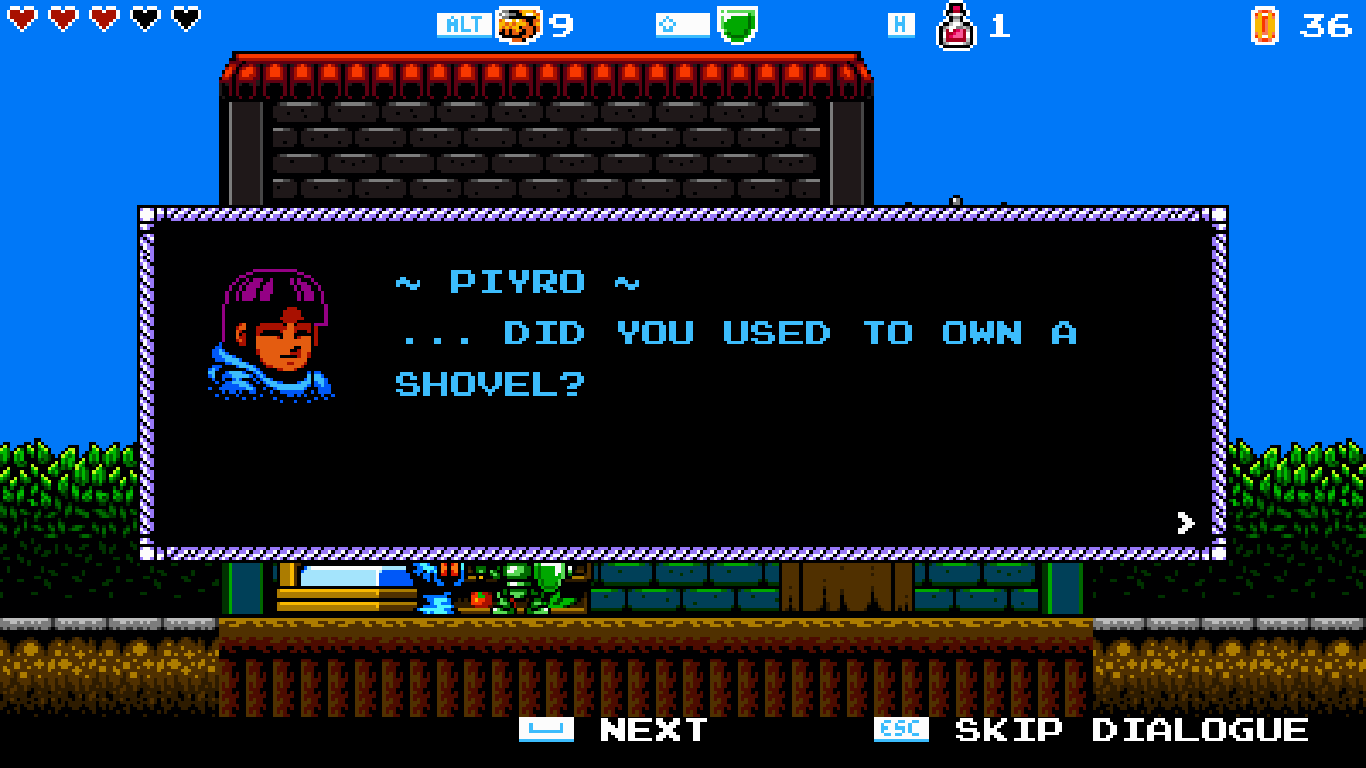 Look, if the game's going to draw its own comparisons I don't see why I can't.
Cathedral's also decently challenging too: there's been some tough platforming sequences and bosses alike, with a recurring family of gargoyles giving me the most trouble so far. The forest gargoyle fight in particular had me scouring the rest of the world for every advantage I could muster, including later game regions like the graveyard and a snowy mountaintop: while the majority of these zones were blocked off, just poking around their earlier rooms garnered me enough combat upgrades to make a huge difference. When I took that boss on again with these additions I barely scraped through - it had a nasty way of honing in on you, making it troublesome to hit. Easily my toughest time with a gargoyle boss since Dark Souls. Difficulty curves are a heck of a thing to get right in the explormer genre because the designers can't know whether they're designing a boss for someone carving a straight path to each boss or someone fastidiously checking everywhere for upgrades along the way, but Cathedral is a rare case of erring towards the latter. Platforming hazards, likewise, take off a huge percentage of health even with all the armor and health upgrades available up to that point: I've been navigating the last couple of zones with five hearts of HP and most of the spikes and acid traps carve off at least two hearts apiece. The potions do make it a little more survivable, but checkpointing has started to become much more infrequent as I progress. Overall, though, the challenge level has been exceptionally fair and though I've died many times I can usually credit these untimely demises to the same vices that befall us all as players: greed, carelessness, and impatience.
Cathedral will no doubt occupy the same place in my mental library of explormers that something like Aggelos (IGotW #216) did: graphical throwbacks that aren't really doing anything too new or distinctive, but are competently put together with a well-considered difficulty curve befitting its NES inspirations while still providing enough modern conveniences and quality of life updates to ameliorate any frustration that might arise from its challenges. Some attractive if slightly garish pixel art, a suitably catchy chiptune soundtrack, moments of levity with the game's many NPCs, and just a whole lot of solid platforming and hitting things with swords and making notes to revisit certain rooms later with the right power-ups. It's an uncomplicated explormer that does its best to direct you where you need to go in its enormous world with its quest system without necessarily putting big arrows and map icons everywhere to make it too obvious. Granted, it's as inessential as they come if you're getting burned out on this genre (2021 was particularly dense with them) and are only looking for a big, meaningful evolution of the format on the level of Axiom Verge's hacking or Timespinner's time-travel or Bloodstained's multitude of upgrade systems or Ori's Disney-tier animation, but if you're in the mood for a comparatively rudimentary explormer that plays well and is substantial enough in size to sustain you for at least a week Cathedral's certainly not a bad option.
Rating: 3 out of 5. (Post-review edit: Bumped it down to 3 for its absurd difficulty, terrible optimization despite looking like a 8-bit pixel platformer, and an awful final dungeon/boss.)
| < Back to 245: Masquerada: Songs and Shadows | The First 100 | The Second 100 | > Forward to 247: The Gardens Between |