
Indie Game of the Week 404: Return to Grace
by mento
You know what happens when you get a 404 error, right? It means a computer messed up somewhere (or you did, but play along with the bit here). That's also what happened in Creative Bytes Studios 's Return to Grace , a first-person narrative-driven adventure game—a genre typically referred to by its fondness for leisurely ambulation—about a supercomputer AI that once ushered a future spacefaring...
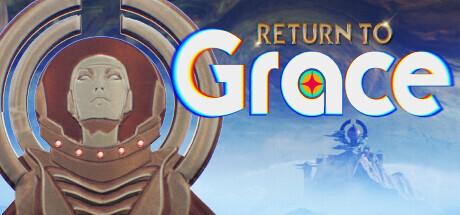
You know what happens when you get a 404 error, right? It means a computer messed up somewhere (or you did, but play along with the bit here). That's also what happened in Creative Bytes Studios's Return to Grace, a first-person narrative-driven adventure game—a genre typically referred to by its fondness for leisurely ambulation—about a supercomputer AI that once ushered a future spacefaring humanity into an era of prosperity and peace from its remote location before going completely radio silent one day, abandoning mankind to a dark millennium of technologically-deficient hardscrabble and doubt despite the fact that they'd already colonized much of the solar system. The desperate explorer Adamari Ito, the protagonist, believes she has discovered the final resting place of Grace on the inhospitable Galilean moon (that's one of the four big ones around Jupiter) of Ganymede and burns all her bridges to get there.
Return to Grace has really two notable traits that I can talk about, given the narrative focus. The first is that it follows Prey in adopting a retro-futuristic (we were calling it "zeerust" at one point) sci-fi aesthetic for Grace's Ganymedean home which was built to accommodate not only the computer's hardware and its engineer attendants but visiting religious sojourners hoping to implore the system for "wishes": these pilgrims were randomly selected by Grace from across the solar system in order to air their desires, grievances, and inner struggles so that the AI might learn more about humanity and its concerns from these disparate voices. The retro style works because from the perspective of Adamari (who goes by Adie) everything here was built and later abandoned almost a thousand years ago: adjusting to furniture and fixtures that seem hopelessly ancient to her is made easier to relate to by how retro it feels to us as well.
 Much of Grace's headquarters feels like something out of The Jetsons (if George left the AC on too long).
The second trait is that Adie is accompanied by various AI voices as she explores the facility: originally, she only has her own ship's AI, Allen, for company but later meets various facets of Grace's personality, having become fractured by whatever shut the place down. These are first represented by the pragmatic and intellectual Logic, the imperious and obstinate Control, and the cheerful and friendly Empathy. Others, based on two of the above, show up later as they become needed for one obstacle or another. These AI not only perform feats that Adie cannot, given the limited command over her environment, but also offer different perspectives and reasoning to Adie as she pieces together the series of events that led to Grace's shutdown. Adie's discussions with these AI, all of which are assigned a different voice actor, make for most of the memorable moments in the game and are at the core of its messaging about humanity's fragile place among the stars and their need for an omnipotent shepherd to guide them.
Gameplay-wise, well, there's not a whole lot to say here. I just finished a playthrough of Senua's Saga: Hellblade II (review's here) and wondered if my dissatisfaction with it was precipitated by a sudden dislike for these more sedate, dialogue-heavy, gameplay-lite adventure games but after Return to Grace I think I just appreciate when a game can decide what it wants to be one way or another instead of trying to straddle the line. The closest thing to a gameplay feature in Return to Grace are a few very simple security door puzzles—simple to the extent that the CPU just tells you the answers half the time—and even fewer sequences where you're walking across a narrow beam and might have to adjust your balance to avoid falling. It's also a relatively short game, though at least somewhat built for replays: there's several endings, and a few scenarios that can play out differently based on your choices (take the longer safer route to squeeze in more talking, or the exciting dangerous route that might cause some problems?), and a sort of very light character affinity system where you can become closer to the AI personality you tend to agree with most. On the whole, though, it's an extremely slim game both in terms of content and gameplay which tends to be the case with Indies with bigger productions: probably no way they could maintain those sorts of visuals into something beyond the length of a movie on an independent studio's budget. Adventure gaming is kind of now in this unusual and modestly made place where you either get three hours of gorgeous visuals in first-person with some light gameplay for flavor or get thirty in a visual novel game with static talking portraits, where the conventional roughly ten-hour point-and-click throwbacks occupy a space in-between.
 Just a small factual nitpick here: This game is set around 1,800 years into the future and the massive storm that is the great red 'spot' of Jupiter will actually clear up long before then, possibly in our lifetimes even. (Why yes, I am a huge dork. It's taken 400+ of these reviews to realize that?) (And, fine, there'll probably be another one eventually. Jupiter eats a lot of meteors, so it has hella skin issues.)
At any rate, I appreciate what Return to Grace is and what it's doing, even if it doesn't have a whole lot to do it with, and I could always go with more games depicting space stations or moon colonies in that 1960s/1970s style. It's the era when most of the best sci-fi movies were made, after all. The AI and nature of man stuff are compelling enough themes too, with the former becoming ever more prescient as we head further into an uncertain future led by soulless algorithms who can never seem to get fingers right, and I'd say the game's voice acting and script is uniformly excellent. If you were the type to turn off the monsters in Soma because you just wanted to mill around while yapping to the computer lady friend in your handheld PDA device about consciousness and artificial systems, Return to Grace is a (less creepy) variation on that formula. As for the rest of you, well, y'all probably know how you feel about walking simulators by now. At least Ganymede's more interesting the Hebridean isles?
Rating: 4 out of 5.
| < Back to 403: Solar Ash | 001-100 | 101-200 | 201-300 | 301-400 | > Forward to 405: Planet of Lana |