
Indie Game of the Week 395: Prodigal
by mento
Later this month, I intend to finally get started on my GOTY list by playing my first (serious) game from 2024: The Legend of Zelda: Echoes of Wisdom . However, that doesn't mean I'll be putting away the many Zeldersatzes I still have in my Indie backlog out of concerns for repetition (I think I've played thirteen explormer s so far this year?) so here we are with an interesting little game cal...
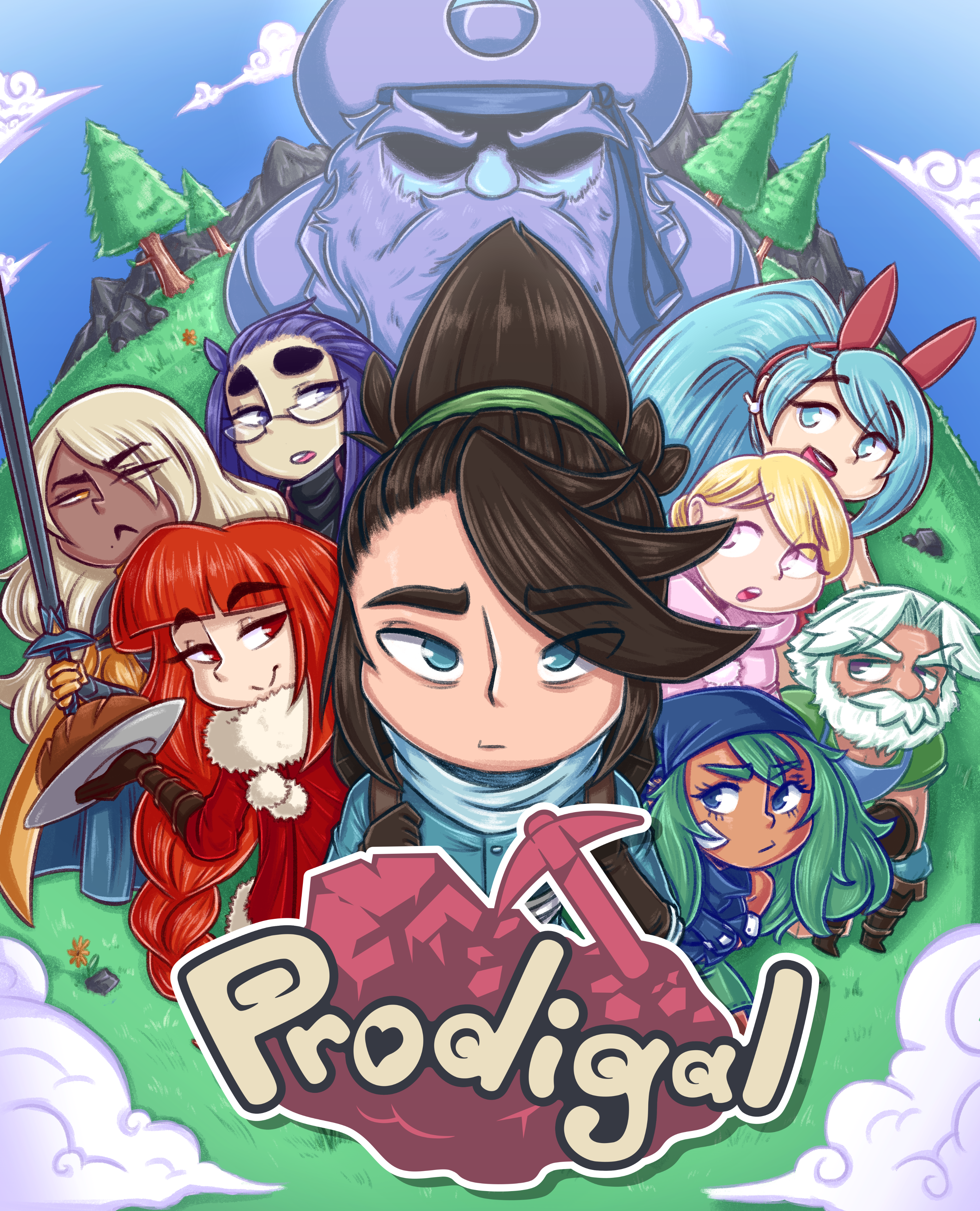
Later this month, I intend to finally get started on my GOTY list by playing my first (serious) game from 2024: The Legend of Zelda: Echoes of Wisdom. However, that doesn't mean I'll be putting away the many Zeldersatzes I still have in my Indie backlog out of concerns for repetition (I think I've played thirteen explormers so far this year?) so here we are with an interesting little game called Prodigal from American developers Colorgrave. Referencing the famous Biblical parable about the commiserate failson, Prodigal sees the protagonist return home to the frontier village of Vann's Point after receiving word that his adventuring parents have passed away: the protagonist originally left his home for untold reasons, taking a large amount of his family's money along with him, which creates a frosty atmosphere among much of the population that remembers him. Despite the negative atmosphere, the hero goes about helping his only remaining family member—his grandfather and local blacksmith Darrow, one of the few happy to see his return—as well as Darrow's passionate new apprentice Bolivar with their tasks as he rekindles his memories of the place and his friendships with his former childhood pals. Naturally, these tasks have him crossing the whole village and its outskirts from one dungeon to the next for various ores and other smithing necessities.
What I found interesting about Prodigal's presentation isn't that it's aping the Game Boy Zelda specifically (that would be Link's Awakening) but a specific optional narrative thread found within that game that is more or less treated like a comedic Easter egg: the idea that Link can, at any point, decide to rob the shopkeeper and take home an item that might be prohibitively expensive otherwise. In Zelda, this causes the player's inputted name to be changed irrevocably to THIEF: this has no bearing on how any of the NPCs treat you, just how they address you, but Prodigal seems to have taken that thought experiment of "what if everyone actually treated the hero like a vile thief and displayed varying levels of hostility towards him?". The game's surprisingly verbal for a Zeldersatz, with a bunch of NPCs to get to know (and in many cases, win back over after your original inauspicious exit) and even more optional worldbuilding lore to peruse such as this world's countries, geopolitical relations, and major religions. That verbosity also allows it to explore, in depth, themes like loss, ongoing resentment, long and aimless journeys to find oneself and one's purpose, picking up the pieces of the broken relationships with those left behind, and the hidden truths of this town and the unfortunate fate of its namesake founding family. You wouldn't think a game riffing on a Game Boy aesthetic could be this deep, but I've noticed that a few times before with games like Anodyne and Two Brothers that—for better or worse—tried to follow in the footsteps of Link's Awakening and its slightly more character-driven and surreal aspects.
 So many background items have their own descriptive text, though most aren't terrible jokes like this (like I can talk).
Gameplay-wise, the game is a relatively straightforward Zeldersatz. It has the typical array of dungeons found across an overworld that requires keys and traversal items to access in full, and these dungeons tend to be relatively short and puzzle-heavy. You acquire four of said traversal items that quickly bind themselves to the four face buttons and never leave them: they're the only items you'll ever need, so there's no reason to go around switching items around in a menu. However, you can supplement them with two passive equipment slots (rings and boots, though I never found any of the former) and up to four buffs from paying vendors for food and potions: these might include double-health, more attack damage, or a free resurrect a la the fairies of Zelda, but they'll all go away if you should ever hit a game over state. You can eventually upgrade your traversal items, but again I never figured out how. Even so, the dungeons are short enough to not need them (nor maps) and the bosses are incredibly easy owing to how you can score multiple hits on them while they're in their temporary vulnerable states and usually finish them off in one or two cycles. This diminished challenge is, in turn, mitigated by how difficult it is to heal outside of your own bedroom: buff items can increase your max health but not recover it, besides the expensive revival item, and enemies and breakable items never drop hearts. You can recover a bit of health by finding the rare heart pieces (they look like heart-shaped ores in this, appropriate given most of the combat revolves around a miner's pick you find early on as a weapon) but otherwise your best bet is to warp out of a dungeon via the convenient teleporter system that connects the entrance to the room just before the boss and just hit the sack back home to rest up. A little inconvenient, but I guess they needed a means to give the game at least some challenge.
So, here's where I get into how the game consistently rubbed me the wrong way with its narrative choices. The first is in how much branching paths and other FOMO aspects are baked into the design: you can earn achievements and take on special dungeons/side-quests by choosing to marry one of the game's eligible bachelorettes, indicating a deep-seated desire to settle down in this town despite previously growing so tired with it that you felt the need to desert it. Already, it's interfering with the interiority I was developing with this otherwise silent cipher protagonist: it's clear he's back to make amends after disappointing his parents and the townsfolk, but there's no indication that he didn't find life on the road more rewarding or that he perhaps has a new family somewhere out in the world that he intends to return to once these matters with his parents and grandfather are dealt with. The idea that he's done a complete 180 and now wants to settle down in a town he once despised so much that he basically burned all his bridges on the way out reads as completely inscrutable. Second, the multiple paths suggests that the developers expected their players to want to play through the game an eye-watering ten times in total in order to see everything; however, the nature of Zelda games is that most of the satisfaction comes from solving the dungeon puzzles, which isn't the sort of feeling you can replicate in multiple playthroughs given puzzles traditionally can only be solved once. It's why that, outside of LTTP and Ocarina randomizers, I very rarely play the same Zelda game twice unless it's been more than a decade or two since the last playthrough (I'm about due for another The Wind Waker run actually; it's been over 20 years now. Hey, don't shoot the messenger).
 There's a surreal interlude where you eventually end up taking on an iceberg dungeon that requires mostly context to deduce (the cutscenes, I mean, not the iceberg dungeon itself. That place is mostly about puzzles where you slide across the ice a lot).
Last and worst of all, there's a boss encounter that's one of those "defeat the darkness inside yourself" scenarios where you take on your own shadow clone. Rather than duke it out, it's a conversation of morality: your shadow, much like those in the Persona games, wants you to admit to your darkest impulses and to your failings as a son and as a former resident of this town. However, some of these questions are stuff like "don't you love this childhood friend character?", "do you want to stay in this town with these people you once abhorred?", "weren't you unhappy wandering the world?" and in order to beat the fight, you have to answer "yes" to all these questions in addition to the more obvious softballs like "you just came back for the money" or "you'd rather leave your grandpa and these people to their fates, right?". This completely tramples over the image I had of this character and the backstory I'd built up for him, since the game offers you no concrete details as to his desires otherwise, and if you get enough of these questions "wrong" you just instantly die and have to walk all the way back to this boss fight from the hub, absent any expensive buffs you may have had equipped. Just a really poor execution of an otherwise neat CRPG "help us define your character's motivation" role-playing moment—one that the game had been developing well enough with multiple yes/no prompts to NPC dialogue about your intentions to stick around. Vann's Point is full of bitter sourpusses and monster-filled dungeons; I'd been happy to get the heck out of there once I'd paid the proper respect to my dead folks (and returned their stolen cash, ideally, which the game does let you do).
In Prodigal's defense, I'll say that the 8-bit aesthetic is charming, the soundtrack occasionally disarming with its emotional resonance given its chirpy chiptune nature most of the time (Link's Awakening had some pretty nice tracks too, if I recall, so that's as good a way to do homage as any), and there's apparently quite a long tail of post-game dungeoneering to be done including a secret additional final boss. The game is filled with secrets in general also, similar to Undertale where the "real story" hidden beneath the main narrative is there for those patient and observant enough to dig around for it. The combat's fine if unexciting especially with the underwhelming bosses, the mostly Sokoban-esque puzzles tended to be a bit easy because there were many times where you could pull off tricks like standing just at an angle from a block in order to push it towards a direction you shouldn't have been able to otherwise, and I definitely respect the moxie involved in making a Game Boy Zelda homage mostly about reading books and dialogue. It's a game that crosses into many of my favorite game design territories for those of a more action-adventure bent, so I only wished I liked it more. Instead, it often evoked the same sort of side-eying distrustful antipathy that its townspeople exhibited towards this titular prodigal hero.
Rating: 3 out of 5.
| < Back to 394: Cthulhu Saves Christmas | 001-100 | 101-200 | 201-300 | > Forward to 396: Sheepo |