
The Dredge of Seventeen Rising: Redredgence (Part Two)
by mento
The Dredge is back! 2021's hottest 2017-themed blogging feature returns for a single month of additional catch-up gaming from one of this industry's most legendary years, all in the service of fine-tuning the internet's largest and greatest 2017 GOTY list . Be sure to check Part One here for a more thorough explanation of whatever this nonsense is all about. Metroid: Samus Returns ( MercuryStea...
The Dredge is back! 2021's hottest 2017-themed blogging feature returns for a single month of additional catch-up gaming from one of this industry's most legendary years, all in the service of fine-tuning the internet's largest and greatest 2017 GOTY list. Be sure to check Part One here for a more thorough explanation of whatever this nonsense is all about.
Metroid: Samus Returns (MercurySteam, 2017)

Metroid was in a weird place in 2017. It had been seven years since its last core entry, the less-than-appreciated Metroid: Other M co-developed by Team Ninja of Ninja Gaiden and Nioh fame, and the series appeared to be changing tracks (in the sense that a train could be said to be "changing tracks" just before a catastrophic derailing) with the eventual 2016 release of Metroid Prime: Federation Force, which reimagined the interstellar setting of Metroid as a multiplayer shooter in the vein of Halo. Being kicked out your own franchise as it morphs into a different, much lesser sci-fi shooter franchise is no acceptable fate for the galaxy's greatest bounty hunter, however, and Nintendo had a contingency plan in the bag by way of this game: a lavish, fixed-plane 3D remake of 1991's Metroid II: Return of Samus for the original Game Boy. Metroid: Samus Returns takes the basic structure of that game—that Samus Aran, after identifying the threat that the metroids present to the galaxy after the Space Pirates so effectively weaponized them against her, heads to what the Federation have correctly surmised is their home planet of SR-388 (a cute nod to the anonymous-sounding homeworld of Aliens's xenomorphs, LV-426) and descends into its depths exterminating all the metroids in her path—and embellishes it with a few extra hazards, mechanics, enemy types, and some returning power-ups introduced in Super Metroid and its sequels.
Metroid: Samus Returns is the first Metroid game to be developed by MercurySteam and, much like its follow-up Metroid Dread (and the preceding Lords of Shadow Castlevania reboot), it just rubbed me the wrong way on a constant basis. I don't want to come off as some Metroid purist (or a wuss, but I think that ship has sailed) and a Metroid that's a little... all right, well, a lot harder than average probably made sense to the developers given most Metroid superfans had since been spoiling themselves on kaizo hacks and tough no-logic randomizers during the many long years of inactivity from the canon series itself but even so it's not a particularly fair shake for the rest of us. It's difficult in a way that's often obnoxious too, making boss fights stretch on forever with their near-infinite reserves of health while simultaneously also having every hit take three or four energy tanks from Samus minimum. General progression through the map is less an issue, given there's some generous health- and ammo-refill stations scattered around (though oddly, neither the warp system or save system will replenish health—get ready to start killing respawning mobs over and over if there's a boss coming up), but certain enemies and hazards that occupy areas with power-ups to find will drain that health gauge fast if you're not conscious enough of them. Easy to get tunnel vision for upgrades in a series like Metroid, especially in Morph Ball mode where it's all tunnels all day.
We also see the original incarnation of the Metroid Dread patented back'ander parry. When an enemy makes a certain visual flash before attacking that's a cue to hit them with a melee counter which, if you immediately follow it up with a normal attack, will defeat most non-bosses in one blow. Irritatingly, if you panic after a counter and use the game's "plant and shoot" to finish off the stunned enemy it still takes the usual amount of damage instead. Many bosses integrate this mechanic into their routines though, obviously, with much more demanding timing: you could theoretically miss all these prompts and still defeat it, but it's that much more challenging to do so without the bonus damage smackdown cutscene that follows. Since we're on bosses, let's talk about the game's weakest point in detail. The boss fights straight up suck morph balls. Part of that is Metroid II's fault of course, built as it was to make you fight the same handful of mini-bosses some thirty or forty times over, but even the ones that aren't just some variant of a metroid followed by a Greek letter are the most annoying type of puzzle boss that would work fine in a Metroid Prime (since it needed to get some mileage out of its scan hint system) but just comes off as incredibly pedantic here given how punitive it is to miss the brief attack window and have to wait for several more patterns to pass before it comes around again. There's a giant mining robot with two drill arms near the end of the game that was pure agony to fight for these reasons and more. Most of the Metroid variants aren't too bad except for, of course, the fact that you have to fight them all so many times that their appeal and novelty diminishes quick. It gets real "Broodals from Super Mario Odyssey" monotonous (speaking of another 2017 Nintendo game with a few issues of its own).
Now, let me be crystal clear here. For all my misgivings about this and Dread I'm not so far gone into my "yelling at clouds" phase that I'd consider them bad games. Metroid (or rather, Nintendo) has always held itself to a certain level of quality, the bare minimum of which is named Other M is still entirely passable as a beacon of the genre. Maintaining that position of respected seniority has become ever more pertinent (and tricky) in this enormous Indie explormer boom of the past two decades: if it's going to be half the name of its more common (if hopelessly reductive) genre name it still needs to be the one blazing a trail forward for others to follow, which gets harder every year considering the vast amount of competition and Nintendo's own general apathy for its space-faring heroine and her frequently deadly spelunks. I don't want to seem ungrateful that companies like MercurySteam and Retro Studios are trying to keep that pioneer spirit alive with all the bold new developments they add to their Metroid games, rather than choosing to play it overly safe with the familiar trappings and faces (so glad Ridley doesn't just pop up out of nowhere at the eleventh hour in this game; boy would that be pandering). It's just... I don't know what it is about this developer but it feels like we like this genre for completely different reasons and we'll never see eye to eye on things. A good example of this came right after the game concluded: any Metroid fan knows that you'll receive some entirely gratuitous skimpy Samus cheesecake for a particularly solid run, measured either by the total time taken or the map completion percentage. Metroid: Samus Returns flips the middle finger to those pursuing the latter, only rewarding the former in this regard. Who plays explormers just to skip all the backtracking and beat them as quickly as possible? Well, I know that crowd exists, but that prerogative is as far from why I play these games as you can get. Maybe it's for the best these Nintendo things don't get achievements given where the developers' interests clearly lie (yaaaay for no-damage runs you can only attempt once).
I dunno, it's fine. It's Metroid. It has to be at least "fine" or Reggie's shoving someone out of an airlock. Even being the comparatively lean year for explormers that 2017 was, though, I don't imagine Samus Returns is spider-balling to the top of that heap given we have Hollow Knight and SteamWorld Dig 2, both of which were more inventive and a lot more fun. Ultimately, Top 40 is certainly possible for Metroid: Samus Returns, but probably not much higher than that.
[To Be Determined]
Three more 2017 games that won't be appearing in this feature any time soon, but never say never on an eventual sighting on the 2017 GOTY list as I continue to refine it from now into eternity.
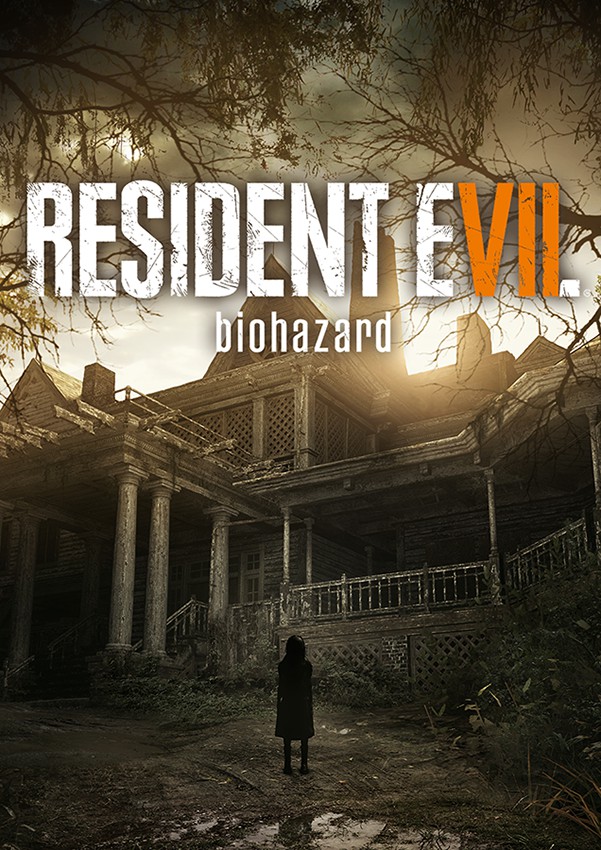
- Resident Evil 7: Biohazard: In the first part of this feature I listed a group of franchises making big comebacks in 2017 but neglected poor old Resident Evil, which bounced back hard after the giraffe-fellating misfire that was Resident Evil 6. With Capcom's careful supervision the series has since gone from strength to strength starting with this creepy first-person reboot that sees a new protagonist run afoul of a family of apparently invincible hillbilly zombies made out of mold spores or something. I liked the gunplay aspect of RE more than the survival horror aspect, which is why I waited until RE4 to join in, but maybe I should give this, VIII, and/or the remakes a shot someday. During a sale, of course.
- Yonder: The Cloud Catcher Chronicles: Yonder's one of many Indie games that made the difficult attempt at a 3D Harvest Moon type, letting the player use the abundant resources and customization tools at their disposal to eke out a living in a fantasy world at their own pace. I remember mistaking this game with the similar My Time at Portia a few times but I've no idea which is actually better. What I will say is that these life-sim farming games are getting more preponderous (as well as just regular ponderous) by the year so even with my affinity for Stardew Valley I'm not sure if I'll next bump into this or any of the dozen others released since. I am sure that, after spending 50 hours picking weeds and giving presents to ungrateful neighbors, I'll decide I'm sated with the genre for another five years at least.
- Knack II: I'm only half serious about this joke entry, sure, but it's worth keeping in mind that Knack was a 3D platformer series helmed by one of Sony's most treasured talents—or at least one of the smartest-sounding that they could wheel out whenever they needed someone to explain, exactly, what it was in the new console model that justified charging half a grand for it; Nintendo could sure use one of those right now—and as a huge fan of that genre as a whole I can't dismiss this weird, little rocky dude despite, well, kinda wanting to dismiss it after seeing the game in action a few times. In a perfect world, both Knacks would've been remastered and re-tweaked for every Sony console half-generation the same way both The Last of Usses are.
One more game/week to go. Will we see a massive upset to the list? Are we really expecting Death of the Outsider to be superior to Prey? Well, it doesn't even have to be better; if it's close that's still Top 40 territory easy. After that we'll check in with three more [To Be Determined]s and maybe I'll actually attach a ranking number to these games like I suggested I would. Imagine that. Following through with my promises. Couldn't be me.