
What do you want from a video game review? Enlightenment? Purchase justification? Quotes to lob at people in your favorite message board? A link that could shoot you to the top on Reddit?
One of gaming’s most articulate writers, Simon Parkin, filed his review of Uncharted 3: Drake’s Deception for Eurogamer yesterday--read it here. Parkin’s material is typically well considered, thoughtful and challenging. His dissection of Naughty Dog’s latest cinematic adventure was no exception, a sharp critique of the fundamental design choices that have fueled the Uncharted series since the beginning, and how the studio’s emphasis on recreating a movie-like experience means breaking that tight script causes serious issues.
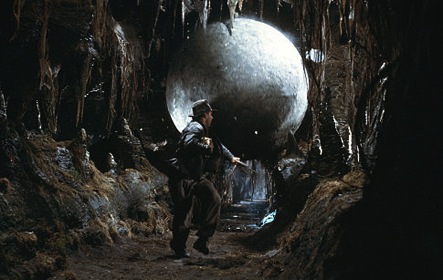
I’m not sure how many people actually read the review, as most comments focused on the 8 score assigned to the game, one slightly under the 9s and 10s (or equivalent) found elsewhere on the web.
There was reason to assume Uncharted 3 was going to be pretty great. Naughty Dog’s track record is solid, and Uncharted 2: Among Thieves was so spectacularly impressive that you mostly felt bad Naughty Dog’s designers, programmers and artists had to follow it up all over again. Plus, nothing Naughty Dog has shown since Uncharted 3 was announced suggested we were in for anything altogether different--Uncharted 3 was more Uncharted, which to most (including me) is fine.
What this meant, however, was that most reviews would likely largely be a thousand words of praise.
Thing is, I’d rather read a thousand words about why someone didn’t like Uncharted 3, so long as the author’s building a proper case, rather than trolling fans. In Parkin’s review, he outlines a grand critique against the Uncharted series as a whole, written through the lens of its latest release, and makes a credible argument for why Uncharted’s highest highs naturally create unavoidable lows. It’s a feeling that’s been with me since the beginning of Drake’s journey, but especially so in Uncharted 2, when players may miss the directorial cue from the game, such as a timed jump, and have to repeat it over and over again.
Other reviews mentioned this point, including Brad’s take on the game, but Parkin made it the focal point of his. By doing so, Parkin's review cast a slightly negative tone, but on the flip side, such concentration allowed Parkin to properly articulate the nuance of his argument, using his megaphone as a reviewer at a major outlet to make a serious point to a very large audience.
One comment beneath the Eurogamer review really stuck out to me.
“I equate reviewers to sports referees and economists; they make a living our of getting it right only some of the time. Once you bear that in mind you don't get annoyed by this review.”
It’s possible this commenter has played and finished Uncharted 3 enough to make a judgement call--but it’s unlikely. By comparing game reviewers to “sports referees,” he (or she) is suggesting the job of the game reviewer is solely to say whether a game is worth a purchase or not. For some, that may be absolutely true; $60 isn't cheap. That’s one of the goals of many game reviews, but reviews can (and should) also function as a design critique, and the best kinds of game reviews are informative to the player and developer, providing an outside perspective that illuminates what did and didn’t work.
Maybe this illustrates a fundamental disconnect between the audience for reviews and the writers themselves. Time is precious, and when I make time for a work, I want my assumptions to be challenged, preconceptions torn apart. If I’m wrong, maybe I’ll learn something from it. This proved especially instructive with Demon's Souls, a game I was only able to understand by reading other people's passionate thoughts. It’s possible to read something you totally agree with and come away with useful lessons, but I’ve found the most instructive moments in life to come from moments involving viewpoints vastly different from mine. As someone who takes thinking about games pretty seriously, this extends to games writing, too.

This disconnect--an intense backlash from fans--isn’t unique to games.
The technical term for the phenomenon is confirmation bias, where individuals seek out information favoring their already established opinion. Confirmation bias is a massive problem in today’s politics, as evidenced by the existence of deliberately liberal and conservative leaning networks like Fox News and MSNBC, and there’s reason to believe today’s highly personalized marketing by the video game industry has trained an audience to seek intense validation for their expensive purchases.
Just take a look at the way Electronic Arts has promoted Battlefield 3 against Call of Duty, stoking the flames of fandom and leading to obnoxious arguments almost everywhere on the Internet. I just want both games to come out so it's all over.
It’s completely, totally, 100% okay to disagree, just make sure you’re aware of what it is you’re disagreeing with.
Next time you read a review that winds you up, take a deep breath, and think before you comment.
If you're looking for other works similar to Parkin's review of Uncharted 3, I cannot recommend places like Kill Screen enough--but go in expecting and wanting something very atypical. Kirk Hamilton wrote an excellent offbeat critique of L.A. Noire, for example, and the publication's web-defying analysis of Infinity Blade by J. Nicholas Giest is as mesmerizing as it is true. Critical Distance is an excellent resource for discovering these kinds of pieces, with quality roundups on a weekly basis.