A few technical hiccups barely temper the emotional impact of this tense, character-driven thriller.
You'll go through a lot of hell to catch a killer. Heavy Rain bills itself as "interactive drama," a term that right away ought to clarify the focus of this grim thriller from QuanticDream. But in case you're still wondering, it isn't headshots or double jumps. Like the company's last game, Indigo Prophecy, Heavy Rain lets you carry out the ordinary actions of ordinary people caught up in an extraordinarily sordid, life-or-death sequence of events that's set in a soaked, dreary urban landscape. The particulars of the storyline are wildly flexible according to the influence of your guiding decisions, and they play out within a narrative framework that succeeds at creating a deep emotional resonance even when it's held back by characters and events that aren't always perfectly believable.
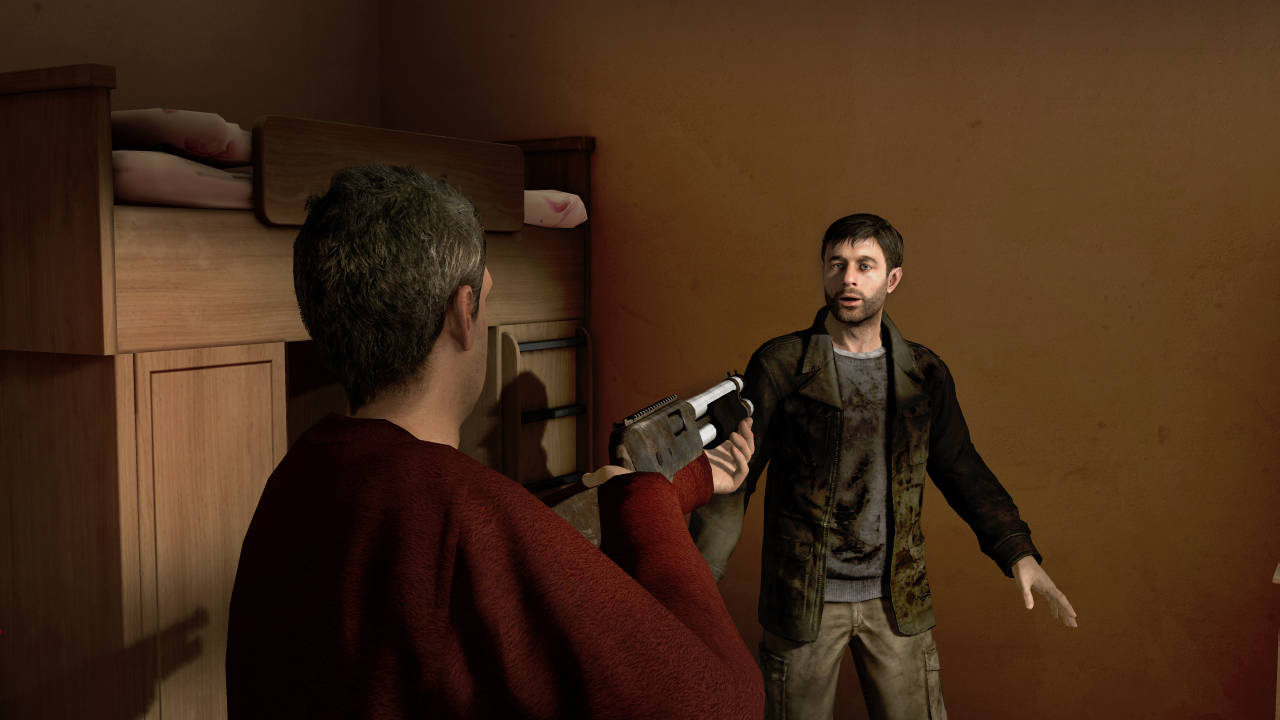
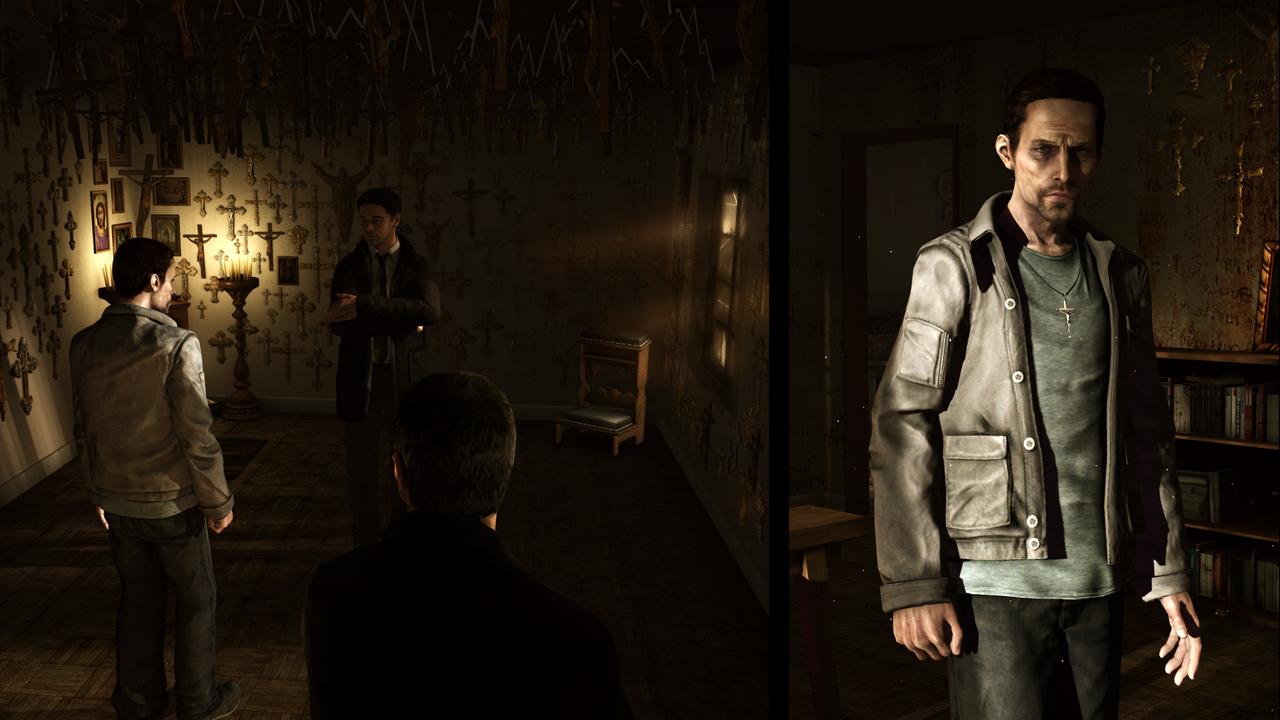
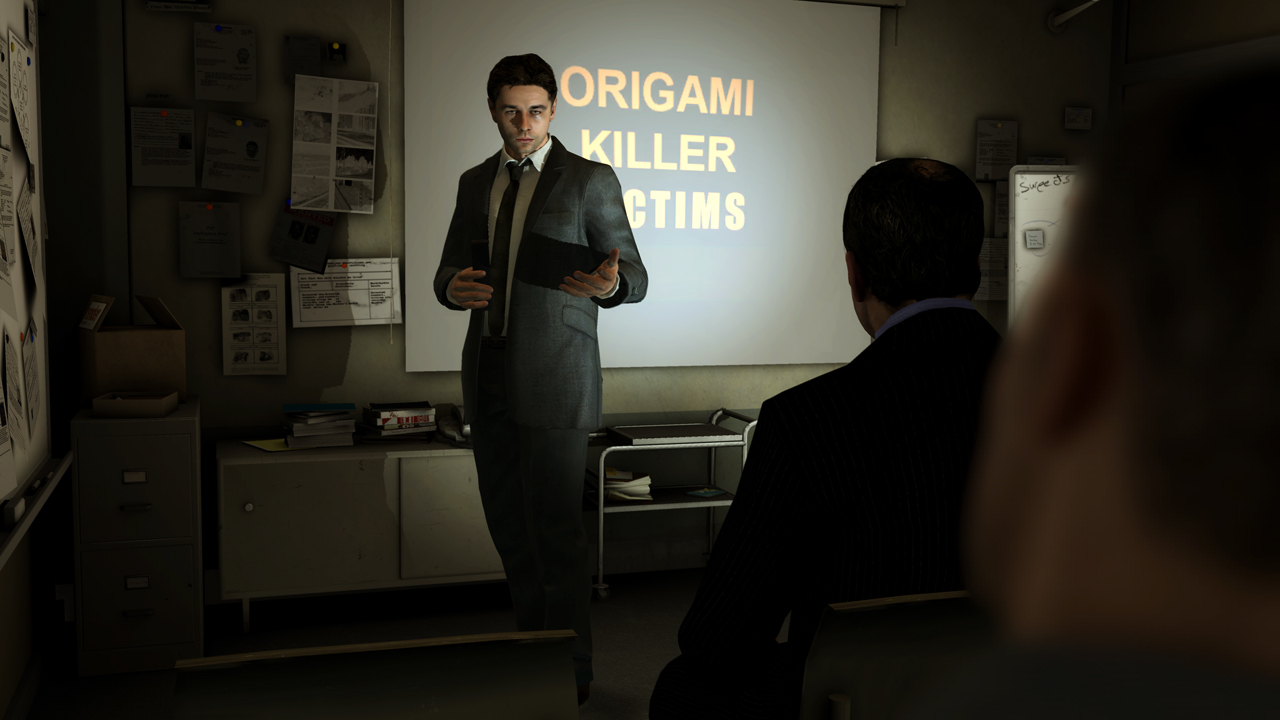
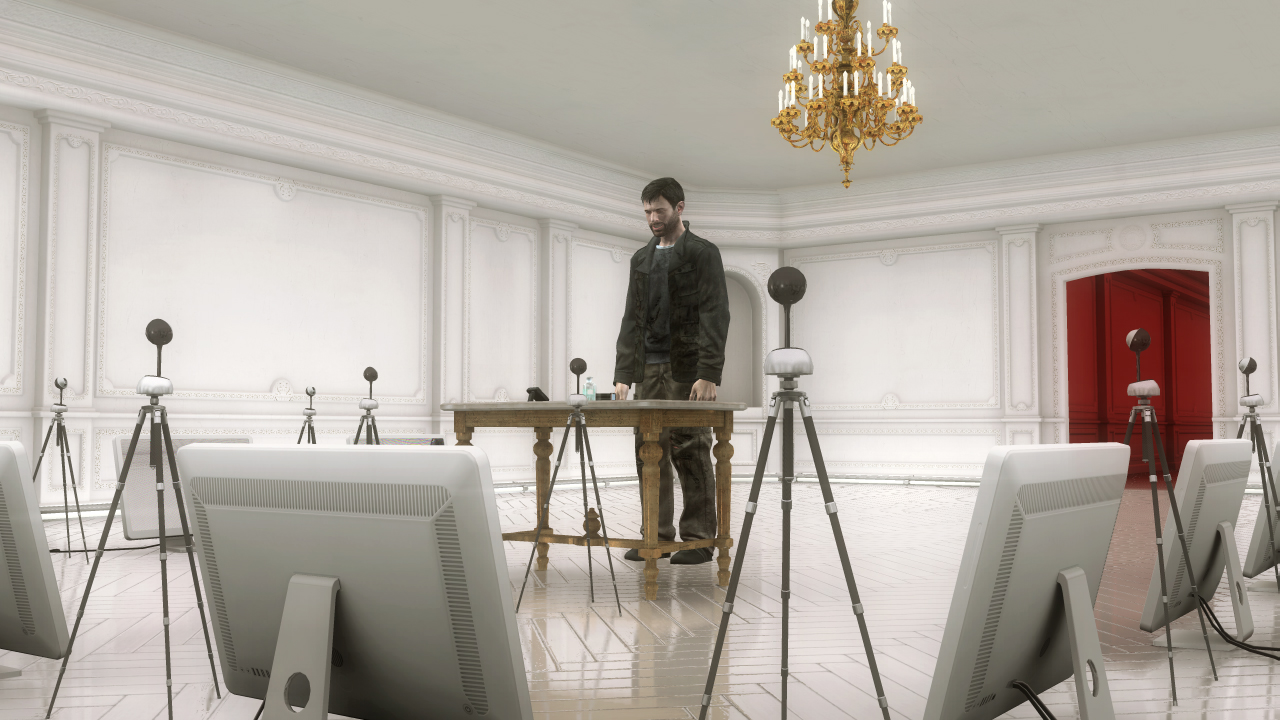
This is essentially an eight-hour movie, or, if you want to be cynical about it, an eight-hour cutscene that you frequently take part in. Heavy Rain's plot unfolds from the perspective of four loosely connected, archetypal characters: the despondent, down-on-his-luck single dad Ethan Mars, already reeling from the loss of one child and the separation from his wife; overweight, alcoholic private eye Scott Shelby; Madison Paige, the feisty newspaper reporter who will stop at nothing to get the story; and the out-of-town FBI profiler Norman Jayden, who predictably creates plenty of friction by grinding up against the internal politics of the local PD.
Great cinematic presentation underpins every scene. For reasons personal, professional, or both, they're all connected to the Origami Killer, the enigmatic psycho who's been murdering children in the area for the last two years. None of these four characters are particularly happy people, but you can't help getting attached to them as their paths cross and converge in pursuit of the murderer. The flow of the plot is broken up into brief scenes starring one or more of these primary characters along with all manner of supporting cast, and it's only an hour or two before you start to see enough connections between people and events, and the story picks up the momentum to propel you rapidly from one scene to the next. You could probably finish the game in two or three sittings once it gets its hooks in you and starts to drag you along.
Even if the broader story succeeds at drawing you in, I found the smaller, personal interactions to be uneven. Plenty of the individual scenes convey honest dramatic heft, but some of them feel awkward or forced, as if you're watching automatons going through their preset paces rather than breathing human beings acting through their own agency. When a child willfully breaks away from his father in a crowded shopping mall, you just know something bad is going to happen to him, even when your character gets close enough to grab and stop him. When two characters lean in for a kiss, you can't necessarily see a romantic spark forming from their rigid facial expressions and lack of romantic preamble. And while most of the voiceover is perfectly serviceable and even quite affecting at times, some of the pronunciations and phrasings don't sound entirely American, though its characters are.
This is getting into serious nitpicking, because Heavy Rain achieves a level of believable human drama most games can only aspire to. And it's probably too soon to expect every synthetic character to match the lifelike precision of the ones in Avatar. But the occasional awkwardness here made me ponder the idea that the uncanny valley encompasses more than simple skin shaders and eye movements. Maybe it extends around the things people say to each other and the reasons they do things, too. But at any rate, it's a sign of the story's overall strength that the game engages and sticks with you in spite of its rougher moments.
The game doesn't shy away from mature imagery and subject matter. Enough about watching the game; how do you play it, and how does playing it contribute to its story? Your interaction with the grimy world of Heavy Rain is limited to walking around in it (most of the time) and using combinations of buttons, analog stick movements, and Sixaxis gestures when prompted to perform context-relevant actions. These range from mundane (slowly pushing the stick downward to drag a razor across a character's face) to frantic (holding down five separate buttons in sequence to loosen a rope binding your wrists while the car you're tied up in is lowered into a junkyard crusher). There's a mostly satisfying, tactile feel to the way Heavy Rain makes you perform controller actions that look and feel like they map directly to what your character is doing onscreen. It's the sort of thing you need to experience firsthand to fully appreciate, but it generally works.
The first question that occurred to me early on in Heavy Rain was, Why am I doing this stuff? What's the point of making a character brush his teeth, urinate, or open the fridge to get a snack? It was around the time I piloted Ethan over to that fridge that I think I hit on the answer. Presented with the choice between drinking a beer or a carton of orange juice, I performed the analog stick action to pick up the beer. Then I was confronted with another action to make him actually drink the beer. I stared at it for a couple of seconds, then put the beer back down, and drank the OJ instead. Then I thought, maybe Ethan stopped to consider his distant, emotionally fragile young son sitting in the other room and thought better of drinking around him. Then I wondered: Did I just contribute to the development of this character in some tiny way through my own actions? I'd like to think I did. It was a strangely empowering moment, even if it was accidental.
Everybody's got a reason to catch this killer. There are a couple of other things Heavy Rain does better than any game I can remember. One of them is quick time events. You participate in every one of the game's frantic scenarios--be it a fistfight, a police chase, or escaping from a burning building--by quickly hitting buttons when prompted. But unlike, say, God of War, in which you fail and have to start over a canned animation when you miss a button, Heavy Rain's action scenes unfold seamlessly according to not only what you do but also what you don't do. Realistically, every character isn't going to escape from a car sinking into a river, or evade an axe-wielding maniac long enough to survive. When you miss a button press, your character exhibits a similarly inept action onscreen, so the course of the action sequence feels like it's being written as you play through it. The game conveys these failures fluidly and convincingly, and I was on the edge of my seat as I scrambled to try to make it through every one of them.
The other is that often ballyhooed but rarely successful back-of-box feature, moral choice. The game foists a great number of tough decisions on you that most people would be loathe to even ponder, let alone make. Is the life of your child worth more than the life of a stranger? Is it worth more than your own life? Would you spare your bitter enemy from a grisly death? Forgive a lover's betrayal? The game flings these sorts of either/or scenarios at you repeatedly, and each choice has dramatic, tangible effects on how the story plays out, even if the effects aren't immediately obvious at the time. And I'm glad they aren't. Since you consider most of these choices under serious duress, the game forces you to make them in a matter of seconds, and then live with whatever the consequences may be. That immediacy adds to the game's gritty realism and the sense than I was contributing to the narrative, rather than just watching it unfold. I got a sour satisfaction out of letting my choices ride as the story went along, even when their ultimate effects were unpalatable.
Some decisions you won't want to make. The only time I went back and immediately replayed scenes from Heavy Rain to make a different choice was when the game's controls prevented me from making the one I wanted the first time. Some of the Sixaxis movements in particular are a little finicky, causing me to miss taking the course of action I wanted even when it was clearly laid out before me. It's worth making sure your characters follow the actions you want them to, because the outcome of the story and even its middle parts can vary wildly depending on what you do and don't do. Major, playable characters can die early in the game, significantly altering the flow of events, and there's an enormous number of ways the story can ultimately resolve. Who's dead, who's alive, and what happens to the survivors is entirely variable and fully based on the way you played your version of the game. Those moments when I felt like my choices were impeded by the controls were rare but disappointing, since they slowed down a story that was chugging along at full steam under its own quick pacing. Even when my ass--or at least a major decision--wasn't on the line, the clumsy walking controls had me occasionally getting a character stuck in a corner or on a piece of furniture, which just looks silly.
Anyway, these technical issues are minor and only really glaring in contrast to the overall quality of Heavy Rain's plotting and presentation. Interactive drama, if you'd like to call it that, is certainly a young subset of game design, itself such an iterative process that most other games get the chance to build on the work of their numerous predecessors. Heavy Rain doesn't really have that benefit. It's coming out of mostly uncharted territory, and it's an impressive effort for that limitation. Interactive storytelling might not yet be able to evoke the same degree of raw human emotion as more traditional art forms, but this is a big step in the right direction.