
The key difference here is that, while Darksiders delivered the Dark Zelda game that certain fans have been demanding of Nintendo, Dante's Inferno simply feels like an off-brand version of the game it's aping. It's not quite the Transmorphers: Fall of Man to God of War's Transformers: Revenge of the Fallen in terms of the quality of the experience, but it's hard to shake the sense that you've already played a better, more inspired version of this game.
Aside from its naked cribbing from God of War--which extends from the tone of the rage-driven narrative to the rage-and-combo-driven combat system--the other significant characteristic of Dante's Inferno is that it is very, very loosely based on an important piece of classic literature. Regardless of whether you hold The Divine Comedy in high regard or have never even heard of it before, rest assured, there's enough distance between the source and the game that it's kind of a moot point. Other than some character names and the occasional chunk of prose, the primary influence Alighieri's epic poem seems on the game is its savagely poetic depiction of Hell.
Here you travel through the nine circles of Hell as a character named Dante--a character whose connection to the Dante from The Divine Comedy doesn't seem to go very far beyond the namesake and the vintage. He's a Crusader burdened with his own considerable sins who seems to be fighting as much for his own redemption as he is the soul of his wife Beatrice, which belongs to an unnervingly well-endowed Lucifer. There's a lot of righteously indignant yelling on Dante's behalf, who, like Kratos, is a character all but defined by his disrespect for the rigid hierarchy of mythological realms, a trait that's pretty well galvanized when Dante beats the Grim Reaper (I guess to death?) at the start of the game and makes Death's scythe his own.
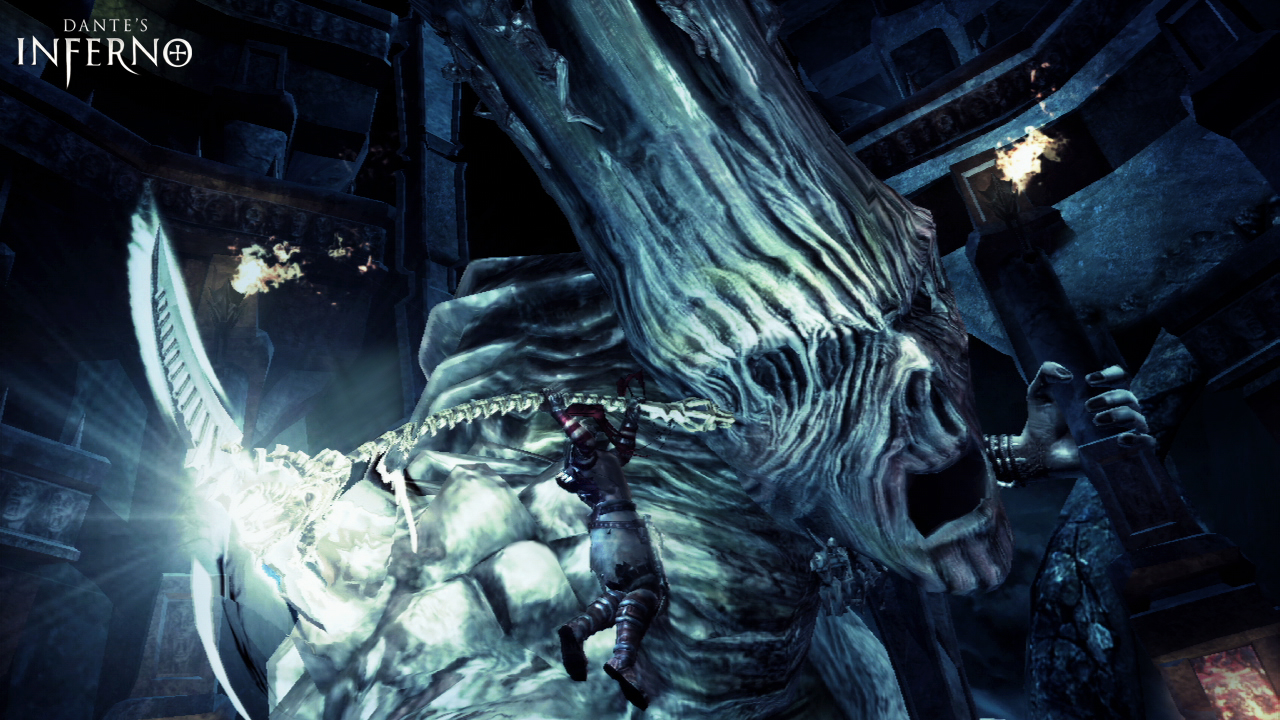
As for the gameplay make-up, well, I don't mean to harp on this point, but it feels remarkably similar to God of War. I suppose I wouldn't feel so compelled to mention this point repeatedly if the specificity of it wasn't so startling. You've got light and heavy attacks you can string into combos, as well as a limited selection of magic attacks that often serve to enhance Dante's range of attack with his scythe. There's the occasional box-pushing/lever-pulling puzzle, and there are outsized boss fights and vicious, quick-time finishing moves, but I felt like I spent a disproportionate amount of the game squaring off with low-level enemies by the half-dozen, over and over again. It's all very sound mechanically, with Dante having a pretty substantial suite of attacks, and different enemies, as well as different combinations of enemies, requiring different tactics, but it can be wearying after a while.
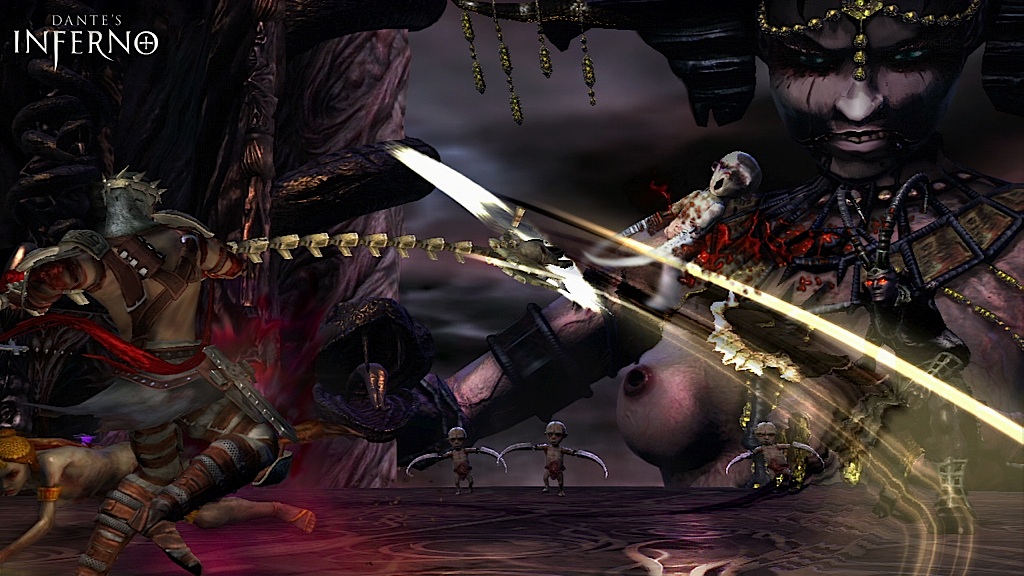
Imitation is an open invitation for comparison, and while it's mostly competent from a technical perspective, it's all very rote. Since God of War is a PlayStation 3 exclusive, I suppose there's some merit to the way Dante's Inferno exposes this very specific style of character-based action game on the Xbox 360, but it's clearly an imitation, and I never got the sense that the game aspired to much beyond simple reproduction.