
by mento
Same deal as the other "GOTY (Adjusted)" lists, found here (2013), here (2014), here (2015), here (2017) and here (2018). The idea is to build GOTY lists that are constantly in flux, ever adapting themselves to a new year's worth of catch-up gaming. Like the Borg, but for video game lists. With enough time I should be able to play through every 2016 game that piqued my interest and construct a list that ideally represents what that year meant to me in terms of games, but that wasn't going to happen on the year in question: too many full-price new releases, too little time.
With 2016 in particular, the year was absolutely packed with games I wanted to try out from every tier of game development, and even after making a lot of backlog headway in 2017 I feel like I've still only scratched the surface. In some ways it's a little worrisome: has the game industry grown so large that we're letting too many high-quality games from exceptional studios slip through the cracks? We can see that in a microcosm with the ongoing bloat troubles of Steam and how it frequently fails the smaller talented developers that go unnoticed, but even if we were to excise all the cheap asset flips and meme trashfires in our midst there's plenty that went ignored by the mainstream that year simply because they had so much to cover. Recognizing games years after the fact is why I make these lists, of course, but I can't help but feel a pang of regret that I left so many behind on the year in question - when my impressions and reviews may have mattered, at least to an extent that they matter at all - just because my time and cash is limited and I perhaps have a habit of luxuriating too long in games I'm enjoying (though I can't really apologise for that last one too much, given that it's usually the developers' intent). All the same, I suspect both this and 2017's Adjusted lists will remain mutable for half a decade to come, at least.
For reference's sake, my original 2016 GOTY list is here.
(Currently owned 2016 games to explore in 2018 and beyond: Brigador, Darkest Dungeon, Earthlock, Glittermitten Grove, Thumper, Unravel, Watch Dogs 2, The Witness, XCOM 2.)
(Currently unowned 2016 games I hope to check out in the future: The Banner Saga 2, BOXBOXBOY!, Exist Archive, I Am Setsuna, Mario & Luigi: Paper Jam, Paper Mario: Color Splash, The Solus Project, Trails of Cold Steel 2.)
(Extra note: This list is gigantic, so I'm only including appraisals for the first twenty. I've written about every game on here somewhere else on the site, though.)
| GOTYs | (Adjusted) | |||
|---|---|---|---|---|
| 2009 | 2010 | 2011 | 2012 | 2013 |
| 2014 | 2015 | 2016 | 2017 | 2018 |
| 2019 | 2020 | 2021 | 2022 | 2023 |
[Up to date as of January 2021.]
Showing 1-10 of 68 items

2016 rank: 1 2017 rank: 1 2018 rank: 1 2019 rank: 1 2020 rank: 1 ConcernedApe's delightful little farming sim hasn't left my #1 spot yet, though it might only be a matter of time. While I can certainly see the argument that it doesn't cover any fertile soil that Rune Factory and its ilk hasn't already tilled ad nauseum, the way its multiple moving parts offered a huge array of activities to do, all of which fed back into two central goals - the success of the player's farm, and the happiness of the townspeople - offers a dizzying level of gameplay variation and exploration, with only a strict daily time limit to mercifully keep it all in check. The game would almost be intimidating if it wasn't so good-natured. Heh, "good nature".
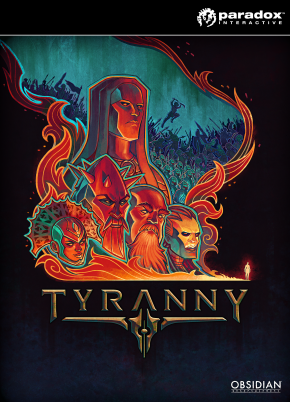
2016 rank: N/A 2017 rank: N/A 2018 rank: N/A 2019 rank: N/A 2020 rank: 2 Came to Tyranny fairly late, but like most recent Obsidian throwbacks I was blown away from its quality and how in-depth it could be, particularly its granular magic system. Being the agent of an indomitable villain and choosing your words very carefully when ousting the last of the holdouts was an intriguing dark subversion of the usual heroic formula, surrounding yourself with other agents of varying levels of psychopathy and immorality out of convenience and being cautious who to trust with your misgivings. Obsidian's also getting really good at letting you establish bases and working to expand them when you aren't following the story or just pottering around looking for shit to loot.

2016 rank: 2 2017 rank: 2 2018 rank: 2 2019 rank: 2 2020 rank: 3 Doom's less good-natured, but I certainly don't hold that against it. Reboots of older franchises sometimes falter because they either try to be too much like the original, which occupied its own place in history becoming slightly antiquated in the process, or it loses the original's spark in an attempt to gussy up the mechanics and style leaving little of what we loved about the original behind. Doom's a rare case that nails this balancing act, modernizing the old FPS franchise in so many vitally important ways while building its gameplay in a manner ensuring that - to get the most out of it - you have to run, shoot and strafe around at full speed like a mad goon, just as Carmack and Romero always intended.
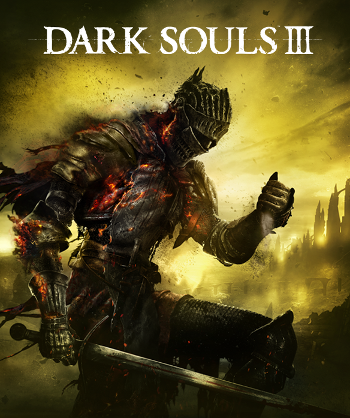
2016 rank: 3 2017 rank: 3 2018 rank: 3 2019 rank: 3 2020 rank: 4 Dark Souls 3 is a strong third chapter to what may or may not be a trilogy, course-correcting some of the disappointments with DS2 while cherry-picking its many worthwhile advancements to the Souls blueprint to ensure a "best of both worlds" amalgam of the first two games and their moody goth cousin, Bloodborne. The Souls world is cyclical, as is now understood, with the same or similar kingdoms and fashions rising and falling over untold millennia. This is a sneaky way of allowing the game to pepper old favorites around, whether that's allusions to popular NPCs or similar weapon and armor types coming back around. It can feel a bit fan-servicey as a result, and one that lacks a strong personality to call its own, but it's definitely the most mechanically polished game in FromSoftware's unrelenting RPG series.

2016 rank: N/A 2017 rank: 4 2018 rank: 4 2019 rank: 4 2020 rank: 5 I considered, briefly, putting Salt and Sanctuary above Dark Souls 3 to indicate that it was the more important Souls-like from that year, but I eventually chickened out. What Salt and Sanctuary does is summon forth what was always a latent spacewhipper vibe to the Souls series by rendering the game in 2D. It's still as tough as ever, but now the player will frequently acquire traversal abilities with which they can backtrack for materials and items and optional areas that will be of great help for the challenging regions and bosses ahead. Of special note is the game's skill tree system, which helps to visualize ideal builds by putting weapon/magic skills and complimentary stat boosts for those skills on the same branch, as well as its equally clever sanctuary customization.

2016 rank: N/A 2017 rank: N/A 2018 rank: N/A 2019 rank: N/A 2020 rank: 6 Took a chance on this SMT/Fire Emblem crossover just weeks before its enhanced edition came out when everyone would be talking about it again. Perhaps one of the best times I've had with a SMT game outside of a Persona, with the showbiz personality and "sessions" system adding a lot to what was already a sterling foundation. I'm especially glad I didn't have to fuse and train a hundred different monsters; I could just focus on the main characters and figure out the best synergies to use. Even some of the musical numbers were catchy.

2016 rank: N/A 2017 rank: N/A 2018 rank: N/A 2019 rank: N/A 2020 rank: 7 I can be kind of a snob when it comes to games very clearly made in some edition of RPG Maker, chasing the highs of the 16-bit era without really innovating or adapting to the modern times. Ara Fell shut down those prejudices and then some, creating one of the most compelling and streamlined 16-bit JRPG ersatzes outside of a Zeboyd joint. Not only was every aspect of combat and development carefully considered, but the world was full of details and incidental wonders to discover. Definitely did not anticipate it becoming one of my favorites of 2016 after adding it to the backlog way back when.

2016 rank: 4 2017 rank: 5 2018 rank: 5 2019 rank: 5 2020 rank: 8 I wasn't quite prepared to put the time and focus into mastering each of Hitman's six locations, opting only for Paris and the tutorial maps in the end, but even with that small taster I think I got a substantial amount of bang (or stab, or blunt force trauma from a flying fire extinguisher) for my buck. Hitman's incredibly elaborate living worlds, which offer dozens of methods to assassinate a map's chief targets and any number of additional would-be cadavers, are like intricate dollhouses and dioramas: works of art on a purely mechanical level. Add to this some surprisingly intuitive controls given the depth of what you're allowed to do, and a great level of style and gallows humor, and it's definitely one of the slickest games of 2016. I'm grateful recent business troubles haven't deterred the developers from assembling future assassination toyboxes.

2016 rank: N/A 2017 rank: N/A 2018 rank: N/A 2019 rank: N/A 2020 rank: 9 A confident and exhaustive end to the Phoenix Wright saga (at least for now), throwing out every idea and feature the series has introduced during its long tenure. Moving most of the action to the vaguely Tibetan nation of Ku'urain, from which Maya Fey and her family obtained their spirit channeling powers, meant having divination taken from the final moments of the victim as a new unreliable wrinkle to deconstruct. I hope this series doesn't stay dormant for too much longer, since it's been nothing but high points.

2016 rank: N/A 2017 rank: 6 2018 rank: 6 2019 rank: 6 2020 rank: 10 While the fourth Uncharted game is a bit on the long side, Naughty Dog does some smart assimilation work here in enhancing the emotional core of its story by spending more time on interpersonal relationships of its characters, a tactic they developed in The Last of Us. Equally, it adopts that game's stealth mechanics to create a number of combat situations where the player can either ignite an all-out fracas or simply avoid conflict with enough patience and guile. Elsewise, the series is the same as it's always been: a mixture of suspenseful and perilous climbing traversal, chaotic gunfights that rely a lot on situational awareness, and high-octane water-cooler cinematic moments where you have a matter of seconds to complete what is esssentially an interactive cutscene. As I often say about formulaic video game series: while it can be a detriment to ongoing ingenuity, sometimes an audience wants what it wants and there's no harm in giving it to them.

