


- Name
- PC
- Abbreviation
- PC
- Release Date
- Manufacturer
- Launch price
- $
- Install base
- Online service
- Yes
- Aliases
- Personal Computer,Microsoft Windows,DOS,IBM,IBM Jr.,PC Booter
PC
The PC (Personal Computer) is a highly configurable and upgradable gaming platform that, among home systems, sports the widest variety of control methods, largest library of games, and cutting edge graphics and sound capabilities.
Platform Images Related Pages
Overview
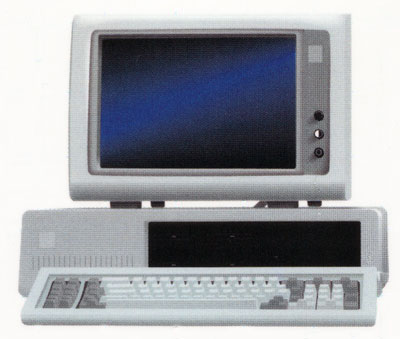 In terms of home video games, the PC is the oldest gaming platform still in use today, having an established library of tens of thousands of games. While there were various different personal computer platforms in the past (from manufacturers like NEC, Apple, Hitachi, Fujitsu (Company), Commodore (Company), Sharp, and Microsoft), the modern PC is largely descended from the IBM (Company) PC, which originally released in 1981 for $1561 (over $4700 in 2021 dollars).
History
The first electronic computers were created between the 1930s and the 1940s. The first binary computer was the Z1 Computer, created by the German inventor Konrad Zuse. Other electronic computers would be created throughout the time period, including the ENIAC and the Harvard Mark I. Many of the first computers were used during World War II (Concept) by both factions and would be later used for scientific research. Early computers were large enough to fill a room, making them unusable for practical, personal use. Later it would be used by banks and large businesses for economic calculations. Companies like IBM (Company) have supplied many businesses with computers years before the personal computer.
1970s
It wasn't until the 1970s where computers usable for the average person were being made. Several revolutionary inventions paved the way to the modern personal computer, most importantly the microprocessor, a single-chip CPU. The concept originated from Sharp engineer Tadashi Sasaki, who in 1968 proposed the idea to Japanese calculator manufacturer Busicom and American manufacturer Intel, which both soon collaborated to produce the first microprocessor. By 1970, Intel engineer Federico Faggin and Busicom engineer Masatoshi Shima had completed their design of the world's first microprocessor, the 4-bit Intel 4004. The microprocessor helped in creating a more powerful central processing unit than the ones used in computers at the time and shrunk it so computers could be smaller. The microprocessor was the major invention that gave birth to the microcomputer, or the personal computer as it is known today. The Kenbak-1, created in 1970 by John V. Blakenbaker of the Kenbak Corporation, was an early attempt at a personal computer, despite the lack of a microprocessor. Starting in 1971, it was sold for $750 and only 40 machines were ever built and sold. In 1973, Kenbak folded and stopped production. It was based on TTL (transistor-transistor-logic) discrete circuitry (much like the Magnavox Odyssey and Pong (Game)) rather than microprocessor technology (which has been used in nearly all video games since Gun Fight (Franchise)). As such, it wasn't until later that the first "true" personal computers began appearing. The first microprocessor-based personal computer, or microcomputer, was the SMP80/08, developed by Sord (now Toshiba Personal Computer System Corporation) in 1972, utilizing the 8-bit Intel 8008, which was followed in 1974 by the Sord SMP80/x series, utilizing the Intel 8080, an 8-bit microprocessor designed by Federico Faggin and Masatoshi Shima. It was then followed in 1975 by the Altair 8800, which also used the Intel 8080 as its CPU. Since the computer's main language was binary code and only had an output of flashing lights, the computer was unusable by the common person. A similar microcomputer was released by NECin 1976, the TK-80, which used the Intel 8080A. In 1976, two Californiacollege students, Steve Jobs (Person) and Steve Wozniak (Person), created the first personal computers with a monitor, the Apple I. The monitor display allowed users to access files and run tasks on the computer using a terminal and allowed programmers to write code in low and high-level languages, such as BASIC. This sparked a new revolution in the computer industry, bringing the creation of Apple Computers and starting the personal computer market. Apple would release the Apple II (Platform) in 1977, becoming the most popular personal computer out in the market at the time. Other desktop computers with CRT display monitors soon followed in the late 1970s, including the M200 by Sord (now Toshiba Personal Computer System Corporation) and Commodore PET in 1977, Hitachi's Basic Master in 1978, and Acorn's System 1 in 1979. In 1977, Panafacom (a conglomerate of Fujitsu (Company), Fuji Electric and Matsushita) released the Lkit-16, the first 16-bit microcomputer. Its CPU was the Panafacom MN1610, the first 16-bit microprocessor, introduced in 1975.
1980s
After the release of the Apple II (Platform), many competitors formed in the early 1980s, including the IBM (Company) Personal Computer, which would later dominate the market in the 1990s. The IBM PC was also one of the first 16-bit home computers, along with Mitsubishi's MULTI16 in 1981. Other leading manufacturers in the 1980s included Commodore (Company) andAtari (Company) in Western markets, and NEC, Sharp and Fujitsu (Company) in Eastern markets. Due to the gaming crash of 1983, many computer manufacturers focused on the business aspects of these machines, leaving gaming as an afterthought.
However, there were many computers that were well-known for their gaming libraries. The leading 8-bit gaming computer platforms in the 1980s included the Apple II (Platform) in North America, the Commodore 64 (Platform) and Atari 400/800 in the West, the ZX Spectrum (Platform) and BBC Micro (Platform) in the UK, the MSXin Japanand Europe (Location), the high-resolution NEC PC-88 in Japan (Location), and the high-colour FM-7 and Sharp X1 (Platform) in Japan. The leading 16/32-bit gaming computers in the late 1980s to early 1990s were the NEC PC-98 in Japan, the Amiga (Platform) and Atari ST (Platform) in the West, the MS-DOS Compatible computers worldwide, and the more powerful (near arcade quality) Sharp X68000 (Platform) and FM Towns (Platform) computers in Japan. The best-selling computer models of the 20th century were the Commodore 64 (Platform) (17 million units sold worldwide) and NEC PC-98 (over 18 million units sold in Japan).
In the mid-1980s, the graphical user interface was implemented on new PCs. Visual interfaces that were controlled using a mouse allowed the common person who were not accustomed to using a terminal to navigate and use various visual applications on a computer. The GUI was first created by Xerox in the 1960s, but the company was not interested in entering the computer market. Apple was given the rights to use GUI for the Macintosh, however, Microsoft was able to trick Apple into lending them prototype Macintosh computers to create programs for the new machines. They used the coding of the operating system to create Windows, an extension to DOS. Thanks to the cheap $100 price point and its compatibility with all DOS computers, Windows became a success, becoming the new standard of computers by the mid-1990s.
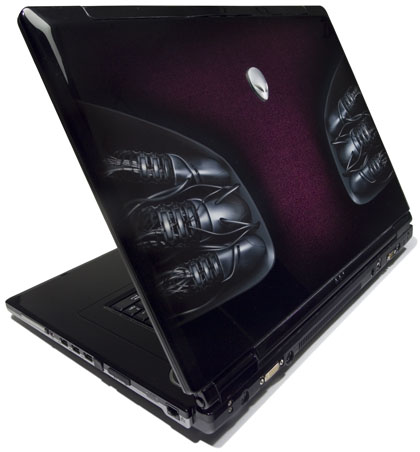 The 1980s also saw the emergence of portable laptop computers. The world's first laptop computer was the Epson HX-20 in 1981. The first commercially successful laptop was Kyocera's Kyotronic 85, originally released in 1983 and re-branded by Tandy as the TRS-80 Model 100, selling 6 million units worldwide. Other competitors soon followed. Sharp's PC-5000 introduced the modern laptop, with a clamshell design and touchpad interface in 1983. It was followed by Commodore (Company)'s SX 64 in 1984. The first mass-market laptop was Toshiba's 16-bit T-1100 in 1985, which they followed with the T-3100 (the first with a built-in hard drive) in 1986. Other competitors soon followed, including NEC's PC-98LT and IBM (Company)'s PC Convertible in 1986 and Apple's Macintosh Portable in 1989. The first notebook computer was released in 1989, NEC's UltraLite, which they followed with the first colour TFT LCD laptop in 1990, the 32-bit PC-9801 NC. Apple soon followed with the PowerBook series from 1991 onwards, further popularizing laptop computers in the 1990s.
In 1982, Sony introduced the 3.5" floppy disk format, with its Sony SMC-70 computer. 3.5" floppy disks would become the standard storage medium for personal computers up until the 1990s.
In July 1986, Sega (Company) announced the world's first home computer equipped with AI (artificial intelligence), intended for household and consumer markets, the Sega AI Computer.
The 1980s also saw the emergence of portable laptop computers. The world's first laptop computer was the Epson HX-20 in 1981. The first commercially successful laptop was Kyocera's Kyotronic 85, originally released in 1983 and re-branded by Tandy as the TRS-80 Model 100, selling 6 million units worldwide. Other competitors soon followed. Sharp's PC-5000 introduced the modern laptop, with a clamshell design and touchpad interface in 1983. It was followed by Commodore (Company)'s SX 64 in 1984. The first mass-market laptop was Toshiba's 16-bit T-1100 in 1985, which they followed with the T-3100 (the first with a built-in hard drive) in 1986. Other competitors soon followed, including NEC's PC-98LT and IBM (Company)'s PC Convertible in 1986 and Apple's Macintosh Portable in 1989. The first notebook computer was released in 1989, NEC's UltraLite, which they followed with the first colour TFT LCD laptop in 1990, the 32-bit PC-9801 NC. Apple soon followed with the PowerBook series from 1991 onwards, further popularizing laptop computers in the 1990s.
In 1982, Sony introduced the 3.5" floppy disk format, with its Sony SMC-70 computer. 3.5" floppy disks would become the standard storage medium for personal computers up until the 1990s.
In July 1986, Sega (Company) announced the world's first home computer equipped with AI (artificial intelligence), intended for household and consumer markets, the Sega AI Computer.
1990s
In the 1990s, the Internet became easily accessible to the public after being used by government and educational networks decades prior. Internet service providers such as America Online and Prodigy gave PC users cheap and easy access to the newly-formed network. Web browsers such as Internet Explorer and Netscape Navigator allowed users to access various websites for nearly every task and interest, such as business, research, and general shopping. Search engines such as Yahoo and Google allowed users to navigate the internet with ease using only a few keywords instead of searching through "sitebooks" for a particular site. Although online games have existed since the 1970s, they've gained in popularity by the mid 90's as more and more people gained access to the internet. Another important revolution for PC gaming was the introduction of 3D graphics accelerator cards in the late 1990s, which allowed the PC to take the lead in cutting-edge 3D graphics technology by the 21st century. The first 3D graphics card for a home computer was NEC's PC-FXGA, released for their PC-98 platform in 1995, which could produce 3D graphics surpassing the PlayStationconsole and rivaling the Nintendo 64 (Platform) in terms of polygon rendering performance. The first 3D graphics cards for IBM-compatible PC's soon followed in early 1996: Creative Labs' 3D Blaster, NVIDIA's NV1, and particularly NEC's PowerVR. While the 3D Blaster and NV1 (with the first game to support them being PlayStation port Toshinden) were unable to rival the PlayStation, the PowerVR surpassed the PlayStation and even approached arcade quality graphics, with a near arcade quality PowerVR demo of Namco (Company)'s Rave Racer (Game) (though this PC port was later cancelled). Similarly, the NV1 card received PC ports of Sega (Company) titles Virtua Fighter Remix (Game) and Virtua Cop (Game) (which surpassed the Saturn (Platform) versions, but couldn't rival the arcade originals). In late 1996, 3dfx launched the Voodoo line, which rivalled the PowerVR in quality and would soon become the most popular PC graphics cards of the late 1990s. Fujitsu (Company) soon introduced the FXG-1 "Pinolite" geometry processor, the first GPU with T&L (Transform & Lighting) hardware capabilities, in 1997, paving the way for NVIDIA's GeForce and ATI's Radeon, both of which would later dominate the PC graphics card market in the 21st century.
21st century
Today, more than a billion people around the world use the PC platform, with the majority of them being connected to the internet. A majority of PC gamers today are located in Asia (Location), with Chinaalone accounting for nearly a third of the worldwide PC gaming market, the growth of which has largely been fueled by the rise of online gaming.
Operating Systems
Before GUIs, most computers used a terminal where users would write out the specific directory where they want to go and write out specific commands that they want the computer to do. The most popular operating terminals used in computers are UNIX, C/PM, and MS-DOS. GUIs in computers were first created by Xerox PARC in the late 60's, however, Xerox did not continue their research into the technology because they were not interested in entering the computer business. In the mid 80's, Apple would license the technology from Xerox and add GUIs to their Lisa and Macintosh computers. In a twist of fate, Microsoft would gain access to Apple's GUI interface by promising MS software support on Macintosh, and using prototype machines, they were able to build their own interface, Microsoft Windows, on top of MS-DOS, causing them to become the dominant force in the OS market to this date. Here are the currently supported operating systems for PCs:
Microsoft Windows
 Windows was originally an extension to Microsoft's own terminal operating system MS-DOS back in 1985. With Windows, people could easily browse through their files and do other simple functions much more quickly. Windows has grown in popularity and became the most popular OS in the world, having the support of PC makers like Dell, Gateway, and HP. Windows has gone through many iterations, starting with the MS-DOS days having Windows versions 1.0, 2.0, 3.0, 3.1, and 3.11. Then came Windows NT 3.0-4.0 and Windows 2000 (oriented toward business) and the Windows 9x operating systems including Windows 95, 98, and ME (oriented toward home users). By the 2000's, Microsoft stopped building Windows versions based on DOS in favor of NET, starting with Windows XP.
Prior to the Windows 9x line of operating systems, gaming was not popular on IBM PCs due to the company's main focus on making machines for businesses. Most IBM-compatible PCs lacked numerous features that would be beneficial to gaming, such as a lack of full color support and lack of support for smooth side-scrolling, leaving most computer games to be developed on competing hardware such as the Commodore 64 (Platform), Commodore Amiga, and the Atari ST (Platform). By the mid 90's, PC hardware was getting good enough where most games were able to run without issues, and creative developers, such as id Software (Company) and Epic Games (Company), would build engines that worked around DOS's known issues. With the release of titles like Wolfenstein 3D (Game) and DOOM, most developers realized that they can develop for DOS without many issues anymore, leaving competing machines to be abandoned in favor of it.
Microsoft took notice of the rising popularity of PC gaming and wanted to capitalize in this new market. With the release of Windows 9x operating systems, Microsoft would create many tools that would aid developers in making games for Windows, including the popular graphics framework DirectX (Concept). Microsoft even started their own game studios in order to create quality titles for Windows, which included Microsoft Flight Simulator (Franchise) and Age of Empires (Game). Microsoft continues to add new features that support PC gaming, with their continued development of DirectX and introducing Xbox Live to PC with Game For Windows Live in 2007. However, with the rise of digital storefronts like Steam (Concept), Microsoft's influence on the PC gaming market has been minimal in recent years.
Today, Microsoft Windows is the most popular PC operating system in the world, with billions of computers having the OS installed. Nearly all PC games released today work on Windows operating systems, where most of them are using DirectX as their graphics framework.
Windows was originally an extension to Microsoft's own terminal operating system MS-DOS back in 1985. With Windows, people could easily browse through their files and do other simple functions much more quickly. Windows has grown in popularity and became the most popular OS in the world, having the support of PC makers like Dell, Gateway, and HP. Windows has gone through many iterations, starting with the MS-DOS days having Windows versions 1.0, 2.0, 3.0, 3.1, and 3.11. Then came Windows NT 3.0-4.0 and Windows 2000 (oriented toward business) and the Windows 9x operating systems including Windows 95, 98, and ME (oriented toward home users). By the 2000's, Microsoft stopped building Windows versions based on DOS in favor of NET, starting with Windows XP.
Prior to the Windows 9x line of operating systems, gaming was not popular on IBM PCs due to the company's main focus on making machines for businesses. Most IBM-compatible PCs lacked numerous features that would be beneficial to gaming, such as a lack of full color support and lack of support for smooth side-scrolling, leaving most computer games to be developed on competing hardware such as the Commodore 64 (Platform), Commodore Amiga, and the Atari ST (Platform). By the mid 90's, PC hardware was getting good enough where most games were able to run without issues, and creative developers, such as id Software (Company) and Epic Games (Company), would build engines that worked around DOS's known issues. With the release of titles like Wolfenstein 3D (Game) and DOOM, most developers realized that they can develop for DOS without many issues anymore, leaving competing machines to be abandoned in favor of it.
Microsoft took notice of the rising popularity of PC gaming and wanted to capitalize in this new market. With the release of Windows 9x operating systems, Microsoft would create many tools that would aid developers in making games for Windows, including the popular graphics framework DirectX (Concept). Microsoft even started their own game studios in order to create quality titles for Windows, which included Microsoft Flight Simulator (Franchise) and Age of Empires (Game). Microsoft continues to add new features that support PC gaming, with their continued development of DirectX and introducing Xbox Live to PC with Game For Windows Live in 2007. However, with the rise of digital storefronts like Steam (Concept), Microsoft's influence on the PC gaming market has been minimal in recent years.
Today, Microsoft Windows is the most popular PC operating system in the world, with billions of computers having the OS installed. Nearly all PC games released today work on Windows operating systems, where most of them are using DirectX as their graphics framework.
Mac OS
 In 1976, Steve Wozniak (Person) and Steve Jobs (Person) made the Apple 1, Apple's first computer. They later gained popularity with the Apple II (Platform), but competing machines quickly took Apple's market share. Regardless, Apple continued to innovate in the PC space. They released the first commercial computers with a graphical user interface (GUI) with the Lisa and Macintosh in 1984. Although the Mac line of computers continued to have diehard fans, its higher price point made it difficult for it to compete with Windows machines, remaining relatively niche in the computer space. However, by basing their new OS on UNIX with Mac OSX, and using x86 architecture for their Mac computers starting in 2006, Mac computers have gained popularity in recent years, giving the OS a sizable audience for gaming.
Because of the lack of marketshare that Macs had over the years, many game developers did not bother to port their games over to Mac OS. There were some developers, like Bungie (Company) and Aspyr, that were known for making games exclusively for Mac computers, but most ignored the platform in favorite of the more popular Windows platform. In recent years, as the Mac platform rose in popularity, more developers began supporting the OS. In May 2010, Valve released Steam for Mac OS X, and ported all of their Source games to the Mac platform by the end of 2010. Other storefronts, like Origin and Humble Bundle, have also come to sell Mac games in recent years, making Mac gaming more popular than it has ever been in the past, but there are still many PC games that release exclusively for Windows. Fortunately, thanks to the x86 architecture, Mac users can install virtual machine software like Boot Camp and Parallels to install a Windows instance on their computer and play PC games.
During the WDCC in 2014, Apple has announced their own graphics API, Metal. It allows game developers to use more hardware resources from devices using Mac OS X or iOS to gain better performance. This allows devices such as Macbooks and the iPad (Platform) to run games with comparable performance to Windows PCs and consoles.
In 1976, Steve Wozniak (Person) and Steve Jobs (Person) made the Apple 1, Apple's first computer. They later gained popularity with the Apple II (Platform), but competing machines quickly took Apple's market share. Regardless, Apple continued to innovate in the PC space. They released the first commercial computers with a graphical user interface (GUI) with the Lisa and Macintosh in 1984. Although the Mac line of computers continued to have diehard fans, its higher price point made it difficult for it to compete with Windows machines, remaining relatively niche in the computer space. However, by basing their new OS on UNIX with Mac OSX, and using x86 architecture for their Mac computers starting in 2006, Mac computers have gained popularity in recent years, giving the OS a sizable audience for gaming.
Because of the lack of marketshare that Macs had over the years, many game developers did not bother to port their games over to Mac OS. There were some developers, like Bungie (Company) and Aspyr, that were known for making games exclusively for Mac computers, but most ignored the platform in favorite of the more popular Windows platform. In recent years, as the Mac platform rose in popularity, more developers began supporting the OS. In May 2010, Valve released Steam for Mac OS X, and ported all of their Source games to the Mac platform by the end of 2010. Other storefronts, like Origin and Humble Bundle, have also come to sell Mac games in recent years, making Mac gaming more popular than it has ever been in the past, but there are still many PC games that release exclusively for Windows. Fortunately, thanks to the x86 architecture, Mac users can install virtual machine software like Boot Camp and Parallels to install a Windows instance on their computer and play PC games.
During the WDCC in 2014, Apple has announced their own graphics API, Metal. It allows game developers to use more hardware resources from devices using Mac OS X or iOS to gain better performance. This allows devices such as Macbooks and the iPad (Platform) to run games with comparable performance to Windows PCs and consoles.
Linux
Linux (Platform) is a Unix-like OS licenced under the GPL. It was created in 1991 by Linus Torvalds and is released as open-source, meaning anyone can install/edit the operating system for free. Unlike Windows and Mac OS, which require specific hardware for the OS to work properly, Linux is a software-based OS, which can be installed on a variety of devices, including devices which are not PC-based. Linux comes in various distributions, or "distros," such as Ubuntu or Gentoo. Being an open source OS, the Linux community actively develops open source software, including games, for the Linux platform. However, there is no requirement that Linux software be open-source. You can get many Windows applications to work on Linux using specific Windows coding software for Linux (such as WINE) but it is generally not a preferable way of playing Windows games compared to running them in Windows on the same machine. Furthermore, WINE is not compatible with PowerPCs including PS3s with Linux installed. A popular option for overcoming Windows compatibility issues is to multi-boot the Linux distro with a version of Windows so that both operating systems are installed on the same PC at once and the user can switch between them. In recent years, it's become more popular to run Linux in a virtual machine inside their Windows or Mac OS. There has been increased development for Linux games in recent years, with many indie games, such as Minecraft (Game), releasing a Linux version. The Humble Indie Bundle typically includes Linux versions of games in addition to Mac and PC. In 2012, Valve released Steam for Linux, porting all of their games to the OS along with various other games. In 2015, Valve has released SteamOS. It is a derivative of Ubuntu that has an interface similar to Big Picture Mode that can be navigated using a controller. It allows users to stream games from another PC so users can run games that are currently not compatible with Linux. However, support for Linux gaming has been growing over the years, with many games, including indie and AAA titles, having Linux versions being released at launch. Despite the lack of support from developers, Linux users have been finding ways of getting Windows games to work on the OS. Various games have been edited to get them working on Linux and have been released through platforms such as Lutris. In August 2018, Valve released Steam Proton, which is an extension of WINE that converts code meant for the DirectX framework into the Vulkan framework. With the release of Proton, thousands of Windows titles are now running on Linux with little issue, with many running without any configuration needed from the user. Many games can be made to work on Windows now with some tinkering of Proton and WINE, which many users have shared via sites like [https:/www.protondb.com ProtonDB] on how to get various games working on Linux. The most popular Linux-based OS on the market right now is Android (Platform). It is a growing, open source mobile operating system with a growing gaming library. However, it is important to note that most Linux-PC applications are incompatible with Android and vice-verse (without a significant amount of effort).
Components of a PC
There are many replaceable parts in a PC, which is a main aspect separating them from consoles. PCs may be upgraded and maintained as time passes to keep up with the latest games, and a user's configuration will affect which games they can play. The main parts of a computer are as follows:
- CPU (Central Processing Unit) - The processing unit that executes operations in a computer. It consists of an integrated circuit built of many transistors that runs on binary code. The CPU communicates with the rest of the computer through the Northbridge via a front side bus. Most medium and high end processors are 64-bit and have several cores which is known as parallel processing. The CPU creates a lot of heat and as a result requires its own dedicated heatsink or waterblock even on a low end computer.
- GPU (Graphics Processing Unit) - The dedicated graphics rendering device, very important for games. The GPU generally has its own circuit board which is slotted into the motherboard, the processing unit its self is also made up of many transistors and is heavily based on parallel processing. The GPU also uses its own dedicated RAM for storing texture data to be processed. Current generation GPUs are capable of rendering shader model 4.1 processes as part of the DirectX 11 package. Many graphics cards are also compatible with OpenGL (Concept).
- Motherboard - The main circuit board in a PC that all the components connect to. Its through this board that all other components may communicate between each other and is run by a set of North and South bridge chipsets, though newer CPUs actually include an integrated nothrbridge.
- RAM (Random Access Memory) - Volatile dynamic memory of a system. Data can be temporarily loaded here to be accessed much faster than from the hard drive or even a solid state drive so not to slow the calculations made by the CPU. The current standard is DDR3.
- PSU (Power Supply Unit) - Supplies power to the PC. Needs to have high enough power (measured in Watts) to run all the components in the system under high load.
- HDD (Hard Disk Drive) - The main storage device of a PC.
- SSD (Solid State Drive) - A type of storage similar to a hard drive, but contain no moving parts. Because of this, data stored in solid state drives can be accessed and written quicker than hard drives.
- Sound Card - An expansion card that processes audio on a separate chip. Most motherboards provide integrated sound chips making sound cards an optional upgrade.
- ODD (Optical Disc Drive) - The peripheral device that reads optical discs such as DVDs, BDs, and CDs.
- Case - Houses the components.
- Monitor - The visual display unit of a computer.
- Input Devices - Mouse, keyboard, microphone, etc. Because of the uptake of the Xbox 360 most games from 2005 onward will work with the Xbox 360 controller. This is also helped by the fact that the Xbox 360 has a USB connection that allows game developers to easily port the control system from current console games to the PC. In 2014, Microsoft released drivers that allowed Xbox One controllers to work for all 360 controller-compatible games.
- Cooling - Commonly either water or air based. With standard cooling devices the lowest possible temperature is the ambient temperature, that of the room the system resides in. To further lower the temperature elaborate devices such as Peltier coolers, liquid gases or phase cooling may be installed, though this is best left to the extreme enthusiast due to the risk of most of these options.
Graphic Settings
Unlike their console equivalents most PC games have the ability to vary the graphical settings. This feature is inherent to PCs as few systems bear the same hardware and so the user must tailor the game's settings for optimal performance and visual quality. With modern hardware PCs can often surpass their console counterparts in terms of technical graphics. Recent titles offer the option to set the ideal configuration of a game automatically. Such settings include:
- Resolution - The number of pixels along the x and y axes to which the game will render.
- Anti-Aliasing - Raises the quality of the edges of polygon based models using smoothing algorithms.
- Anisotropic Filtering - Raises the quality of textures viewed from obtuse angles.
- Texture Quality - General resolution of the paint scheme of each model.
- Model Quality - General number of polygons used for each model.
- High Dynamic Range lighting - Allows for dynamic tone mapping in games.
- Shader Model - Technology a game can use to render advanced visual effects.
- Vsync - Reduces an artifact known as tearing by synchronizing the frame rate and refresh rate of the monitor.
Game Lineup
Early History
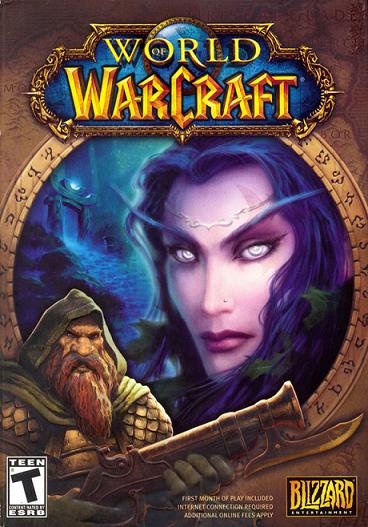 Computers first featured simple titles similar to SpaceWar! or simple text-input games such as Adventure but have since evolved to become the leading platform for cutting-edge game development in the 21st century due to their seemingly limitless potential.
Old computers such as the Commodore 64 (Platform) and NEC PC-98 featured a built-in controller port, for C64 controllers as well as Atari 2600 (Platform) and other controllers. Many games supported both keyboard and joystick input. Since mice have become standard, they have become the preferable method of input for many games, with various manufacturers branding mice specifically for gaming. Joysticks are still widely used via USB. Early games were simply saved onto cassette tapes or floppy disks by a publisher or even the programmer themselves. These disks were sold in Ziploc bags and Vinyl slips; they generally had a bland manual and had nowhere near the shelf-presentation of a modern game. Some publishers, such as Electronic Arts (Company), made their games stand out by storing their games in vinyl sleeves, but later games would be released in cardboard boxes, jewel cases, or DVD cases.
By the 1980s, developers such as Sierra Online (Company), Origin Systems (Company), EA, Microprose, and LucasArts became some of the biggest publishers of PC games, with titles such as Zork (Franchise), King's Quest, Ultima (Game), and John Madden Football (Game) becoming some of the biggest titles of that era.
Computers first featured simple titles similar to SpaceWar! or simple text-input games such as Adventure but have since evolved to become the leading platform for cutting-edge game development in the 21st century due to their seemingly limitless potential.
Old computers such as the Commodore 64 (Platform) and NEC PC-98 featured a built-in controller port, for C64 controllers as well as Atari 2600 (Platform) and other controllers. Many games supported both keyboard and joystick input. Since mice have become standard, they have become the preferable method of input for many games, with various manufacturers branding mice specifically for gaming. Joysticks are still widely used via USB. Early games were simply saved onto cassette tapes or floppy disks by a publisher or even the programmer themselves. These disks were sold in Ziploc bags and Vinyl slips; they generally had a bland manual and had nowhere near the shelf-presentation of a modern game. Some publishers, such as Electronic Arts (Company), made their games stand out by storing their games in vinyl sleeves, but later games would be released in cardboard boxes, jewel cases, or DVD cases.
By the 1980s, developers such as Sierra Online (Company), Origin Systems (Company), EA, Microprose, and LucasArts became some of the biggest publishers of PC games, with titles such as Zork (Franchise), King's Quest, Ultima (Game), and John Madden Football (Game) becoming some of the biggest titles of that era.
Popular Genres
In the early days of computer gaming, most games were developed by a single programmer, and were often simple or downgraded ports/clones of more powerful arcade games. PC gaming has since evolved to encompass a wide variety of genres, some faring better than others.
The most popular genres that have evolved on the platform are simulators, (Computer Role-Playing Game), (Real-Time Strategy), and (First-Person Shooter).
Due to the powerful nature of PCs, they became the ideal platform for making simulations of various occupation. The earliest simulators came in the form of "God games" such as Utopia (Game) and Populous (Franchise), where players would controls the lives and happenings of their subjects. This concept would later expand into management games like SimCity (Game) and Civilization (Franchise), where players would need to manage their resources as their expand their business, cities, or even nations. Other simulators would have a smaller focus. There are various simulators based on flight and driving, such as Microsoft Flight Simulator and Test Drive (Franchise), life simulators like The Sims (Franchise), and job simulators like Farming Simulator. This genre has become even more popular in recent years.
CRPG's were largely inspired by pen & paper role playing games such as Dungeons andamp;amp;amp; Dragons. The genre spans early ASCII adventures such as Rogue (Game), action RPG's such as Dragon Slayer (Franchise) and Diablo (Game), and (Massively Multiplayer Online RPGs) such as Lineage (Franchise) and World of Warcraft (Game). Freedom is a main element that has evolved with CRPG's. The earlier games were more linear in their approach, sometimes even approaching level design from a distinct "stages" standpoint. CRPGs evolved to have 3D dungeons, real time combat, and huge multiplayer, non-linear worlds.
Real-Time Strategy games, such as Starcraft and Command andamp;amp;amp; Conquer, is a genre that was at the heart of PC gaming in the 1990s and continues to remain a dominant PC genre in Asian countries like South Korea (Location) and China (Location). The genre requires fast-paced clicking using a mouse, making implementation on consoles very difficult; ironically, the game often considered the first RTS, Herzog Zwei (Game), was a Sega Mega Drive / Genesis console game. The genre has certainly seen evolution, but the premise of collecting resources, spawning an army, and sending it into battle, has remained relatively constant throughout RTS history. Today, the most popular RTS games are called MOBAs (Multiplayer Online Battle Arenas), with games such as League of Legends (Game) and DOTA 2 being some of the most played games in the world.
 The third, and arguably most popular, PC genre is the FPS. After being popularized with iD Software's Wolfenstein 3D (Game), the genre exploded into popularity with Doom (Franchise). The use of mouse to look around was later popularized by Duke Nukem 3D (Game) and Quake (Franchise). It's a genre that has been ported to consoles, but still controls better on PC due to quick, precise aiming with mice. Landmark PC FPS games include Doom (Game), Quake (Game), Counter-Strike, and Half-Life.
In 2005, Microsoft released drivers that allowed the Xbox 360 controller to work on Windows PCs, giving developers a controller interface to use when developing games. This has caused controller support to be implemented in nearly all PC games, allowing a variety of genres to work on the platform.
The third, and arguably most popular, PC genre is the FPS. After being popularized with iD Software's Wolfenstein 3D (Game), the genre exploded into popularity with Doom (Franchise). The use of mouse to look around was later popularized by Duke Nukem 3D (Game) and Quake (Franchise). It's a genre that has been ported to consoles, but still controls better on PC due to quick, precise aiming with mice. Landmark PC FPS games include Doom (Game), Quake (Game), Counter-Strike, and Half-Life.
In 2005, Microsoft released drivers that allowed the Xbox 360 controller to work on Windows PCs, giving developers a controller interface to use when developing games. This has caused controller support to be implemented in nearly all PC games, allowing a variety of genres to work on the platform.
Digital Distribution
In the mid 2000s, numerous developers started to focus more on console development, and they feared that online piracy was causing them to lose money on the platform. Retail PC games have also seen a massive decline of sales around the same time, causing many to think that PC gaming was losing popularity in favor of consoles. However, even with retail PC game sales slowing, digital distribution has been expanding within the last decade. Popular digital distribution services like Valve's Steam (Concept), EA's Origin (Concept), and Battle.net helped in boosting the sales of PC games and have helped in making many indie games popular. Other digital distributors, like GOG, sell older PC games that either don't sell in retail anymore or are too old to be compatible with newer operating systems. These services allow you to play older games and usually sell them for less than $10 while also being free of DRM. The Humble Indie Bundle and other alternatives have been a great resource in downloading numerous indie and retail games for prices set by the end user. The majority of the proceeds go to the game developers as well as numerous charities. These type of services help in having an easy way to play PC games and having developers keep in touch with their communities.
Issues
Upgrading
 A primary issue with PC gaming is the barrier to entry due to cost. Pricing of a PC depends on what type of performance a user wants when it comes to playing games, but for people who want to play games at maximum settings, it can cost at least $1000 to build and up to $3000 to buy from a manufacturer. In order to play some of the biggest, most graphically impressive games on PC at maximum settings with a stable framerate, it may require a user to upgrade their computer components every 2-3 years. However, thanks to better optimization of games and the creation of lower level APIs such as AMD's Mantle, the barrier of entry for PC gaming has been decreasing and lower-end hardware can be used to run games with decent performance.
The ability to selectively upgrade hardware also gives PC gamers a flexibility absent in console gaming. Users can upgrade RAM, GPU or hard drives to make their computers more powerful as the games become more demanding. In turn, this flexibility and constant increase in performance allows developers to create games that can fully utilize the latest hardware, often leading to more complex or better looking games.
A primary issue with PC gaming is the barrier to entry due to cost. Pricing of a PC depends on what type of performance a user wants when it comes to playing games, but for people who want to play games at maximum settings, it can cost at least $1000 to build and up to $3000 to buy from a manufacturer. In order to play some of the biggest, most graphically impressive games on PC at maximum settings with a stable framerate, it may require a user to upgrade their computer components every 2-3 years. However, thanks to better optimization of games and the creation of lower level APIs such as AMD's Mantle, the barrier of entry for PC gaming has been decreasing and lower-end hardware can be used to run games with decent performance.
The ability to selectively upgrade hardware also gives PC gamers a flexibility absent in console gaming. Users can upgrade RAM, GPU or hard drives to make their computers more powerful as the games become more demanding. In turn, this flexibility and constant increase in performance allows developers to create games that can fully utilize the latest hardware, often leading to more complex or better looking games.
Piracy and Digital Rights Management
One huge problem reported by publishers with PC gaming is the excessive piracy of games. Bootleg copies of games have been a problem since the introduction of the personal computer. Many computer experts were able to copy floppy disks and distribute them to either share with friends or profit off them. Since the introduction of the internet, it has been easier to distribute pirated software than ever before (including games). Bittorrent sites make it easier for people to put up game files where everyone can download and play.
Although piracy ranges across the world, the areas with the most piracy are developing nations. These are areas that either have poor game distribution or have gamers that are too poor to afford many games. Piracy has also gone up since the economic crash of 2008.
There are many measures that game publishers use in attempts to prevent piracy. Floppy disk games of the 1980's included items in their game boxes called "feelies", or items necessary to have in order to play the game. Some games required the player to look in the instruction manual and type in a specific word to play the game while others had the player decrypt a code displayed on a screen using one of the items in the box. As CD games became more popular and CD copiers were gaining traction, CD keys, unique codes to identify legitimately purchased games, were introduced. Sometimes CD keys are used to access certain parts of a game such as multiplayer and Live features in Games for Windows - Live (Concept) games. There have been many issues with CD keys. If you were to lose your CD key and needed to reinstall a game, you had to buy your game again. This type of security did not last long because pirates were finding ways to create fake CD keys that they could use to play pirated games. Digital Distribution has made CD keys mostly obsolete.
This led game publishers and various third parties to develop forms of Digital Rights Management (Concept) (DRM). DRM is digtal software protection that prevents the user from using copied game discs and downloaded disc images or installing games on multiple machines. Some early forms of DRM may interfere with some applications such as disc drive emulation software used for mounting disc images.
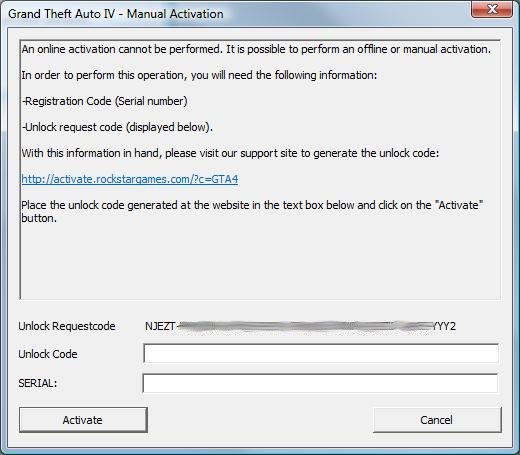 There have been controversial uses of DRM within the last decade. In 2008, EA announced that they are going to use a new version of SecuROM (Concept) DRM that limits the number of simultaneous activated installs for all of their new PC games (starting with Mass Effect (Game) and Spore (Game)). Since then there has been a huge controversy over DRM, even questioning the legality of it.
In 2009, Ubisoft introduced a new DRM that will require you to be online at all times when playing a game. If you are disconnected from the internet for any reason, gameplay will stop. The first games to utilize the new DRM were Assassin's Creed II and Silent Hunter 5. As of 2011, Ubisoft decided to discontinue and retool their online DRM system with the release of Assassin's Creed Brotherhood, and was relaunched with the release of Driver: San Francisco. Today, Ubisoft has their own digital platform, Uplay (Concept), that is needed to access many of their games.
Common complaints about this type of DRM are losing game progress and not being able to play when an internet connection is unavailable. Other companies are using similar DRM including EA with Command and Conquer 4 and Blizzard with StarCraft II: Wings of Liberty and Diablo III (Game). Both Candamp;amp;amp;C4 and D3 require a constant, active connection to the host servers, but Blizzard's implementation in SC2 allows offline play of the single player campaign and AI versus modes with achievement functionality disabled.
Recently, a new DRM method called Denuvo has been used in various games such as Grand Theft Auto V (Game), Hitman (Game), and Doom (2016). It claims to be "uncrackable", but there have been various cases where games have been successfully cracked.
Many digital distributors feature their own DRM. Steam requires users to connect to their servers at least once and enable offline mode before playing games offline. In Steam's offline mode, achievements are deactivated. Microsoft's Games For Windows Live has similar restrictions.
There have been controversial uses of DRM within the last decade. In 2008, EA announced that they are going to use a new version of SecuROM (Concept) DRM that limits the number of simultaneous activated installs for all of their new PC games (starting with Mass Effect (Game) and Spore (Game)). Since then there has been a huge controversy over DRM, even questioning the legality of it.
In 2009, Ubisoft introduced a new DRM that will require you to be online at all times when playing a game. If you are disconnected from the internet for any reason, gameplay will stop. The first games to utilize the new DRM were Assassin's Creed II and Silent Hunter 5. As of 2011, Ubisoft decided to discontinue and retool their online DRM system with the release of Assassin's Creed Brotherhood, and was relaunched with the release of Driver: San Francisco. Today, Ubisoft has their own digital platform, Uplay (Concept), that is needed to access many of their games.
Common complaints about this type of DRM are losing game progress and not being able to play when an internet connection is unavailable. Other companies are using similar DRM including EA with Command and Conquer 4 and Blizzard with StarCraft II: Wings of Liberty and Diablo III (Game). Both Candamp;amp;amp;C4 and D3 require a constant, active connection to the host servers, but Blizzard's implementation in SC2 allows offline play of the single player campaign and AI versus modes with achievement functionality disabled.
Recently, a new DRM method called Denuvo has been used in various games such as Grand Theft Auto V (Game), Hitman (Game), and Doom (2016). It claims to be "uncrackable", but there have been various cases where games have been successfully cracked.
Many digital distributors feature their own DRM. Steam requires users to connect to their servers at least once and enable offline mode before playing games offline. In Steam's offline mode, achievements are deactivated. Microsoft's Games For Windows Live has similar restrictions.
Games view all →]
- _Access (Game)
- _summer (Game)
- ! That Bastard Is Trying To Steal Our Gold ! (Game)
- !4RC4N01D! (Game)
- !Sqrxz! (Game)
- !Sqrxz! (Game)
- "Hello, world." (Game)
- "I'm sorry! I'll do whatever you want!" She said... (Game)
- #AkiRobots (Game)
- #EscapeRoomSimulator (Game)
- #Modarchive Story (Game)
- #SelfieTennis (Game)
- #WarGames (Game)
- #hasicontent (Game)
- #killallzombies (Game)
- $1 Ride (Game)
- && (Game)
- '&': Sora no Mukou de Sakimasu you ni (Game)
- '90s Football Stars (Game)
- '90s Super GP (Game)
- 'Nam 1965-1975 (Game)
- 'dillos (Game)
- 'n Verlore Verstand (Game)
- (Don't) Open Your Eyes (Game)
- (I Fell in Love With) The Majesty of Colors Remastered (Game)
- (Not) Just another Space Shooter (Game)
- (T)Raumschiff Surprise - Periode 1 (Game)
- (the) Gnorp Apologue (Game)
- *NSYNC Hotline Phone and Fantasy CD-Rom Game (Game)
- +EXORCIST+ Chris and the Cursed Town (Game)
- .45 Parabellum Bloodhound (Game)
- .T.E.S.T: Expected Behaviour — Sci-Fi 3D Puzzle Quest (Game)
- .flow (Game)
- .hack//G.U. Last Recode (Game)
- .hack//fragment (Game)
- .kkrieger: Chapter 1 (Game)
- .projekt (Game)
- // Down to Earth // (Game)
- //N.P.P.D. RUSH//- The milk of Ultraviolet (Game)
- //Todo: today (Game)
- 0 A.D. (Game)
- 0_abyssalSomewhere (Game)
- 00 mem.: ~Le Chat~ (Game)
- 0000 (Game)
- 0008 The Story (Game)
- 007 First Light (Game)
- 007 Legends (Game)
- 007: Licence to Kill (Game)
- 007: Nightfire (Game)
- 03.04 (Game)
- 0RBITALIS (Game)
- 0Space (Game)
- 0x10c (Game)
- 0°N 0°W (Game)
- 1 1/2 Ritter: Auf der Suche nach der hinreissenden Herzelinde (Game)
- 1 Moment Of Time: Silentville (Game)
- 1 Screen Platformer (Game)
- 1 Ton (Game)
- 1,000 Heads Among the Trees (Game)
- 1-0 Soccer Manager (Game)
- 1...2...3...KICK IT!: Drop That Beat Like an Ugly Baby (Game)
- 1/2 Blood (Game)
- 1/2 Summer (Game)
- 10 Beautiful Postcards (Game)
- 10 Cent Classics: Shady Pack (Game)
- 10 Dead Doves (Game)
- 10 Miles to Safety (Game)
- 10 Minute Barbarian (Game)
- 10 Minutes Till Dawn (Game)
- 10 Puzzle (Game)
- 10 Second Ninja (Game)
- 10 Second Ninja X (Game)
- 10 Spiele-Hits Vol. 1 (Game)
- 10 Years After (Game)
- 10 in 1 game-a-week bundle! (Game)
- 10 nin Yaru! Soshite Densetsu e (Game)
- 100 Christmas Cats (Game)
- 100 Doors: Escape from School (Game)
- 100 Familien Spiele (Game)
- 100 Hidden Aliens (Game)
- 100 Hidden Birds (Game)
- 100 Hidden Cats (Game)
- 100 Hidden Cupcakes (Game)
- 100 Hidden Eternals (Game)
- 100 Hidden Gnomes (Game)
- 100 Hidden Mice (Game)
- 100 Hidden Mushrooms (Game)
- 100 Hidden Snails (Game)
- 100 Hidden Snails 2 (Game)
- 100 Seconds (Game)
- 100 Years War Online (Game)
- 100 in 1 Game Collection (Game)
- 100% Hidden Objects (Game)
- 100% Orange Juice (Game)
- 100,000 Games (Game)
- 1000 Amps (Game)
- 1000 Days to Escape (Game)
- 1000 Games: Volume 3 (Game)
- 1000 Miglia (Game)
- 1000 Words (Game)