With some video game publishers and developers being reluctant to be upfront about their usage of Neural Networks in creating their games, I figured it was worth tracking what games have used it in different ways.
Sometimes you sit down and you have an idea and it's a stupid thing to follow through with it, but you do it anyway and you can't explain why. Pretty sure Jeremy Medina knows that feeling all too well…
The thought I got was when I read Metacritic's Best of the 2010's feature, showcasing not just how broken their own system is and how tastes have rapidly changed in the past ten years, but also a list of publications decade top ten lists. There was a “ranking” of the games based on how many times each game was mentioned in those lists, but…
I don't like it.
Don’t get me wrong, the list probably had what the popular opinion would be the top 20 games of the last decade, but it was so… sterile… so… safe. What about the indie darlings and the cult classics? What about the mobile hits and the niche simulation games with arcane mechanics?
No, this wouldn’t do. I’d make my own list, using my own algorithm, using my own sources. And I’d bring the people’s voices into it too! Not through manipulatable user review scores, but from their own voice on the topic: through forums, blogs, youtube videos, and the lists on this fair site. But before I started, to keep it impartial, I needed to figure out how to do it, I’d need to figure out
THE ALGORITHM
Like all ranking systems, I needed a fair and accurate weighting system that could be used to judge the data. Or, more accurately, a weighting system that my own biases and values deemed as fair and accurate to judge the data. And I needed one that worked across four major scenarios:
Top 10 lists with each rank having a different weight.
Unranked lists still giving points to each game that were relevant
Large lists like Top 100’s not having too much influence
Lists smaller than 10 still having influence
A fair and accurate system… a fair and accurate system… a system that shows a game fairly and accurately… a system that fairly and accurately shows a game’s worth… a system that fairly and accurately shows a game’s skill…
No, no, no. That wouldn’t work. Unless…
No that makes no sense at all. There’s no way to make Mario Party systems work with this data.
But what if I...
Yes… Yes of course! Mario Kart has been balancing a system of doling out points for 8 and 12 player races for decades. It’s a well tested formula used to give first place a competitive edge, but not give each position behind it an insurmountable climb to first. Mario Kart 8 even came out this decade, so it all fits! So the point values will be as follows:
Any game that is positioned below 12 gets the same points as twelve (basically a pity point for showing up). This should give:
First place a distinct advantage (20% of top 10)
Top 10’s get the bulk of the potential points (96% of top 12).
Top 100’s having more influence than top 10 (91 more points), but they’re spread out over 90 titles.
Any number below 10 get’s a fair percentage (ex. Top 3 = 47%, top 5 = 69%)
Okay looking good for ranked lists, but what about unranked lists? Well, my first idea was to just give an unranked list of x games points in the x ranking. And you know what? It actually surprisingly turned out looking pretty good? Like here is the point totals for unranked lists:
It might look unfair that to get the most total points you need 6 or 7 entries, but, just like how top 100’s lose their influence by spreading too thin, the more games in your list, the less influence you had on the position of any one game. It ended up being a pretty good compromise of giving unranked lists sway, but still not having to play a guessing game on what goes above what or just ruling them out altogether.
(also, if unranked lists had some pretty clear ranking (“definitely in my top 3 of the decade”, “this is the game of the decade and the rest are runner-ups”), I’d put those games still in the position that made the most sense).
The algorithm is set, now I just need to establish some ground rules before getting the data.
THE RULES
First off: Ranking order. This is a scientific list using science and numbers. So there needs rules on which numbers are better than others, so we can scientifically say x game is better than the other.
Also if I just go by how many points each gets there will be way too many ties and there has to be a tiebreaker system. (Seriously, looking at the final data, there would be like 53 games in ties in the end and nobody wants that.)
Thus the games are ranked in this order:
Total number of points across all lists
The highest position a game got on anyone’s list
The number of lists that placed it at that highest position
If all of the above are equal, the games tie.
(In the end this resulted in five two-way ties, which I can live with.)
THE LISTS
This is where this idea went from "stupid thing I can't get out of my head" to "thing I've worked on way too much over the past two weeks". Luckily I find plugging numbers into spreadsheets an oddly soothing exercise, so going a little overboard isn't too big of deal.
I’ve been collecting lists from websites, youtube videos, blogs, forums (actually, just here and discourse.zone), podcasts, and giant bomb user lists. I wanted to get about equal between “players” and “professional” lists, but this does skew more towards the “player” side, mostly because there was way more data and a lot of them were shorter (the forum posts are mostly just choices for #1). Looking at the end result though, it seems that didn't have too big of an effect on the end result (sorry Giant Bomb community, I know you wanted Sleeping Dogs in that Top 10).
I did however, allow myself to veto some lists due to a few factors:
If the list read too much like a “best selling list”. You’d be surprised how many of these were like this out on “professional” sites.
Lists that were focused on one platform or publisher. I mostly used them still, just giving everything 1 point instead of a ranking.
Lists from sources that were hateful or malicious.
Lists I didn’t respect. This was a low bar to clear, but some still couldn’t clear it. Sorry not sorry, but Angry Birds and its many spinoffs were not the best games of the last ten years. It wasn’t even the best game of the ten years before that when it was a flash game.
That all being said, if I missed your list, you, the one reading this, know that I probably just missed it. I am human, after all.
#BuildingTheList
And after around 60 professional sources, over 100 Giant Bomb user lists, and 30 miscellaneous lists added on top, the list is built and ready to go.
I just need to finish, you know, writing it.
With 703 games between everyone's lists, I couldn't have write-ups ready for each of them. So I'm going to be putting up the 100-51 just as a list right now, right here, then edit and finish it once it's done. Probably by the end of tomorrow.
Until then, enjoy this screenshot of the 40 games that just missed getting into the top 100. Gives you a good look at how the spreadsheet worked as well (I can send the google docs link to it after this is all done if someone requests it if you want to look at my sources or something).
After ranking 703 games, I have compiled the list, including quotes from industry professionals, game reviewers, youtubers, and users of this very site. Enjoy.
Part Quatre! If you didn't read the previous parts, I'm posting a quick summary of why I'm excited for 50 different video games in 2016. Today, I'll be running down the last ten games on my list or, better put, the ten games I'm most excited to play in 2016. I apologize for the wait. I was sick off and on for a good three weeks after the last post and unfortunately 30% of this last segment is already released because of it, but I'm working on a little something extra of more 2016 hype to make up for it so I hope we're still friends. Ok? Okay!
Again, this is a subjective list, so don't expect something popular I have no interest in to take #1 (sorry, ARK: Survival Evolved). Hopefully this list will get you more hyped up for the games coming out this year, remind you of a few you've forgotten about, and maybe introduce you to a few new games.
If you didn't catch the previous posts I made, check em out here:
This game tickles me pink as a lover of math, a computer scientist, and a game designer. What this small team of what I have to believe are genius level intellects are accomplishing makes me accept that there are heights to attain in all three of these fields that I never thought possible and may never personally reach, yet inspires me to reach them all the more. The scope of the game world that Hello Games are creating is bonkers, with incredible breadth of biodiversity and ecosystems all being driven by one of the most powerful instances of procedural generation that games have ever seen. Since this game was announced, my jaw has been on the floor. I’m at the point where, whatever the hell the gameplay of this game ends up being has no bearing on my interest level. I just want to dissect it, to pick it apart and analyze it. I want to sit on my couch, stare at a small part of this universe they created and yell “HOW THE FUCK DID THEY DO THAT?!” at the television. If the game ends up being a compelling gameplay experience, all the better, but it’ll be a rewarding, special, one-of-a-kind experience regardless. As a testament of human creation, of human ingenuity, No Man’s Sky is sure to keep me captivated for years.
Yes, I was late on this one and XCOM 2 was already released. Shut up. XCOM 2 is still my #9 most anticipated game of 2016 and allow me to explain why:
It baffles me how short some people’s memories can be, especially when it comes to rough launches of video games.Diablo III launched as a massive disappointment as compared to the “seminal” and “perfect” Diablo II and that derisive attitude toward the former persists today, despite Diablo III undergoing massive improvements over the last few years and Diablo II being a full on tire fire when it was released. Ultra Street Fighter IV on PS4 is considered the definitive version of the game and people act like it always has been, despite having weeks where one of the characters sounded like a goddamn train and another had invisible fireballs. More closer to the topic at hand, Firaxis has had a history of rough launches of their games, from the sterile and boring Civilization: Beyond Earth to the imbalance of vanilla Civilization V to the bug-riddled XCOM: Enemy Unknown that made Ironman a bigger struggle against the game’s inadequacies than an alien invasion, despite Firaxis being (rightfully) known for being one of the best strategy game developers in the business.
So XCOM 2 launches and what happens? Well, there’s so many bugs that it looks like a Fallout game and people start freaking out about it. It’s business as usual, but people are acting like it’s the end times. I just want to grab people, calm them down so they stop screaming, look into their eyes, and softly say “you do not have to play games the second they come out.” Civilization V was improved to one of the best 4X games in existence with it’s two expansions. XCOM: Enemy Unknown exterminated most of it’s bugs even before Enemy Within came out. Civilization: Beyond Earth… well Civilization: Beyond Earth could use one more expansion, but it’s on the right track to being a respectable entry in the series.
Don’t get me wrong: this doesn’t excuse the developers for launching a busted game. I would love to have been proven wrong, for the game to make huge improvements and be perfectly playable right out of the gate. But as the old saying goes: fool me once, shame on you; fool me twice, shame on me. And baby, you wish this was only the second time.
Danganronpa went from being “a visual novel I should check out I guess maybe?” to one of my favourite series in 2014. The series was able to create engaging mysteries, a colourful cast of characters that slowly subverted their one-note literal-cardboard-cutout character designs, and masterfully made use of tension to keep you both dreading and fixated on figuratively turning each page of the story. Sure, it had a few… disgusting parts to it (mostly due to how it handles a transgender character and it’s constant need to ogle and objectify it’s female characters), but those aspects slowly got better as the series progressed (Despair Girls was actually pretty good on that front…).
The future of the series is undergoing a big split however, a split between the story and the gameplay that comes directly from not sticking with their guns on a decision made early on. Without spoiling too much, they opened the Mystery Box. The developers made some fantastic novels and games with the box open (hell, Goodbye Despair was a better game than the original), but they lost the ability to spin stories with the same magic, tension, and wonder. They were vehicles of knowledge and answers to mysteries that were satisfying on their own, but never as satisfying as the mystery itself.
Danganronpa V3 is throwing the series back into the box and throwing the rules out the window. It takes place in a different universe with different characters and different reasons for why, essentially, high school kids are killing each other. It’s sort of like The Great Ace Attorney, but even more of a step removed. It’s a new take on the series that they can use to completely start anew, with new takes on the premise going forward that hold onto the same magic of the original, that made it such a compelling mystery to unravel. It’s a take that, for the love of god, I hope they do not backpedal on, as it’s a stronger direction for the series going forward.
But I do think they’re going to stick with it. The original universe with all the characters you love (that are alive, that is) will be continuing after all…. in a new anime series. While initially a move that disappointed me greatly (not only because I am not a fan of the medium, but because the original Danganronpa anime was some hot garbage), I think it’s best their pursuing an ending to the current arc concurrently, but separately. While I don’t buy for a second that the series will include elements “that can only be expressed in the anime medium” and I’m highly skeptical that it will be any good, I feel that the sooner Spike Chunsoft hit the reset button on this series, the better.
I don’t know if Danganronpa V3 will actually come out this year. I certainly believe it will be out in Japan, but localizations of these games have not exactly been swift. Something tells me, however, that NISA understands that they have a hit on their hands and their going to be making Danganronpa V3’s localization a top priority. A hope and a prayer, but no guarantee.
Last year’s Splatoon was the most excited I had been for a multiplayer shooter in many, many years and it met my every expectation. While I haven’t quite sunk hundreds of hours into it like I did with Monday Night Combat or Team Fortress 2before it, this is more due to not having access to an external hard drive to fit the updates onto (curse you, 8GB Wii U!) than waning interest. I’d like to say I’ll eventually play just as much of Splatoon in the months & even years ahead, but, for the first time in my life, there’s multiple multiplayer shooters that I’m actually interested in playing.
Overwatch isn’t squids and kids levels of novelty, creativity, and freshness, but if there’s one company other than Nintendo that can hook me on a game, it’s Blizzard. And I’ve fallen for their hype hook, line, and sinker. Fascinating character designs, breadth, & depth; gorgeous visuals & art direction; focused game modes (that happened to be my favourites from Team Fortress 2); and character flexibility that suits the more jack-of-all-trades approach I usually take. It looks like a fantastic time to tackle with either friends or alone and I’m dying to play it, either on console (where I feel it will play quite nicely) or in the mean streets of the PC shooter scene.
Speaking of Team Fortress 2 though, a lot of people complain that Overwatch is just a ripoff of it, a stab by Blizzard back at Valve after DOTA was taken out from under them (kinda). To which I respond: yeah, doi. That second part is pure conspiracy theory, but there isn’t a competitive genre alive that hasn’t taken, borrowed, or stolen from competitors. It’s why shooters started off being called “Doom-likes” and most of them plays like Call of Duty now. Just because no games have yet recaptured Team Fortress 2’s success (though some have tried), it doesn’t mean it’s a sacred golden cow that no one can learn from.
Overwatch has the game modes from TF2 that work the best in a more fast paced, movement heavy shooter with unique roles and classes, but almost everything it’s doing is adaptations on where the competitive gaming scene as a whole is right now. MOBA’s and MMO’s have taught players cooldown management, so Blizzard ditched the multiple weapon and ammo model found in games like TF2 for a completely ability and cooldown based system. Call of Duty and Fighting games have taught players to unleash devastating attacks on opponents with proper metre/killstreak usage, so every character now has an ultimate they have to manage and use at the right time to swing a match. MOBA’s and Fighting Games also lend themselves to the player preparing match-up knowledge, which is extremely important in games with a lot of characters. Hell, some characters even have shield management and recovery from Halo and Destiny. So when you break down Overwatch, yes, it’s taking stuff from Team Fortress 2, but don’t think that’s all it’s taking from. Overwatch is a beautifully designed game that is taking inspiration and learning lessons from all corners of competitive gaming and that, that is what makes it so special.
Given how big of a Nintendo fan I am, I’m surprised at how little Nintendo is on this list. Sure, there’s not exactly a lot announced these days on the Wii U or 3DS, but beyond a few third party titles, Star Fox and Pokkén are about it. That either means that 2016 will be a big drought year for both platforms or Nintendo has a lot to announce in the next few months. Luckily, we do have the most exciting and unique Zelda game since Wind Wakerto look forward to, a fine game to mark the end of the Wii U and to start the likely transition to NX next year.
We don’t know much about the game currently beyond hopes and promises (Nintendo instead chose to focus on games much closer to completion), but everything they have shown has been full of promise. The open world aspect, despite my usual aversion to the approach, is what gives the title so much potential. If you think about the worlds the 3D Zeldas have given, there haven’t been much in the way of adventure, of exploration, of trekking off the beaten path to find new areas and secrets. In a way, the series is still where it was in 1986, still bombing walls to find secret rooms and exploring the small, confined, tiled, sectioned off spaces that are presented to us. Wind Waker was the only game to break free of this model, but with it’s own set of limitations that come with a world that’s 99% water. Still, you were finding unexplored islands, you were hopping on spooky ghost ships, and heading wherever the wind took you… as long as you travelled to exactly these 6 dungeons along the way.
I know it’s cliche and passé, but I truly do believe that a game like Dark Soulsis more of the answer here, if only in the way the world is structured. Sure, Dark Souls is a game that lends itself to more claustrophobic environments than Zelda, but the way it’s connected, the way the world feels full and natural and just waiting to be explored is a feeling that has been rubbed off of the Zelda series over many, many iterations. A beautiful open world that is cleverly designed and just waiting to be explored to your heart’s content might be the trick Zelda needs to break the series from it’s decade old rut.
Note: This post was initially released prior to the release of Street Fighter V. Despite some launch ugliness, I stand by it.
Even if Street Fighter is not your game of choice, if you are a fan of any corner of the fighting game genre, you know how colossal a new Street Fighter game is. Street Fighter II invented the genre as we know it today, Street Fighter IIIflipped the script on what a fighting game could be, and Street Fighter IV single-handedly revived the series, the competitive fighting game scene, and the entire fighting game genre. And now, we live in a new era. A new game means new characters, new blood, new playstyles, new mechanics, new technology, new combos, new competitors in the genre seeking to dethrone it, and new competition from the pro level right down to your local scene.
The slate is wiped clean this time right when the genre, the scene, the community are at their very brightest. The community has never been bigger, more focused, more passionate. The competition has never been as diverse, as educated, as fierce. The games being played have never been as numerous, as polished, as distinct. And Street Fighter V is attempting to defy expectations: to not only keep the good times rolling, but to push the community and the whole damn fighting game side of the industry to a whole new pinnacle.
The future is bright for fighting games and, despite still needing a lot of work (especially when it comes to removing toxicity), I’m proud to be a tournament organizer in this scene. So here’s a toast to those games, those organizers, those competitors that allowed this scene to get to where it is today. If the industry continues to put out games with this level of passion and excellence, we’ll be sure to respond in kind.
Rez is one of the few games ever made that I would unequivocally say is perfect. It’s art style is ageless, the way it incorporates music into it’s gameplay is powerful, and it’s the best the on-rails shooter has to offer. It saddens me that, though it has a sizeable fanbase nowadays, it’s still not a gaming experience ubiquitously praised for it’s ingenious and flawless design. The world just wasn’t ready for it back in 2001, I guess, a time where game criticism was still stuck using the Playskool branded critiques like “price”, “value”, and “length” to determine a game’s “worth” and therefore, by the metrics of the time, it’s cultural significance.
But culturally and critically aside, the world just wasn’t technologically ready for Rez either. Despite being made 15 years ago, Rez feels like it was born for VR and we’re only now able to fully realize the game’s potential. Rez might be a short game, a game that can be wrapped up in under two hours, but it’s also a game that has sold me as a consumer on buying into Playstation VR, something no other VR headset has quite done yet.
I think that says a lot about how much those two hours are “worth” in my eyes.
Note: Due to some retailer (*cough*amazon*cough*) fucking up my order, I did not have access to Fire Emblem Fates until a few weeks ago despite having preordered it in June of last year. So I chose to write it still as a preview, despite it being released.
Fire Emblem: Awakening is my frontrunner for game of the generation so far. The series really lost it’s footing for nearly a decade and to call Awakening a return to form is a huge understatement. It fixed a lot of longstanding problems, it made smart innovations, it had one of the most engaging (albeit still simple and shallow) stories in the series, and refocused the game on what had mattered to fans (can you believe that Supports were actually taken out of the three previous games?). Yes, Awakening was a real gem, a game that was no doubt the best the medium had to offer in 2013, the best game to grace the 3DS, and one of my favourites of all time.
So you can imagine how stoked I was when not one, but somehow two follow-ups were announced. Two campaigns that played off each other, with each giving you a glimpse at two equal, but opposite forces that had their own quirks, flaws, and advantages. The game felt like a breath of fresh air into the series from a narrative standpoint, as it had always been about the unshakeably moral and virtuous vs the undeniably evil and cruel bad guys. Unfortunately, the game never quite shook this habit, based on how both the opposing factions ended up and a “true” path through the middle that reframes the storyline into the classic good vs evil of old.
Still, Fire Emblem: Fates is more classic Fire Emblem Strategy RPG gameplay with more characters to fall in love with (platonically and… not so much) in it’s most approachable form (based on it’s difficulty settings at least). It’s a natural follow-up to Awakening that tries a new approach to an honestly rote storyline, which will be interesting regardless if it pans out. I cannot wait to finally dive in.
That’s all you needed. That’s all you needed to hear and you erupted into excitement if you’re a Zero Escape fan. If you’re not, let me lay down some history for you, because getting this game feels like a miracle.
The second game, Virtue’s Last Reward, left the trilogy on a ridiculous cliffhanger, but the realities of the business caught up with this little visual novel series. It just wasn’t selling in Japan, the home of the genre, visual novel fanbases, and visual novel developers, even after Virtue’s Last Reward was tailor-made to succeed in the region. The thriller aspect of the story was toned down considerably, the tension and violence was minimized, voice acting was added with some notable Japanese talent, and a 10 minute OVA was made to hype up the crowds. All to no avail. The game tanked in Japan and with it, any chance of a conclusion.
…Or so we thought.
I think it’s not unfair to say that without Ace Attorney doing so well in North America, the Visual Novel genre would have stayed in Japan. The wacky lawyer visual novel series converted a lot of people to the genre (including myself) with it’s humour, adventure game gameplay, outrageous plot twists, and fantastic characters. But in early 2010, North America had finally caught up with Japan on the Ace Attorney series with AceAttorney Investigations: Miles Edgeworthand North American fans were experiencing their first lull in the series. Investigations’ sequel would never make it to North America and new fans of the genre needed somewhere else to turn. Enter the first Zero Escape, 999: 9 Hours, 9 Persons, 9 Doors, which released on the DS in North America in late 2010. It was a cult hit and, somehow, managed to sell ten times as many copies in North America than in Japan.
And, despite the game being made for Japanese audiences, Virtue’s Last Reward was much more successful in the west. It was one of the must-play games of that year, helping to expand the genre even more in the west. It won awards from outlets across the industry and it’s writing was even nominated at the Game Developer’s Choice Awards, I’d argue the closest thing this industry has to an Academy Award. Spike Chunsoft had an award winning series on their hand, but since conventional knowledge said that Japan mattered most for the genre, a sequel was doomed.
Then Zero Escape 3, the ending to the trilogy, the ending to one of the best storyline games have to offer, was finally announced last year to everyone’s surprise. At Anime Expo in LA of all places. I hoped it would be made. I hoped that Spike Chunsoft would see that they genuinely have one of the biggest Visual Novel successes in North America on their hands and how much of an opportunity that was, but it’s hard to see that when you’re an ocean, language, and culture away.
Yet they did, eventually and somehow, and, in just a few days, we’ll be getting the first trailer for the game at GDC, debuting it’scool new cel-shaded art styleand embracing the thriller aspects of the original (Note: This trailer is linked above!). Then, later this year, Kotaro Uchikoshi and the rest of the world will finally see the story of Junpei, Akane, Phi, and Sigma to it’s conclusion.
There isn’t a video game that you could pitch to me, real or imagined, that could take the #1 spot over a new Persona game. I connected with Persona 4’s narrative and characters so deeply that I didn’t quite know what to do with myself when I had completed it. The highs left me giddy with excitement, the lows hit me like a sack of bricks. Even though I had finished Persona 3 just months prior to Persona 4’s release, I still wasn’t prepared for how genuinely invested and touched by the exploits of those meddling kids (and their bear too) I was. There isn’t a video game out there that I cherish more than my time with Persona 4.
So, obviously, the next game in the series is something I’ve looked forward to for nearly eight years. And you know what? I think such a large gap is only going to be a positive for Persona 5. Sure, as a fan, it’s a pain in the ass to wait for the game for so long, but in many ways Persona 4 was just Persona 3 2.0. They had similar styles, gameplay, execution, music, writing, localization, etc. etc. This large gap between games, however, has given Atlus everything they’ve needed to make a new Persona game be as creative as possible and to ensure 5 will be an evolution of the series, rather than just another iteration. The hardware advantage is obvious (I wouldn’t even be surprised if the PS3 version was axed so they could make full use of the PS4), but they’ve also gone back and touched up both 3 & 4 since then, refining them and experimenting with them to see just what exactly the audience wants out of their games.
And you know what? So far I’ve been very impressed on how much it’s paid off. The game’s style has evolved from it’s predecessors, the premise is unique and takes the series in a fun new direction, the dungeons are hand-crafted instead of randomized, the world is populated and made to feel more alive, and the UI is a fucking masterpiece of both form and function. I’m trying not to hype it up too much for myself (except for the UI part because GOD DAYUM) so that I get disappointed in how it ends up, but I also have faith that Atlus both knows what they’re doing and taking this game very, very seriously.
As they should.
A game like Persona 5 (a big budget JRPG whose fanbase stretches beyond the genre) is only released once, maybe twice a decade… let’s hope Atlus delivers.
And that concludes the list of why video games are going to be fucking rad in 2016. What did you think? Got anything you agree/disagree with? Got any other games you're super excited about this year that I didn't mention, especially some underground shit no one's ever heard of? Post down below with your thoughts! I had fun with this list, like every year and I hope you did too!
Part Trois! If you didn't read the first two parts, I'm posting a quick summary of why I'm excited for 50 different video games in 2016. Today, I'll be running down ten more games. I should have the final ten by the end of the week if all things go according to plan. Again, this is a subjective list, so don't expect something popular I have no interest in to take #1 (sorry, Far Cry Primal). Hopefully this list will get you more hyped up for the games coming out this year, remind you of a few you've forgotten about, and maybe introduce you to a few new games.
This is a collection of posts from my tumblr, so a few of them might contain information that is outdated and/or are about games that have already been released.
If you didn't catch the previous posts I made, check em out here:
Hyper Light Drifter took the indie game scene by storm when it launched it’s Kickstarter back in 2013, sporting slick animation, a Disasterpiece soundtrack (who was coming off of industry-wide praise for hisFezsoundtrack the year prior), and action RPG gameplay hearkening back to greats like Boktai and Link to the Past. The Kickstarter raised thirty times what was asked for, understandably ballooning the game’s scope well past what was feasible by it’s promised 2014 release date. If the consistent developer updates and the trailer they released last fall (linked above) are any indication, that scope change was for the best, as everything about it just seems polished to an impeccable shine. I have misgivings about how well the game will turn out from a gameplay and story perspective (as just not enough of either has been shared), but if the rest of the package is any indication, Hyper Light Drifter is going to expand beyond the indie scene and take this whole damn industry by storm.
I’m a sucker for well animated video games, but Cuphead is on a whole other level. Using animation techniques that have long been replaced by computers, the developers have fully embraced the wacky, expressive, and energetic ways of classic cartoons that are damn near a century old. Hand-painted water-colour backgrounds, hand animated animation, and character designs that have a creativity rarely seen, Cuphead is a ridiculous blast from the past to the time when Disney meant Steamboat Willie and Warner Bros. meant Porky’s Duck Hunt.
I was tempted to make this entry just a bunch of Cuphead pictures and the words "LOOK AT THIS!"
The gameplay shoots for a similar nostalgia, but back to the early days of NES Run & Gun action platforming games. Taking inspiration from Contra, Metal Slug, Gunstar Heroes, and even newer gems like Alien Hominid, Cuphead is being tuned to that extra hard difficulty level people used to associate with Nintendo’s earliest consoles, though it still will have difficulty levels so those that aren’t itching for that nostalgia trip can still get in on the fun.
So far, it sounds too good to be true, but there’s still a few things that have me hemming and hawing. What has me unconvinced is just how the game feels, the pacing, and how the levels work. Boss battles are really all that have been shown and they look fantastic, but the developers are promising a game that full run & gun platforming experience without having shown really anything of it yet. Will those levels be a distraction between the boss fights, leading to pacing issues akin to the No More Heroes series? Are the boss fights going to be too frequent and, just due to the obviously high amount of work that goes into one, mechanically simple or excessively recycled? And, while it looks reassuring from the footage shown, how does the game actually feel once you get your hands on it? That’s such an important thing for games like this and dooms a lot of difficult platformers because the game feel hasn’t had enough attention.
Regardless of my worries, I’m ecstatic that this game is slated for this year. It looks like a blast, especially in co-op, and is going to be an absolute treat to soak in all that lovely animation.
I love Shantae’s evolution over the past decade from a relatively unknown Game Boy Colour gem to an indie darling. A decade ago, Wayforward was struggling to get a second game out of the series after the Game Boy Colour original vanished just as quickly as it launched, likely due to it releasing a fully year after the Game Boy Advance. That second game was slated for the Game Boy Advance, but was scrapped and assets were eventually retooled into Risky’s Revenge: a fine game, but one that launched onto the ill-fated DSiWare.
Now, Shantae is finding success on Steam, both major Nintendo platforms, and mobile, there are Shantae guest characters in games like Hyper Light Drifter and Indivisible, and there even was a relatively large campaign going to try to get the half-genie heroine into Super Smash Bros. This fourth game is even be made in part due to a ¾ of a million dollar Kickstarter: not enough money to make the game, sure, but enough to get the ball rolling and indicate that Shantae has a pretty substantial group of dedicated fans. Which, as a fan rooting for the series since it’s GBC days, is mind boggling. Here’s hoping that Half Genie Hero, whenever it ends up launching, is just as good as the most recent release (Pirate’s Curse) and Wayforward continues to find success with the franchise.
However, I still find it funny that, due to where the industry was when the Kickstarter launched, Shantae will once again be launching on outdated systems: the PS3 and 360. The more things change, the more they stay the same, eh? At least it’s getting a release on the other major consoles (and Vita!) as well.
This game continues to look fucking rad and is only getting more exciting as the developers share more about it. If you only have seen the original game jam version of this game, here’s a quick list of features the developers have added:
Parkour.
More weapons including melee weapons, different types of guns, and projectiles.
More varied environments.
Even more gorgeous lighting.
Some sort of ridiculous hacking storyline?
Real-time replays after you complete a level.
The enemies will now procedurally shatter like crystals when you kill them and it’s fucking beautiful.
A nifty icon & highlighting system that makes doing shit like throwing your gun at someone to knock them out, catching their gun in midair, and shooting their friend with it as easy as reading this sentence.
I cannot wait to get my hands on the final game next week.
Yeah, I jumped the gun on putting this on my list back in 2014, but last year had a lot of interesting developments for this long awaited metroidvania indie title. Not only was that amazing (and incredibly polished) trailer released (linked above), but Konjak announced that he would be releasing the game on PS4 and Vita. In his own words, he’s ready to finish the story, the saga of development of bringing Iconoclasts to life. Maybe 2016 is the year, maybe not, but all the best wishes and good luck to Konjak on finishing development. I will continue eagerly awaiting it’s release.
An indie RPG that is the closest a game has come to straight up making a late SNES era JRPG. This is more than just a love letter to Chrono Trigger though (see #22 on this list for more thoughts on that), with an already killer soundtrack from Hyperduck Studios (Dust: An Elysian Tail), a fascinating battle system concept that makes status ailments useful and forces you to change your strategy constantly, and a sci-fi/spy story, a surprisingly underutilized storytelling space for the JRPG genre. I’m a big fan of Zeboyd Games and their vision for Cosmic Star Heroine they pitched back when they launched their Kickstarter seems to be coming together better than I could have hoped.
Cosmic Star Heroine is definitely one to look out for in 2016.
Even a decade later, a sequel to Shadow of the Colossus are big shoes to fill.
What a ridiculous press conference Sony had last year. People were crying over Shenmue 3, people were screaming about Final Fantasy VII’s remake, and after years of silence, The Last Guardian was shown to the public for the first time in six years (footage linked above). Then, almost as quickly as it came, The Last Guardian vanished from the public eye once again. Shenmue III was the talk of the industry as the Kickstarter skyrocketed to ludicrous heights. Final Fantasy VII Remake dominated talks of games coming out in the future as more details were released and a new trailer was shown at PSX. And The Last Guardian… well, that was about it. It had a 2016 released date attached to it, was shown more to some of the press behind closed doors at E3, skipped over the rest of the shows for the year beyond a cute interactive Trico display, and now it’s hard to judge what exactly is going on with it.
Fans are always anxious when a game doesn’t have a solid release date, but doubly so for games that have been in development as long as The Last Guardian. And I really can’t blame them. Shadow of the Colossus and Ico are two seminal games for this industry and while expecting The Last Guardian to be one as well may be putting too much weight on it’s shoulders (times have changed after all), fans are worried that it might never happen. And I’m sure it’s the same with the developers as well. They’ve put out two amazingly realized games and it’s a damn shame that they haven’t been able to share another game with the world in a decade.
But, even if there’s anxiety around the title, I still believe trusting in the developers is the right way to go. Maybe it won’t make the 2016 release date, maybe it will. But I trust that, regardless of when it comes out, they’ll do right by their vision for the game and that’s what matters. The Last Guardian’s journey has been harsh on the fans, but the developers are the ones that have worked for a decade on this behemoth. They deserve to see their hard work and passion be fully realized.
It took a few decades, but Ys has finally, slowly been finding a western audience. With the quite popular releases of Ys I & II, Oath in Felghana, Ys Origin, and Ark of Naphis- Napitish- Ark of Napitism- … and Ys VI on Steam and the wonderful Memories of Celceta on the Vita, Falcom and XSEED have had a pretty healthy run with the series here in North America. So healthy that I’d argue Ys’s success is one of the biggest catalysts for so many Japanese PC releases nowadays.
But with so many games coming out, you’d think think that another new game in the series wouldn’t be that big of deal, but all of those games have been remakes and rereleases. Adol Christin hasn’t gone on a new adventure (and, subsequently, gotten a new case of amnesia) since Ys Seven was released on the PSP back in 2010. So while I’m loving the remakes XSEED are making available over here, I’m more than ready for a new chapter, especially one that looks to be building on Falcom’s recent efforts in the series (Celceta) and in the genre (Tokyo Xanadu). It looks great, has a great foundation to work off of, and, knowing Falcom’s dedication to game feel and tweaking it to perfection, I’m confident that VIII will be yet another winner in the franchise.
Ys VIII: Lacrimosa of Dana does not have a western localization announced at this time.
Miegakure has been blowing minds for years. And by years, I mean XKCD had a comic about it 6 years ago. It’s perspective-breaking 4D world can be mystifying, so your first exposure to it, even in video form, can leave a lasting impression. I know that was the case for me ever since I saw it in motion at PAX a few years back. It’s a beautiful mix of easy communication of mechanics that helped popularize Fez and the drive to understand the unknown, foreign, and impossible that made Antichamber a must-play experience.
Living up to those expectations are going to be the biggest hurdle for this game to be a fantastic game and not just a brilliant idea. Pressing a button to switch perspectives of Miegakure’s 4D world and being unsure how it will graft onto the 3D world we experience is fun when you’re seeing it for the first time in an Indie Megabooth, but not so much when you’re trying to quickly and eloquently solve a puzzle an hour into the experience. Conveying how the world will change, what that means for progression and puzzle solving, and how players can use that intuitively to their advantage has got to be a helluva tall order, especially if you want to keep the magic of the mechanic fresh and interesting for the entire game.
Marc ten Boch's blog has a great explanation on thinking in 4D.
So I have my reservations about Miegakure and whether it will stick the landing, but it’s worth noting that this is the last game on this list I have such doubts about. Of all the games I’m still hesitant about, that haven’t quite convinced me that they’re 100% going to achieve their potential, Miegakure is the one that has the most promising core, the most potential to be something special, and is the game most worth getting excited about. Miegakure is a game that is going to sneak up on a lot of people and, even if doesn’t end up perfect, it will be challenging game design conventions for decades to come.
As for Miegakure’s release in 2016, that is pure speculation on my part and has not been announced by the developer. At the risk of getting people’s hopes up and dashing them or putting more pressure on the developer than I intend (of which I do apologize for), I still felt the need to post about it anyway. For if the game does come out in the next ten and a half months and I never sang its praises, there really wouldn’t be a point to this list, now would there? I’d rather continue posting about it for the next five years as it’s polished and perfected than miss it’s release altogether.
P.S. I’d also like to point out that just because I’m skeptical that Miegakure will succeed, doesn’t mean that I don’t have faith in the developer. Reading Marc ten Boch’s blog on the game is an absolute treat and comes highly recommended and hearing him speak about it at talks and in interviews has me convinced he’s up to the task, but when you’re breaking such new ground in the field of game design you encounter new problems and challenges that you could never predict. And game designers are only human, even if Marc ten Boch is a very smart one.
Okay, I might be a little worried about Ace Attorney 6’s unfocused direction, but The Great Ace Attorney… now this is more like it! New fun, interesting characters to fall in love with! A brand new setting to influence events and frustrate the localizers! A new court system to mix things up! A new story filled with twists, turns, and turnabouts! This is what the Ace Attorney series is all about!
This isn’t quite as good of an idea as “let’s make a Professor Layton and Ace Attorney crossover”, but it’s damn near close. The ancestor angle is nowhere near a new storytelling gimmick, but it’s one that the series desperately needs. Everything I was complaining about with Ace Attorney 6, from it’s unfocused direction to the oversaturation of characters to the impossibility of meeting everyone’s expectations as the series continues to branch out, is solved by this approach. Hell, it even could fit nicely in the weird alternate reality Los Angeles the localizations take place, as you just have Wright’s ancestor riding a wave of more Japanese culture spreading westward, starting with England.
The Great Ace Attorney is the most excited I have been about the series proper since I finished Apollo Justice, which says a LOT about the rest of this list that this isn’t higher as my love for this series runs deep. I just hope that a localization will be announced soon, as, unlike Ace Attorney 6, The Great Ace Attorney has yet to have one announced. Which is a shame, as I am dying to meet Mr. Wright, his assistant, Sherlock Holmes, and 10 year old female Watson (WHY IS SHE ONLY TEN YEARS OLD?! JAPAAAAAAAANNNNN!)
The Great Ace Attorney does not have a western localization announced at this time.
- - - - -
That's all for Part Three! Thanks for reading! I'm hoping the finale up by the end of next week, so keep your eyes peeled!
Part Deux time everybody! If you didn't read the first part, I'm posting a quick summary of why I'm excited for 50 different video games in 2016. Today, I'll be running down fifteen more games and I'll hopefully have the rest done by the end of next week. Again, this is a subjective list, so don't expect something popular I have no interest in to take #1 (sorry, Deus Ex). Hopefully this list will get you more hyped up for the games coming out this year, remind you of a few you've forgotten about, and maybe introduce you to a few new games.
This is a collection of posts from my tumblr, so a few of them might contain information that is outdated and/or are about games that have already been released.
If you didn't catch the first post I made check it out here:
When Rime was revealed at Gamescom 2013, I took two things away from it: the visuals were as breathtaking as the first time I saw Wind Waker in motion and it was the first game since Journey that I just wanted to explore just for the sake of it’s beauty. The following year, Tequila Works put out another trailer (embedded below) that was even more stunning, with lush, colourful landscapes and superb lighting, but it also hinted at how the game will actually play. The best we could decipher was that it was a sort of hybrid between an open world combat-less Zelda game and a more puzzle focused game from Team Ico. Sure, that’s entirely speculative, but everything about the game that was shown or talked about was striking home.
Then, after that Gamescom, *poof* Rime vanishes. The developer continues to update their company’s site enough that you can tell the game hasn’t been cancelled, but no new information about the game has been released. Which is a shame. As the industry is praising another gorgeous open-world puzzle game, I find myself thinking of that latest Rime trailer on a daily basis. I respect The Witness and am glad it’s finding success, but it is a game that is decisively not for me. It’s too reminiscent of the Myst-style adventure game or the Fez-style puzzle game, both games eliciting the same respectful disinterest. So I am green with envy that The Witness is getting all this buzz and my Puzzle Treasure Island game of choice is still on the horizon, somewhere.
Despite not being that big of a fan of Bioware, Mass Effect 2 might just be the game of the last generation for me.
Sure, I was never a huge fan of the original, but something about Mass Effect 2made the whole Bioware formula click after decades of trying. The characters were more alive and their relationships mattered to me, the worlds felt more real (despite restricting access to them to a few hallways and launching probes haphazardly across them), the side quests all felt like they had value to them beyond just getting x reward, and the story was basically just Ocean’s Eleven in Space, which was fucking rad. The gameplay, while not quite as tight as pure third person shooters like Gears of War, was satisfying and tense no matter what class you were playing or team you brought into battle. And don’t even get me started on how much I love the Loyalty Missions and their insights into both your squad and the Mass Effect universe.
Yes, Mass Effect 2 was the finest Western RPG, Bioware game, Third Person Shooter, and Dating Sim I ever played, but along came Mass Effect 3 a few years later, a sadistic destruction of everything within it’s predecessor I held dear.
And that wound is still in the process of healing. I still am filled with negative emotions about the series. I am still so wary to get excited about a new game in a franchise that had such a high high and such low lows.
On the other hand, the developers behind Andromeda are (so far) taking the steps they should to distance themselves from Mass Effect 1-3. By having Andromeda take place on a Noah’s Ark of a spaceship that left prior to the potentially disastrous ending of Mass Effect 3 on a 2.5 million light-year trek to the Andromeda galaxy, Bioware has effectively looked at the mess that surrounded the ending of that original trilogy and just start waving their arms yelling “NOPE NOPE NOPE” across the local group. While it might be an excuse to make more Mass Effect games without touching the Mass Effect 3 landmine, it’s the right excuse. Andromeda can safely jettison a lot of the baggage that has stuck with this series for a decade. The whole “your decisions matter and will stick with you for multiple games”? The needlessly binary (and prone to mood swings) Renegade and Paragon system? The need for a morality metre at all in 2016? The whole stale and static way the plots unfolded with exploration of the galaxy as merely a feature on the back of the box? The overreliance on humanity’s place in the universe and every matter in it as a way to keep the plot “engaging”? The problematic storylines that “had” to be hastily all wrapped up with a nice bow by the end of the original trilogy? The sloppy in-universe explanations that prevented more LGBT relationships in the game? Hell, even the way that basic mechanics works justified by arbitrarily chosen technologies in place within the universe? All of that could be (and hopefully will be) tossed out into the vacuum of space safely without (most of) the fans being up in arms.
I can feel the nightmares coming back just looking at it...
It’s because of this that Andromeda has the most potential of any game in the series. Bioware has a fictional universe that they can safely chop up and carry over only the best parts, as the rest will be literally left behind in the Milky Way. Mechanically they can shape this new entry around the heart of what made Mass Effect 2 so great and the original Mass Effect…. uhhh… so full of potential! Whatever they feel isn’t worth bringing forward, they make from scratch. This means that we’ll have new races to meet, new planets to explore (with hopefully better results mechanically), new situations to choose between diplomacy or a gun, new approaches to storytelling and gameplay alike the series has never seen before, and new friends to meet, romance, and, sometimes, kill (you always kill Ashley).
When making this list, I was both tempted to put Andromeda in the top ten based on how much pure potential it has and tempted to keep it off the list altogether based on my still lingering aversion to it. There are too many questions about it’s direction left unanswered, too many ways it could go wrong, and there have been too many times I have been burned by Bioware in the past, but I can’t help but acknowledge that Andromeda is making the perfect first impression. Though there are safer bets and more exciting games to look forward to playing in 2016, Mass Effect: Andromeda is the game I am most looking forward to E3 for, just so I can see how far Bioware Montreal is willing to take this.
The original Gravity Rush is the best superhero origin story game ever made. Through introducing a character with an unwieldy super power such as gravity control, it used the limitations of game controls to create a deeper connection with Kat, the main character. Every time you stopped in the middle of the air and struggled to get your bearings, you felt Kat was doing the same thing. Every time you were frustrated by barely missing a hit on a flying monster, your frustration mirrored her own. And every little improvement you made, every little mechanic you slowly mastered as you played the game was Kat transitioning from an awkward girl trying to grasp her disorienting superpowers into a confident, badass superhero who was hellbent on protecting the people of the foreign city around her. Gravity Rush was not a perfect game, but this connection you had with the Kat on a mechanics level was something completely unique and exhilarating to experience.
As exciting as it is for there to be a sequel to a game that had a lot of flaws on the periphery of it’s core design (the sidequests, the upgrade system, and the limited colour palette all hurt the original), I’m worried that the connection you make with Kat carried the original game more than I would like to admit. I’m worried that, now that Kat is a full grown superhero in a bright colourful world, that the player might not connect with her as well as in the original, exposing just an okay action game that lost it’s identity.
Those fears are unfounded so far, as it’s really only something you can judge once you’ve experience the game in full, but it’s something I think about whenever I see something new about Gravity Rush 2. It’s another one of those “only time will tell” scenarios on this list.
P.S. Gravity Rush: Remastered came out on PS4 last week. If you have not played the original, this seems like the ideal way to play it, as the Vita controls… well, it was a near-launch game, so every single hardware feature of the Vita was used, most being detrimental to the game. So yeah, pick up that first game if you haven’t!
It’s less than a week away fromafterFirewatch's release, and your idea about what the heck is Firewatch is as good as mine. How branched out will this narrative become? Is it largely a (and I use this term with all the love in the world) a walking simulator? Is it some sort of linear tale that can be driven through non-linearly and with a breadth of choices? Is the tale a Thriller? A Horror? Or is it just a Mystery? Is it’s painstakingly detailed approach to the world to accent the realistic approach to the storyline? Or is there something supernatural going on? Why are there racoon jump scares? Is it a Dating Sim? Can you keep that jukebox with you the entire game?
There are more questions than answers on what exactly Firewatch is, but it’s because it can’t be pinned down by mechanics and conventions of traditional found in games that makes it so exciting. Sure, the jury is still out on whether I’ll even like what the end product has become, but I sure as hell respect it for the risks it’s taking and the conventions it’s disregarding.
Note: This was originally posted on my blog on February 3rd. Guess there has to be one already released game in each batch of these, eh? OOPS
If Videoball isn’t the next super popular local multiplayer game, then somebody, somewhere fucked up. It’s simplistic nature, ease of control, intuitive design, and underlying strategy communicates to you wordlessly exactly how to play it in under a minute and just how deep the strategy can be in just a few rounds. The only reason this isn’t higher on this list is due to my own personal inundation with local multiplayer games and the looming realization that, by the time this game is released, I probably will be in another city, province, and/or country than I am right now. Not exactly conducive to enjoying Videoball to it’s fullest…
The first Sly game is like... really fucking good, people. Like unbelievably so.
Ratchet & Clank was always the black sheep of the three Sony PS2 platformers for me. The first Jakgame was underwhelming, but the later games were the best open world games of their day. On the other hand, the first Sly was a masterpiece of platforming design, while the rest of the series leaned on their wonderful characters and varied gameplay to be engaging. And Ratchet & Clank was just… there. I always find people fall on different sides of this debate, but Ratchet just felt like the odd one out, an underwhelming 3D platformer that didn’t really rise above your average mascot 3D platformer to something special like Sly and Jak.
A year ago I decided it was time to give the series another shot and, while I still hold that it’s weaker than it’s cousins, the first two games (which is all I managed to get through) were a lot better than I remembered them being. I had a blast. I don’t know what changed in the decade since I played them last, but why people liked the Ratchet games finally started to click with me. It was just unfortunate that I discovered that so late, because as good as the core of Ratchet & Clank was, everything around it…. well… understandably plays like a game from 2002, which is not a good look nowadays.
So a new remake of that first game built completely from the ground up sounds like just what the doctor ordered. Reworked level design to fall in line with the standards of today; a retelling of the story in a much more vibrant, expressive, and natural way; and graphics that make me confuse the game footage with that movie their making. I don’t care if it’s remake at this point: getting to experience a brand new, modern take on this series should be a treat.
It’s weird to say, but nature is such an underused aesthetic in games. There are countless games that take place in the wilderness in some way or another, sure, but when I think of games that truly make use of all the little things in the natural world around us, both in a visual and mechanics way, ThatGameCompany’s Floweris the only game that comes to mind. And it’s understandable. Why make a detailed bush or icicle on a tree or a pile of dirt that behaves and looks like it should when your player is going to just run right by it? It’s just a huge sink in resources for not a lot of gain in immersion.
But Unravelforces those details to be crucial to immersion by significantly reducing the scale in which you interact with the world. Each branch is not a texture on a tree or tied to your “foliage” slider in the graphics menu, but an obstacle to surpass that bends and sways as you put pressure on it or as the wind blows and the rain falls. Snow is not just a tileset that makes the ground slippery or your footsteps more crunchy, but a field of snowflakes to be parted, compacted, and/or molded.
So while games like Yoshi’s Woolly World have made the whole yarn aesthetic cute and it definitely makes little Yarny an adorable character, it’s the way that Unravel uses nature that has me in awe of it’s visual design and salivating at the chance to experience more.
Note: This was originally posted on my blog on February 4th. Did I say "one" game that was already released in each batch of these? hoooo-boy.
Ah, World of Warcraft. You are barely the game I fell in love with during The Burning Crusade era, but you remain the unyielding Warcraft lore delivery service that I find irresistible. Since I stopped playing you seriously when you wrapped up your Warcraft 3loose ends during Wrath of the Lich King, your world has been torn asunder in Cataclysm (and, subsequently, barely recognizable from the time I played you), you have traveled to the homeland of my favourite Warcraft race in Mists of Pandaria, and you have made a bizarre time traveling jump in Warlords of Draenor to retcon the hell out of Warcraft: Orcs & Humans to have the orcs fall in line with your modern, sympathetic, shamanistic vision. Yet, even though that all sounds appealing, the hooks were never set in again. Sure, I make a vacation back to Azeroth (and Draenor (and Outlands)) now and again, but reading up on your world was enough to keep me satisfied while your events played out for millions of other players to experience first hand.
Legion, though… Legion I don’t think I can resist. It’s the third invasion by the Burning Legion (if you don’t count the first and second Orcish invasions which were pupppeteered by Gul’dan and his demonic masters). This is it. This is the big one.
If it isn’t clear by now, I’m a GIGANTICWarcraft nerd and I will attempt to boil this down to those who don't follow every book, comic, and short story released as best I can: this expansion is the single biggest event that has happened in the entirety of World of Warcraft. All the major players in this universe are going to be there, from leaders on both factions to heroes that have had books written about them to villains that Blizzard literally had to break it’s own timeline to be all in one spot. And not all of these beloved characters are going to make it until the end. We already know a handful of them that have died in just the limited content available in the beta. What will the world look like when this is over? Who will fill the roles that others leave behind? How will this change the power dynamics between the two factions? Inside of each faction? What new characters will step up like Yrel did in Warlords to become new heroes, new fan favourites? These are the questions that keep me thinking and speculating about this game constantly.
Of course, we’ll win in the end. Blizzard isn’t going to allow their cash cow to die a graceful death just yet. But Blizzard is putting a lot of chips on the table, more than they’ve ever put down before, and are hoping the gamble brings back more players as it continues to shed millions off of it’s once insurmountable subscription numbers. And I know this. I know Blizzard is playing me…
Sony has a real gap in their first party output this generation. Sure, Sony doesn’t exactly have a stable of amazing franchises like Nintendo, but I just finished gushing about Sly, Jak, and Ratchet a few posts ago, so obviously there is quite a few of them that I love that aren’t showing up. This is largely due to Sony shifting from a developer into even more of a publisher, being the backer of risks for AAA studios like Capcom or From Software (STILL weird to put them in that category) and Indie Studios alike in exchange for exclusivity (even if it’s timed) on their platforms. And this strategy is working. If you compare the line-ups for the PS4 and the Xbox One, you’re seeing a lot more content on the PS4, especially as indie games become a bigger priority.
But just because Sony is shoving a lot of other games into the void their leaving behind doesn’t mean I don’t miss their first party efforts. Especially the side of them that has always been that weird, scrappy, risk-taking developer that creates games like PaRappa The Rapper, Ico, Patapon, and that trio of PS2 platformers. It’s that Sony that has been missing this generation.
Horizon: Zero Dawn isn’t quite…. THAT unique when it comes to games. It’s a sci-fi third person shooter from Guerrilla Games (the people known for making sci-fi first person shooters), but the world it lays out, a post-apocalyptic hunter-gatherer society where the robots have devolved into basically hi-tech animals to be hunted for supplies, is just goofy and hokey enough for me to wrap around on it and be 100% on board. Who cares if the core idea of the game has about as many holes as swiss cheese when you can hunt robot dinosaurs?! It’s the right kind of video game immaturity I can get behind.
Plus, the whole big game hunting feels sort of like a third person shooter Monster Hunter. If we need a third person shooter about hunting robot dinosaurs to stars popularizing those mechanics in other genres and within the mainstream outside of Japan, so be it.
Please. If there is any sort of video game god out there... no fishing this time. Please!
I’ve heard a lot of complaining from NieR fans about Automata, mostly revolving around Platinum games involvement with it. Fans see the original as a unique gem of the last generation that deserved to have another game that builds off what they love about the original, not for it to transform into the next Platinum character action game. And I totally understand that and respect that, in an ideal world, a sequel should build off the strengths of the original.
But here’s my counterpoint: the combat of NieR was not what made it unique, it’s what held it back. Throughout my brief time with the original, it was the characters, the story, and the weird little gameplay hooks they sprinkled in that made me want to keep playing, not the stale, aggravating, and wholly unsatisfying moment-to-moment action RPG gameplay. On the other hand, here’s Platinum Games, batting 1.000 when it comes to making action games, a perfect candidate to swoop in, redesign the core of the game, yet keep all those little touches that made the original great.
It would be nice if all games had a core to them that was worth redeeming, worth refining, worth touching up and perfecting, but NieR was not one of those games. It was a game that you take a hacksaw to, removing it’s good parts and leaving the rest to rot. And that’s what I expect out of Automata, that’s why it’s on this list. The story, characters, music (oh dear god the music), and moments where the game is suddenly a text adventure were what made NieR great. So please… salvage them, Platinum. Salvage them as you create the rest anew.
The Dragon Quest series is built on approachability in it’s game design and mature storytelling that effortlessly spins heartfelt tales of comedy and tragedy alike, but Enix’s last entry in the series before their merger with longtime rival Squaresoft was so obsessed with 1UP-ing the heavy competition in the JRPG genre that it lost it’s soul. Dragon Quest VII retained the simplistic core gameplay and medieval-fantasy-by-way-of-Akira-Toriyama, but it was bloated to the point of being well over 100 hours long, had gameplay systems that felt needlessly arcane, and a story that was impenetrable as compared to its predecessors. Fragments of the Forgotten Past is a chance at redemption for this misstep and word from those who’ve played the Japanese release has been unanimously positive. I’m excited to see just how much a more streamlined and focused version can realize the original’s potential, even if it’ll retain it’s ungodly length.
P.S. I’m also very excited for the Dragon Quest VIII remake on the 3DS, but I’m much more interested in seeing a disappointing game get a second chance in a complete remake than an already fantastic game get a graphic downgrade handheld port with a few new features (though the new characters in the story is super cool!). Maybe that’s just me though…
The Banner Saga was a fantastic video game, but by its nature, felt underwhelming, underdeveloped, and unfulfilling. It’s the first entry in a trilogy, after all, and, from a narrative perspective, carries with it all the problems inherent to that, from The Fellowship of the Ring to The Force Awakens, but it's how the interaction of games cooperates with that story that worries me. Games that promise a lot of player interaction with the story that carries on through multiple games have had… mixed results over the years (*cough*masseffect*cough*). While the same story beats are hit regardless of playthrough, who you meet, how you treat them, and who meets their untimely end could have significant impact on the story’s conclusion, at least in the player’s mind and expectations. How Stoic balances the need for every player to have a satisfying journey and have their choices have real impact is a balancing act I do not envy, but is one that will be instrumental in whether The Banner Saga 2 ends up being a fantastic video game or just a good SRPG combat delivery system.
One day you'll get your own game Athena. One day...
Look, I love the Ace Attorney games and thorough enjoyed Ace Attorney 5, even if a lot of fans dismiss it and it didn’t quite live up to the high points of the series (still beat the hell out of Justice for All and Investigations). But from what I’ve seen of the new game… I’m just not feeling it like I was in the lead-up to Dual Destinies. Sure, it seems like a good story for the series to go down (exploring more of the supernatural elements of the game and their place in the world) and we’ll likely see what Maya has been up to over the past…. however many year gap this has been since Trials & Tribulations(a decade?).
I just feel the game is shaping up to be unfocused, split between expanding Phoenix’s story further and Athena & Apollo holding down the fort in good ol Los Angeles. Both sides of the game sound great on their own… and that’s the problem. I would much rather see a new game just about Athena getting her chops after the end of AA5 & Apollo struggling as a mentor to her as Phoenix is absent on his trip (with some more about Trucy’s success as a magician to boot). I would much rather have a new game that takes an in-depth look at a new court system as Phoenix meets new people in a new culture which culminates in a reunion with Maya. Mashing these storylines together is going to do them both a disservice.
Still, it’s more Ace Attorney. It’s still going to be more thrilling cases, more clever adventure game puzzles, a new prosecutor, and a suite of dastardly villains and colourful witnesses. It’ll be a joy to play through, but I am more than wary of it’s approach.
It’s been two decades since Chrono Trigger was released, yet no JRPG has yet to duplicate it’s special mix of old school combat, engrossing story, and memorable characters. No, the genre had to evolve, not iterate for there to be games that stand by it, whether it be through the gut-wrenching personal story of Mother 3 or through incorporating high school simulator elements in Persona 4. There are games out there that still try to chase after Chrono Trigger, trying to get the mix exactly right, but they never quite pull it off. That doesn’t mean that developers will stop trying to make a newer, better Chrono Trigger or even that they should. It’s just that… well, I’ve been on this merry-go-round ride before and it’s gotten to the point where I’m more interested in what your JRPG with Active Time Battle combat, dual/triple techs, and on-map battles brings new to the table than just “hey, remember CHRONO TRIGGER?!”
As you may have guessed by now, Ikenie to Yuki no Setsuna is one of those games, but what sets it apart is how it embraces winter in it’s world. I live in a cold climate, a climate where winter isn’t so much a season as a year on it’s own, with rainy springs, hot summers, and breezy autumns whooshing by between the harsh, oppressive cold of winter. Despite this, I rarely see winter portrayed as anything other than a cartoony winter wonderland or as a mere ice level to cram all that wintery goodness into. Winter isn’t that. Winter is a season that casts your whole world in a new perspective, from the trees to the wildlife to the culture of the people living through it. Lakes become passable by foot, rivers impassable due to ice flows, and forests become sparse, peaceful, and serene. Setsuna embraces this: characters sport practical, yet fashionable, winter-ready clothing; areas you visit are diverse and really show off how snow can change landscapes; and how the towns are built.
I could gush on and on about it, but it’s just one of the details that has me hoping that Setsuna makes it way over to North America. It launches next week in Japan and am excited to see how it received over there as, again, I’ve seen how this song and dance can go in the past.
P.S. Regardless of how it turns out, I am also glad to see Square-Enix get back into making original traditional JRPG games like this and Bravely Default. Hope to see more new titles like this from them in the future.
Note: Ikenie to Yuki no Setsuna does not have a western localization announced at this time.
2015 was a quiet year for Owlboy. While it made appearances at a few shows, the developers were interviewed here and there, and a handful of updates on D-Pad Studios’s development blog let fans know that the game was still alive, it wasn’t anywhere near the spotlight. And maybe that’s for the best. It’s hard to juggle all the hats you have to wear as an indie, so I don’t blame the developers for taking a step back from the marketing and promotion just to actually make their game in peace. There still isn’t an announced time frame as Owlboy enters it’s eighth year in development, but I’m not exactly holding my breath. This game will be finished when it’s finished and I wish the best of luck to the developers as they’re (hopefully) heading down the homestretch.
------
And that's it for Part Two! Thanks for reading! I'm hoping to have Part 3 and 4 up by the end of next week, so look out for those. And, once again, if you haven't read the first part, check out #50-36 right here!
That's right, I'm back again this year for another list of games worth looking forward to in this (relatively) new year.
I have expanded this list from 35 to 50 games over the previous year (which didn't actually end up being finished for a variety of reasons) and it's mostly because I decided to not do the whole "leftovers" posts that I used to do, which was a side list of all the games that were on my lists in previous years and checking back up on them. For starters, it felt a little too mean-spirited to call the games "leftovers" in hindsight, especially for smaller games on this list that never had a firm release date. Second, as we're adapting to the bigger budgets and scopes of games slower than any generation before this, we also see release dates being harder to pin down. Hell, if I WOULD have finished that list from last year, there would have been 20 "leftovers" from 2016. That's a lot of extra writing! Last reason is that I kinda like the reevaluation aspect of how excited I am for the games that I've talked about before. Maybe I am way more excited about something now that it's closer to release? Maybe I've cooled on it since then as details I wasn't into were shared? Who knows! So, long story long, this list is just one big list this year instead of one big list and an ever growing side list.
I'd like to mention that this list is purely a list reflecting my own personal tastes and is purely subjective. This is not a list of what I see the whole industry is into or all of Giant Bomb or you, yes you, the person reading this. Maybe Dark Souls III is your #1 most anticipated game of the 2016 with a bullet and that's completely understandable given the quality of those games. Me? I'm STILL working my way through Demon's Souls and have barely touched the other three games, so my personal hype for the game is pretty much nonexistent. I'm sure I'll love it, but, wow, I do not see myself playing it any time soon. And there's a lot of instances of that, where there are games that a lot of people are going to be excited about and I just do not care about. So just... keep that in mind, okay?
This is a collection of posts from my tumblr, so a few of them may be a little outdated by information released since I posted the initial posts (or, in one case, the game itself was released), but hopefully it still makes you excited for the games coming out in the next 11 1/2 months. And who knows? Maybe I'll mention a few new games you've never even heard of! Anyway, on with the show!
I had no expectations for this video game when it was announced (at least, when Versus XIII became XV) and, going into a year where it will likely launch, I still don’t really have any. This hasn’t changed as more people play and write about the game and it definitely hasn’t changed with the bizarre way Square Enix is choosing to market this game (what the fuck even is this trailer?). Will it be a beautiful, creative, fun masterpiece? Will it be a problematic, boring, broken disaster? I’m not even going to speculate where in that spectrum it will lie, but I have give the game props for being so goddamn weird and oddly experimental for such a big budget game. I’ll support it for that at least, even if it’s from the sidelines until I see how it all shakes out in the end.
Regardless, it’s going to be a fascinating game to keep an eye on and one I couldn’t NOT put on this list.
Reaction online to King of Fighters XIV has been… unanimously aghast at the change in art style from 2D to 3D. The series had always been known for its fantastic 2D spritework, beautiful backgrounds, and very catchy music, so having something like this be the first footage shown of a new KoF game was understandably disappointing to fans
King of Fighters XIII was a beautiful game, but reveled in it's old school limitations & mechanics and it's inaccessibility to both new players and fighting game fans alike.
But it’s not the polygon count that makes the game. Hell, I’ve sunk enough hours into Street Fighter EX 3, Soul Calibur IV,Super Street Fighter II Turbo HD Remix, and Marvel vs Capcom 3 in my time to be no stranger to ugly fighting games. And what it always comes down to is how the game feels when you sit down with your controller of choice next to another human being.
King of Fighters XIII was a fantastic game for what it was, but in some ways it was a twisted version of the vision that brought Street Fighter IV success. Instead of XIII playing off your nostalgia of old fighting games, it brought back the punishing reality of those classics by having an exceedingly punishing input barrier of entry and “learned” from the newer games in the genre by adding a suite of cumbersome new mechanics that must all be mastered to even stand a chance.
And that’s why King of Fighters is so far down on my list. I haven’t played the game and we don’t know enough about it mechanically to make a solid judgement on how the game will evolve competitively. Will it learn why XIII pushed a lot of players away? Or will it cater to the same hardcore fans who relish the challenge at even doing a basic super properly, let alone lightning loops? We’ll just have to wait and see…
Woah! Uhhhh.... Chrom buddy.... you having a bad day?
Like, seriously, how the fuck did we get here?
When they announced a Fire Emblem and Shin Megami Tensei crossover, people were expecting some sort of post-apocalyptic strategy RPG or, you know, maybe a European medieval fantasy twist on the Japanese end-of-the-world JRPG.
What we’re getting is a Persona game that takes out the high school aspect and instead replaces it with the creepy world of J-Pop Idol culture. We get Persona gameplay with the classic FE weapon triangle to make physical attack resistances a little less random. We get our favourite Fire Emblem characters taking the place of personas with some weirdredesigns. And the art style is so vibrant and anime it kinda makes my eyes hurt.
None of this is saying that this game will be bad (though sales aren’t doing too hot in Japan), it’s just… shocking how different this game is than anyone imagined it would be. It’s like someone has been pitching an idol RPG at Nintendo or Atlus for decades and they finally saw their chance to double down on the idea with this crossover, adding the Fire Emblem and Shin Megami Tensei aspects as an afterthought.
I sure hope whatever this is ends up being good. Cause even as a fan of Fire Emblem, Persona, and Shin Megami Tensei in general, there’s a lot about the game that is, understandably, rubbing me the wrong way.
There’s not much to really say about Gang Beasts. If I want to drunkenly punch my friends’ doughboy babies, pick them up, and throw them off a moving truck, I can do that right now. Gang Beasts has been an Early Access success from the player’s perspective, but as the core of Gang Beasts is a multiplayer title, you can have a blast with it right now. There isn’t a brick wall where the content runs out. You can play the current version of it for an hour or a hundred hours, knowing that when the game is updated (and released!), the game will only get better. So, while I love Gang Beasts, it’s eventual release isn’t going to make as big of a splash in 2016 as other games on this list, but be sure to keep your eye out for it regardless.
Cook, Serve, Delicious was a wonderful surprise. The intense, frantic, and stressful (in a good way) job of washing dishes while juggling 4 chicken breasts almost burning in the oven, a steak that is just sitting there waiting to be seasoned, and a salad that a customer has already been waiting on for 30 minutes made for an exhausting, but addicting restaurant simulator I could get behind. But the tension and exhaustion prevented me from enjoying the game in long chunks and I would end up being satisfied after just a 20-30 minute session. So, while I do love the original and think it’s a fantastic game, I can’t really put Cook, Serve, Delicious 2 higher on this list because I know that, by the time this releases, I’ll still be toiling away in my 4 star restaurant in the original.
Still, it warms my heart to a crisp brown that the original did well enough to get a sequel. It deserves all the success it has received.
Yes, you read that right: a Pikachu Luchador. She is a badass.
Like King of Fighters XIV, I just don’t know enough about Pokkén to rank it any higher, but that’s 100% on me. I love that Nintendo is teaming up with the Tekkendevelopers to finally make the game that I thought Pokémon Stadium was going to be when nine year old me read about in Nintendo Power, but my apathy to 3D fighting games has me just so cautious about whether I’ll enjoy the game, even if it exceeds all expectations and ends up being one of the best games in the genre. So, I may not know much about the game at this point, but it doesn’t really matter. I will need to have this game in my hands to know if it’s for me. So, I will try Pokkén and I will likely even buy Pokkén, but who knows if the gameplay will connect with me.
I mean, design wise the game already has. There’s a goddamn Pikachu Libre Stone Cold Stunnering her opponents, so obviously it has to be good on some level.
I’m a big fan of Vanillaware’s output and not just because they make the most beautiful games in the industry. They make inventive takes on stale genres, whether that be action RPG’s, beat-em-ups, or real time strategy games (no one remembers GrimGrimoire ;( ), with cool mechanics, wonderful storylines, and memorable characters,
Odin Sphere (PS2) vs...
And did I mention the graphics because oh my god the art and animation in Vanillaware games are so goddamn perfect.
Anyway, the less said about Dragon’s Crown the better. I’m here to talk about good Vanillaware games. The best Vanillaware game, in fact, and how exciting it is for Odin Sphere to get a second chance at both an audience it deserves and on hardware that can handle it. Even though Odin Sphere is one of the best games on the PS2, oh boy was it not the right platform for it. Not only was it in standard definition, which is depressing considering how amazing the art is (did I mention Vanillaware makes beautiful art), but the game tried to push the PS2 far beyond what it was capable of and slowdown and lag were everywhere. There were some boss fights that I’d be surprised if the framerate was double digits.
Although the slowdown definitely made those parts of the game easier (in early SNES-style fashion), it was already easy enough because you had fought that boss 3 times already as different characters. See, Odin Sphere follows a Norse Mythology inspired storyline from 5 different characters perspective, all culminating to Ragnarok, the legendary world ending event in the mythos. So, naturally, some characters will run into encounters with each other and you’ll play it from both sides. Unnaturally, the game does it’s best to shoehorn nearly every single boss fight and location into every campaign, even if there is really no reason for character X to be fighting this dragon or for them to be wandering the Netherworld for the fourth time.
Odin Sphere Leifthrasir.
Odin Sphere: Leifthrasir will improve all of that… hopefully. Vanillaware already promises the game will be locked at 60 fps throughout and the game’s art was nearly completely redone to be in high definition (the art somehow looks BETTER), but the only other changes they’ve talked about are adding some difficulty options and the option to retool the gameplay system to be more in line with Muramasa (an unnecessary change if you ask me). They’ve shown a little footage of new enemies, new locations (and variations on old locations), and new bosses, but haven’t really explained if the constant repetition of areas and bosses will happen again. They’ve said that the story will still linearly progress from Gwendolyn through to Velvet, but didn’t mention if the gaps in the story will be smoothed out like they were in the Vita remake of Muramasa.
And that’s pretty much why I can have a remake (not just an up-res) of one of my favourite games of the last decade be coming out, but rate it so low on this list (beyond there being just a ridiculous amount of exciting games in 2016 to talk about, that is): I don’t know exactly what the developers are going for with Leifthrasir and I don’t know if they’re going to change too much of the game or not enough. I’ve scoured the internet for more information, but I just can’t tell if they’re bloating the game, changing the core of the gameplay too much, or patching up all the holes and realizing the game’s potential. Again, this is another “just have to wait and see game” on this list, but hoping for the best is really all I can do at this point.
Regardless, this game is going to look amazing on my OLED Vita.
Everything I have heard about the Night in the Woods sounds amazing. The art is vibrant and a splendid mix of cartoons and dreamscapes, the animation is fluid and expressive, and, most magically, they blend together so well that you begin to forget that this game is about anthropomorphic animals. The story cuts to the core of anyone who grew up in a small town: your hometown losing all luster as you age and it slowly dies as our society moves on from small communities, friends are split apart as some change rapidly when they roam the globe while others sit in a standstill as they cling to the place they call home, and those caught between clinging to your past and their desire to move forward struggle to find their place in the world. It. With a premise like that in the game, I’m already on board and, really, don’t care if the game ends up being heavily narrative focused and very light on the actual gameplay.
But hints at a spin on the mode of the game as it approaches its final act(s) that has me hesitant. The developers are trying to add some inertia into the lives of Mae and her friends, forcing them to act instead of being stuck in that standstill where they are headed in their lives, but it’s a tonal shift that I’m not confident they’ll be able to pull off (especially with how squeamish I am when it comes to horror). The initial world and story is so appealing to me, but I can’t tell from what has been shown if it will end up being something I even want to play, even if it gives such a fantastic first impression.
Just like how Night in the Woods is about being stuck on the fence with how to proceed through your life, I’m stuck on the fence with whether or not I’ll end up playing it.
There are two major gaps in my old LucasArts adventure game knowledge and they both involve Maniac Mansion. While the first game can be played on the internet archive, there currently isn’t a way to play Day of the Tentacle legally other than eBaying an old copy of it. And, while that is a route I’ve considered (even after this version was announced), I was so satisfied with how Double Fine handled Grim Fandango that I will happily wait for an opportunity to play my last classic LucasArts era adventure game in a meticulously remastered form. I just hope this game holds up as well as Full Throttle and Grim Fandango do.
Pictured: Promotional Concept Art for Mighty No. 9 i.e. not what the game was ever going to look like.
Mighty No. 9 is in a pickle. It’s been demonized by part of it’s "fanbase", but that’s not what I’m talking about. The people going all doomsday about Mighty No. 9, saying that it’s trash because the game doesn’t live up to “what was promised” (i.e. they don’t understand the concept of concept art) and that Inafune lost all credibility once he launched a second kickstarter (i.e. people don’t understand the realities of game development) hold about as much credibility as the part of the gaming public claiming Broken Age’s kickstarter was a failure because [insert inane reason] or the assholes who say Anita Sarkeesian’s kickstarter was a fraud even after she delivered more than promised because [insert sexist reason]. Honestly, at times they sound like and have as much credibility as Immortan Joe: “Do not, my friends, become addicted to crowdfunding! It will take hold of you, and you will resent its absence!”
No, Mighty No. 9 is in a pickle for a much different reason. A related, but realistic reason: messaging. Even on the parts of the internet that aren’t wearing tin foil hats or making 60 minute rants on youtube, Mighty No. 9 isn’t getting flattering press. And that’s not because people hate the game. Those who play it seem to be big believers in it, actually, but you’re not hearing that. Search the news around the game on most major sites and it’s centred around the conspiracies (mostly making fun of them, but still), the “shady” delays, the developers doing damage control against their “fans” (see: detractors), and a few trailers that have squeaked by unnoticed (mostly because, truth be told, they’re kinda bad). Mighty No. 9 launches in less than a month and Deep Silver and Comcept have so thoroughly lost control over the messaging that I fear it’s just going to be shipped out to die at this point.
Pictured: Promotional Concept Art for Destiny i.e. also not what Destiny was ever going to look like.
I do have hope yet for this game. Again, the reaction to Mighty No. 9 from the people who have actually played it, especially at PSX last month, have been nothing but positive. While I have reservations of my own about the art style, it’s nothing that can’t be overlooked if the gameplay is stellar. And all of the gameplay being shown looks really fun, a nice balance of modern game mechanics and a throwback to the mechanics of Mega Man games of old. There’s even precedence with Comcept that they can deliver satisfying action platformers without needing a lot of buzz around it, as Azure Striker Gunvolt, another Mega Man-alike from them, launched to little fanfare or attention in 2014 and it ended up being fantastic.
You have to feel for the development team for Mighty No. 9. You can really tell they gave it their all with the funding and tools they had, really trying to do what they can to meet the impossible expectations thrusted upon them, but they were hit with such toxic backlash from multiple angles (some far, far more legitimate than others) that, if I were in their position, I’d be very tempted to just push the game out the door with two middle fingers raised high in the air before retreating into a hole to cry. But their sticking through it, trying to make the best game they can for the fans that still believe in it, despite having been dragged through the hellish side of the gaming public that refuses to die out. I hope, in the end, it was somehow worth it.
Last year I was fretting about Miyamoto being in charge of such a mechanics focused series like Star Fox (which isn’t what Miyamoto is exactly good at) and was hoping for a team that had proficiency in mechanically deep games to take the reigns.
You know, someone like Platinum!
Well…
It happened.
Platinum Games (though not Kamiya) is co-developing the game, which puts a lot of my fears about the game’s mechanics at ease. The legacy of a franchise that still only has a single good game (Star Fox 64), the skepticism around how the motion controls will play out, the suspicious lack of actual on-rails shooting in the footage that has been shown, and the feeling that all the new vehicles are just gimmicks that will get in the way of Star Fox’s juicy core are all still there, mind you. So, while I’m really pumped by that announcement, Star Fox Zero didn’t exactly skyrocket up this list, but at least I know the game will feel great… when you can see where you’re going, that is.
Another game on this list that we just don’t know enough about for me to rank it any higher. It has a fantastic premise with a ton of potential and a good team behind it, but until we know more about this new project, there’s not much to really say about it beyond that. It sure does look pretty though and it’s great to see that the Xbox One is getting interesting exclusives, which are far too few and far between on that platform.
I don't think I quuuuiiitee understand what kinda nostalgia you're going for here. Could you give me a hint?
Originally I saw this as the revival of the 3D platformer, the jumping off point for a resurgence of the genre, but 2015 kind of changed that. Grow Home was an excellent take on the genre with a simple, singular goal, intuitive controls and mechanics, and a relaxed pace; Yooka-Laylee’s Kickstarter promised the Banjo-Kazooie spiritual sequel that fans of the genre had been clamouring for for years; and Psychonauts 2 was the biggest announcement at The 2015 Game Awards. The resurgence has sort of already arrived and other games are hogging the spotlight while this indie effort remained relatively quiet, releasing promising updates on it’s Kickstarter, but receiving very little attention.
But that all being said, 2015 was also where I stopped being excited about A Hat In Time due to what it meant for the genre and just was excited because the game itself looked awesome. Maybe I just wasn’t paying enough attention, but the game just started looking… better. The structure of the game was more cohesive, the mechanics seemed to be tightened up and more enjoyable just to look at, and the art and level design improved drastically, filling out the levels to make them seem more like worlds to explore rather than just random filler. I still don’t think A Hat In Time is going to be this revolutionary game that will set the world on fire, but I’m now sure it will be a damn fine game.
When I put this game on my list last year, I was coming off a Falcom high. I had just completed Ys: Memories of Celceta, a fantastic vita Action RPG and one of my favourite games from 2013. I was excited to see what Falcom had to offer in the genre next and, given the Xanadu series’s legacy, figured Tokyo Xanadu would be my next fix.
In case you were wondering HOW anime this game is: it has a bathhouse scene.
Between then and now, the game was shown, marketed, and released in Japan. The gameplay indeed looks similar to Celceta in many ways, with a just a bit more flash, but it’s also yet another game that is trying to bank on Persona’s success.
Look, I love the Persona series, but not every game needs to be Persona. Not every game needs to be about modern day high school students fighting demons in an alternate world while juggling their day-to-day high school life, Not every game has to be a dungeon crawler/high school simulator mix complete with goddamn social links. Hell, some of your party members are basically just knockoffs of Persona characters* like Rise, Kanji, and Mitsuru.
(yes, I know those characters themselves are stereotypes found in anime and Japanese games, but the parallel is still there)
I still want to give the game a try, but much of the appeal of Celceta (and other Falcom games like Trails in the Sky) was the smart world building, excellently written characters, and more personal scope of the storytelling. It’s sad and disappointing to see Falcom instead go the copycat route.
Tokyo Xanadu does not have a western localization announced at this time.
The word of mouth I’ve heard around Darkest Dungeon has been exceptionally kind. The design is striking home with the game’s audience, more and more people I know are getting on board as the game nears its release, and the only major complaint I’ve heard, which was a while ago now, was there just wasn’t enough of it. And if that’s the worst complaint the development team is also hearing, they should feel pretty good about that. Chances of that are pretty low though, considering there’s always going to be someone kicking and screaming with every small change to the game the studio makes, but such is the nature of Early Access, I guess.
Pictured: Me when I forgot to post this list on Giant Bomb before Darkest Dungeon came out.
But, from my perspective, it’s been pretty much the ideal Early Access experience and these types of stories make me happy to see people embracing the funding model. Early Access, when done right, has developers getting constant testing and feedback as they reach the homestretch, the audience getting a preview before the game launches, and the game itself ending up being better because of both. Early Access has a ton of potential, but very few reach this ideal. Developers don’t hit the funding they need and have to end development early, the audience doesn’t click with the game being delivered and the word of mouth you expect to receive backfires, some developers deliver a terrible product and the audience feels scammed, and certain fans take too much ownership over the whole thing and demand, berate, and harass the developers, ruining it for the rest of the audience. It’s a gamble to go through Early Access, especially with so many still apprehensive about it, but I sure hope Red Hook Studios are receiving all of the benefits they deserve, as the audience has been pretty stoked about it.
And if you are one of the many that are still skeptical about Early Access, you will be delight to hear that the journey is 4 over. Darkest Dungeonwill be was released out of Early Access tomorrow earlier this week, which is so close I can practically taste it. right now!
P.S.Darkest Dungeon was originally about 8 spots higher on this list, but I needed to get this post up before it was released close to when it was released so… ¯\_(ツ)_/¯
And that's it for Part One! Thanks for reading! Hopefully you've enjoyed it so far! I'll be posting the next two parts in the coming month, so be sure to keep a look out!
I’m not going to make excuses: I dropped the ball hard on this list. For anyone who was following along with it, sorry for stopping halfway through. I had the list drafted and put a bunch of time into it, but it was never quite completed.
R.I.P. Iwata
The good news is that, of the twenty games left on this list, only eight of the games actually released in 2015, so I’m able to just talk and gush about the others for 2016's most anticipated games list (which I’m also working on). Look forward to it!
As for the eight that were released, I’ll be going through them in this post with my anticipations and reactions to the games that have come out in 2015. Just a short paragraph for each game. So…. let’s doit!
Look, I love the Disgaea series and have sunk thousands of hours into the series. But as much as I enjoy them, it’s too much. These games are long and require significant investment, especially since A) I’m mostly in it for the gameplay rather than the anime-as-fuck storylines and B) Nippon Ichi has been solely concentrating on milking this series dry rather than constantly experimenting with the SRPG genre like they were on the PS2. All of that said, I’m still excited that the reactions to the game have been positive and still do want the game when I get a PS4… just in a few years once I’m less burnt out on the series and had time to have my fill of the last few…
There is a significant allure to a game that you are unable to play due to a lack of translation. That lingering feeling that you’re missing out on something great creates a fantasy that you have been deprived of a classic gaming experience due to (to grossly oversimplify) “business reasons”. Yet, those expectations are largely just born out of our desire to have what we can’t, like a toddler yearning for the toy taken away and not the twelve already in front of them. And I know that. Type-0 didn’t launch to overwhelming fanfare over in Japan back in 2011 and neither did this HD remaster in March, but I still feel like I have to play it, just to experience what i couldn’t for a long time. I’m not expecting a lot out of it, but it’ll likely be one of the first games I pick up when I get a PS4 or Xbox One.
Axiom Verge is one of those games that I am incredibly happy to see find success. From an announced Xbox Live Indie Game that no one really paid attention to one of the best reviewed games of 2015, it makes me happy that not only is Tom Happ’s hard work deservedly getting recognition, but that there are still these single developer success stories. As indie games become more diverse and impressive, so too does their expected bar of quality and budgets. With more games being made than ever before (just look at how many games are released on Steam, the App Store, and, hell, even consoles everyday) it’s damn impressive that these stories still find success in an increasingly cutthroat market.
As for the game itself, I still have yet to touch the Metroid loveletter, as I am one of those twelve people who are waiting on the Vita release.
This game is adorable in a way that, really, only Yoshi can be. The fantastic art style makes me want to just give the biggest hug to everything in the game, sure, but other games like Puppeteer or LittleBigPlanet have gone for that aesthetic and haven’t had nearly the same levels of success. It’s the expressiveness of that little green (and pink and red and…) dinosaur that adds that special something that makes this game not just cute, but CUUUUUUUTEEEEEEEEEE. There is a joy and wonder with every flutter jump or ground pound that makes every new level just a treat to play.
I’m not far in the game, but I think I’ve experienced enough to say that it isn’t Yoshi’s Island levels of platforming heaven, but it’s the closest Nintendo has gotten in the nearly two decades since the series began.
#8 - Etrian Mystery Dungeon - 3DS
I refuse to give up on crossovers. Even with some highly anticipated letdowns in recent years (not to mention that Shin Megami Tensei x Fire Emblem turned out to be some sort of J-Pop idol game), I still can’t help but see the countless possibilities when you take two series, distill them down to their essence, and fuse them together. I do, however, acknowledge that seeing those possibilities to fruition while keeping hold of the series original identities is a monumental task that rarely will work out.
Etrian Mystery Dungeon is not…. bad per se, but it is a disappointment. It took a lot of safe options and undesirable compromises that diluted the appeal of both series, rather than fusing them into a nice, cohesive whole. In the end, though, it’s a playable game and even an enjoyable game. It’s a valiant effort that just didn’t quite meet that potential.
The Witcher might be the weirdest game on this list, at least when it comes to my tastes. Open world games have never been my cup of tea and are a struggle to keep my attention for an hour, let alone the hundreds they usually end up being. It’s so European medieval fantasy it hurts. It’s a (primarily) PC RPG series with a lot of ties to old school western RPG tropes and mechanics. The first game had you collecting trading cards of women naked by sleeping with them.
So yeah, not a lot going for it.
Yet, something about the series stuck with me, even after I struggled through the original for a good 20 hours. I picked up Witcher 2, mostly on its word of mouth about its fantastic storytelling, great characters, gorgeous visuals, and challenging-but-rewarding combat. It exceeded all my expectations and ended up being on of my favourite games that year, but the aforementioned switch to an open world structure has me skeptical if Witcher 3 can do the same.
Like most of the other games on this list, the lack of a PS4, Xbone, or powerful PC prevented me from experiencing The Witcher 3, but it’s a world I hope to get lost in once that changes. I’m just hoping that I won’t get so lost that I’ll forget why I was ever interested in the first place.
I fucking love Rock Band. It was basically the game that defined my last year of high school. My friends and I cleared the endless setlist, a four and a half hour, nonstop playthrough of every song in the game, on three separate occasions, including during a nearly-24 hour new year’s party and after my fucking prom. The series has been a staple at parties, get-togethers, and xbox live groups ever since, but, only naturally, it faded from people’s minds as time went on.
I've missed you.
Now, I knew that Rock Band 4 wasn’t going to be a “bigger and better Rock Band” experience from the get-go. Harmonix isn’t that kind of company anymore and they didn’t have the backing from a giant publisher like EA. It doesn’t take a game industry insider to put two and two together on that one. Rock Band 4 was going to be a platform that Harmonix was going to use to push DLC sales (new and old), put new instruments into players hands, and hopefully reclaim as much of their fanbase as they could to get the train rolling again.
Which isn’t to say this game was just there to exploit fans. This was all to the benefit of fans and Harmonix alike. New tracks are put in the game every week, new innovations made the formula fresh, and, slowly but surely, your rock band libraries are being moved over to the new consoles. But the biggest benefit to both parties is that Rock Band is back in the public consciousness again. Even if Rock Band 4 was a disappointment to some cause it had no online or the dlc transfers weren’t available from day 1, it still had people playing Rock Band, which was entirely the point.
And that’s basically my thoughts on Rock Band 4 in a nutshell: I’m just happy to see it back and people caring about it again. Hopefully the series has a bright future and this wasn’t the last hurrah.
When Smash Bros. 4 was announced, I looked back at the new Nintendo games since Brawl for characters to add to the roster and came up pretty empty. What had even come out? Xenoblade? The Last Story? Captain Rainbow? There wasn’t much in the way of new series, new experiences coming out of Nintendo and there still hasn’t been, other than a little experimentation on the 3DS eShop front. If the game has a new and unique idea, chances are that the Mario, Pokemon, Zelda, etc franchises will be thrown on it in some way or another.
It's too early for me to say that Splatoon was the best game of 2015, but it certainly was the freshest.
Splatoon wasn’t that. It was a brand new, very Nintendo take on the multiplayer shooter. But that was all I could really focus on when it was announced. “What does Nintendo know about shooters?” we thought. “How can they expect to make a multiplayer shooter when they barely can get online working in anything else?” These questions dominated the Splatoon talk for much of the lead up to release.
At the start of 2015 though, something in me clicked. Why was I so cynical and skeptical when this is exactly what I wanted Nintendo to do? Here they are, tackling a new series with it’s own distinct identity in a genre of games that Nintendo has never touched with feverish ambition and creativity and I’m sitting here wondering if they are risking too much on this unsafe bet. I realized I was, in some way, still part of the problem that stifles imagination in this industry, relying on sequels and well-worn design instead of originality and innovation.
Splatoon hushed the cynics in us. It was one of the best games of the year, one of the best games on the Wii U, and one of the best games in the genre overall. It was a fun, frantic take on the multiplayer shooter that somehow both grabbed fans of the genre and hooked new players who had never even thought about playing a shooter before. It had unparalleled post-launch support, a killer soundtrack, a fresh 90′s Nickelodeon vibe, an abundance of that Nintendo charm, and a surprisingly well designed single player mode, considering how basic it was.
Splatoon is one of the best things to come out of this industry in a good long time and I hope that, not only do we see more in the way of squid kids shooting water guns at each other, but Nintendo announces more games that makes me doubt them, just so they have more opportunities to tell the cynical side of me to shut the fuck up.
2015 is something like 10% done so it's a little hard to do a "looking ahead to 2015" piece with a straight face, but WHATEVER. Here's the first 15 games of 2015 that look hella fucking cool. Enjoy the list.
Note: For this list, I don't consider Early Access games to be released. There is a lot that can happen during a game's time on the service and for those of who wait for a game to be complete to play it, we're still waiting for its release date regardless.
An insane piece of rubber baby wrestling, drunken Pillsbury Doughboy street brawling, humanoid stress ball king of the hill nonsense Gang Beast’s simplistic style, basic ruleset, and thin content doesn’t exactly belie any sort of hidden depth in the game, but it’s still a bundle of good, stupid fun. Sure, there’s a few “advanced” techniques to get a hang of, from wall climbing to using momentum to toss players around, but from the state the game is currently in, it’s merely a multiplayer riot.
And there is nothing wrong with that. Playing Gang Beasts with several other people is an absolute blast and definitely a game to add to your local multiplayer rotation.
But I’m interested to see what exactly Boneloaf can do to expand on the core of this game before they officially launch it. I don’t know what mechanics could add depth without ruining the simplistic design they currently have, but I can’t help but feel there’s some sort of potential with this game’s core idea that’s left untapped…
If they just end up adding more levels and costumes, polishing up the menus, and tightening the controls a wee bit more, Gang Beasts will be worth every cent if you’re a fan of local multiplayer games. So I guess I should just be happy with that.
I’m taking a very optimistic view on this new Kirby game, as it seems I’m the only person out there who was thoroughly unimpressed by Rainbow Curse’s predecessor, Canvas Curse on the DS. It was a neat idea, but it felt shallow in its execution. However easy it would be for me to dismiss this new game as just the same design with the same flaws a decade later (yes, it has been a decade since Canvas Curse came out. Yes, that makes me feel really old.), I don’t feel like being a downer on such a happy, charming game. So instead I’m hoping that Rainbow Curse can make good on the promise the original had, with more interesting level design and better use of Kirby’s powers.
And if it doesn’t? Well, maybe that co-op and unbelievably cute art style will make up for it. Hey, it worked for Kirby’s Epic Yarn!
I'm never going to be good at level design if I can't make something better than this mess!
Considering my plan in life is to go into game development professionally within the next two years or so, it might be weird and slightly discouraging that I’ve never really had any passion to mess around with these types of create-your-own-level games, like LittleBigPlanet or WarioWare D.I.Y. I respect the hell out of those who make beautiful, weird, wonderful levels in these games/tools, especially since I can then download those levels and enjoy myself, but I would much rather get into the code, into the nitty-gritty than using a toolkit that is more approachable, but limited.
But you know, if the tools are robust, the controls are accurate to their originals, and the sharing and discovery of levels is quick and easy to use… I might just give this game a shot. I mean, unlike something like LittleBigPlanet (which has robust tools but not exactly the tightest platforming), the Mario series is pretty much the best you can get when it comes to platforming physics and design.
It might not be working on the code and design of a new Mario game, but Mario Maker could be the next best thing for both big fans of the games and up-and-coming developers.
I finished Gravity Rush over the summer, twisting and turning my Vita screen as I flew through the air while divekicking the same amorphous blobs in the big glowy red spot over and over. It was repetitive, looked a little too brown and dull for that amazing art style, and crammed way too many instances of forced touch screen and motion controls, but I enjoyed my time with it. More so than most other open worlds of its type, in fact. And on the Vita, no less!
Really, the game has an excellent core to its design. It just needs to flush out everything around it. That’s a big “just”, but the most fun I had with Gravity Rush was just zooming around the world, looking at the sights as I soar by, finding gems on top of lighthouses, and running on the side of buildings. If they could make some compelling side content, a story that focused a little more on Kat’s character, and give the combat system a little more love, Gravity Rush 2 would be killer. With the early-in-development footage released (embedded below) you can already see a lot more vivid use of colour in the world, so the game’s already on the right track in my books.
So let’s go, Sony! I’m willing to give this gravity defying series another shot.
What is Firewatch? Well we’re not really sure yet, even those of us who have seen lengthy demos or have talked to the developers themselves. It seems to be simultaneously embracing and rejecting the modern models of adventure games. It focuses on the human relationships and choices like Telltale’s The Walking Dead, but doesn’t limit the player to doing this through binary choices or text selection. It has an extreme amount of detail in its environment and relies on the player to explore it carefully to piece together the details of the characters’ lives, much like Fullbright’s Gone Home. Yet the setting varies drastically, as you fan out to different parts of the Wyoming wilderness. It does this through use of jump cuts in a linear story, showing different scenarios that expose something about the greater story and character interactions. Kinda like how Thirty Flights of Loving uses them to force the player’s imagination to fill in the blanks, though Firewatch seems to not use jump cuts quite as liberally.
So what is Firewatch? It could be what I described above, but that’s mostly just a guess on my part based off the little footage I’ve seen of the game. I could be completely wrong! Who knows! Either way, it’s certainly something unique and interesting. Hopefully, whatever Firewatch ends up being, it will be right up my alley.
I say this a lot and I get a weird amount of pushback on it, but Star Fox 64 is one of the best games ever made. The movement… the shooting.. the enemy waves, designs, and placement… branching paths based on in level performances… the way score is handled and encourages replayability. Ahhh… it’s easily the best game in the series, a highlight in the Nintendo 64’s catalogue, and stands up there with the best of the best in the on-rails shooter subgenre (like Sin & Punishment and Rez). It’s not for everyone, sure, as many criticized its 3DS remake recently as too short or repetitive (a criticism that reminds me of reviews fixating on Street Fighter IV's lack of story or Spec Ops: The Line's poor multiplayer), but for even the most tangential fans of the genre, it was a pure and near perfect shooter experience.
Fast forward two decades and the Star Fox series is still riding on the back of its only notable entry like a forgotten actor milking their only big TV performance. Don’t get me wrong, I’m excited for the idea of a new game, but twenty years is a really long time to wait for a series to produce a game worth anyone’s time (beyond Star Fox Assault’s so-bad-it’s-good multiplayer). Do I have faith that Miyamoto can bring the series back on track? Not really. Star Fox 64 is the kind of technical game that is not really Miyamoto’s forte. He’s better at taking a complex set of genre conventions and designing them to be approachable, like Pikmin or those demos he showed off at E3 last year. As much as it would be wish fulfillment for Kamiya, I really think a studio that puts as much focus on fine tuning combat mechanics like Platinum would be the ones to return the series to form.
But Nintendo is always full of surprises, which is why this game is on this list. I might not have a lot of hope for the project, but, it’s good to see the series get a new installment after such a long wait and, hey, it could be fantastic! Who knows! And if it’s not, well, at least we’ll always have that Bayonetta 2 bonus level.
It may be grossly oversimplifying its mechanics and maybe even a bit reductive of the innovations Red Hook Games is making with Darkest Dungeon, but I have to hand it to them for tricking a lot of people to talk about an indie JRPG. An independent developer has to struggle to get all the coverage they can, while most games with a classic turn-based RPG battle system are largely ignored by the western press. So for this game to get the attention it deserves and run a successful kickstarter, no doubt influenced by the inclusion of some popular roguelike mechanics and use of a popular dark & gloomy art style, is simply amazing, as it looks outstanding.
I could go on for quite a bit about the little things this game seems to be doing right so far, but the way it tries to humanize its randomly generated characters is what grabs me. The story and concept of the affliction system remind me a lot of Rogue Legacy, though with less of a goofy tone to it (I don’t think we’ll be seeing upside down screens or constantly farting characters). The more serious handling of such a touchy subject (especially for someone who suffers from a few mental illnesses) is a tricky tightrope to walk and I’m not exactly sure that they’ll pull it off, but the end product will end up being infinitely better if they do.
Look, I get it. The 3D platformer died for a reason. The overemphasis on collectibles lead to trash like Donkey Kong 64, the studios that once excelled at its design have shut down or moved to bigger markets as the medium sized developer shrunk out of existence, the rise of indie games and the (comparative) ease of 2D platforming design made 3D platformers unattractive to smaller teams, the market for even the children 3D platformers dried up as mobile exploded… there is no reason to believe that the 3D platformer will ever see a return to prominence like we saw around the turn of the millennium.
But I still want to see it have a comeback. I miss them. I still have enough good memories about the early games like Super Mario 64 and Banjo-Kazooie from my childhood, I still would love to see more entries in the PS2 trifecta of Sly Cooper, Jak and Daxter, and Ratchet & Clank, and I love the more experimental designs in the genre with Psychonauts and Jet Set Radio (totally counts. Think about it).
A Hat in Time might be kickstarting that 3D Platformer resurgence. It looks a little rough in it’s alpha footage, but watching that footage invokes all of that wonder I had when I jumped into a brand new world in Super Mario 64. It gives me hope that, with so many indie games covering the gaps left by AAA game design stagnating, the 3D platformer might not quite rise again, but definitely have a brighter future than it has in the past few years.
I’m really rolling the dice here. The only thing we know about Tokyo Xanadu is a few pieces of art, a short paragraph describing the story premise, and the legacy of the series. Beyond that, who knows? Will it be some sort of visual novel spinoff that never comes out to North America? Will it be a smartphone only game that is a large departure from the original games? Will it be a faithful sequel with some key elements that will turn me away from it? When I put it like that, I don’t really have a rational reason to put this game on this list. There are too many unknowns…
Yet, I am still excited for it. I may be a new fan of Nihon Falcom, but some of their recent releases like Ys: Memories of Celceta have won me over with their excellent gameplay design and smart world building. I’d be happy to see more localizations of the games (they’ve been churning out games in the Trails franchise almost every year over there), but a revival of one of their older franchises seems a lot more interesting than rapid-fire iteration.
It might not exactly be a new, unique property like I’d hope they’d do next and I might not have much experience with the Xanadu franchise, but I have a lot of trust built up for the developers at Falcom to build a fantastic game. And that’s enough for me to get excited for it, even if it ends up being a Japanese-only cell phone free-to-play game that I have no interest in.
Bloodborne takes the "Blood" part of its name very seriously. Glad I got over my hemophobia in games.
I have not seen a Souls game through. Still! Not due to lack of interest or excitement, mind you. I respect the gameplay, adore the world design, and even enjoy the clunky nature of its asynchronous community within the game. No, it’s not that I don’t believe that Dark Souls or Demon's Souls won’t hold my attention, I’m afraid that they will hold too much of it.
For the past few years my life has been a mess of ever-present anxiety, strained relationships with family and friends, and the soul-crushing weight of an overabundance of obligated responsibilities, (rather than motivating and fulfilling responsibilities like game making). It would be irresponsible to believe I could dive headfirst into the worlds From Software have been releasing for the past 6 years and think I could juggle it alongside everything else.
Bloodborne will be hitting store shelves at a weird time of transition in my life, as two decades of school ends and the rest of my life begins. I hope that, once that transition is over, I can finally find that oxymoronic middle ground where my life is proceeding in such a satisfying direction that I’ll have the luxury to remove myself from it for hours at a time.
Until then, I’ll be very excited for Bloodborne and it’s evolution on the style of its Souls spiritual-predecessors, but only from afar.
By the time I knew about Phantom Dust and had the means to play it, the community had dried up. With the looming closure of Xbox Live for the original Xbox, I felt like the door had closed, that I missed my chance to experience this weird arena based, collectible card game, deck building, action RPG. Sure, there was still a lengthy campaign to experience, but it would still only be part of the full experience. I put the game in the backlog, making the empty promise to return to it one day.
I wasn’t the most excited person on the internet when this Phantom Dust remake was announced at E3 last year (that would be Nick Robinson), but I was pretty happy to see it. It’s one of those truly surprising announcements at E3 that ensures you watch every year. It wasn’t a huge hit when it first came out, but with the buzz from diehard fans, from people who clued into the game just a little too late (like me), and, hopefully, a warm reception of a good remake, I think there will be a lot of people experiencing this forgotten classic for the first time when it eventually launches. And it might just be enough to convince me to grab a Xbox One for myself and be right there with them.
This game looks really, really ugly, stars a bunch of American and English historical and fictional figures I don’t know (beyond Lincoln), has a steampunk theme to it (blah!), and seems to be taking most of its mechanics straight from Valkyria Chronicles, but with more spring-loaded-boxing-gloves and less horrors of war.
Code Name S.T.E.A.M. has a lot souring my excitement for it, which is really unfortunate because “new SRPG series from Intelligent Systems” is just about the most excited I could get for a 6 word pitch for a new game. I’ll pick this game up despite everything about it looking boring, bland, and ugly, just because I’m positive the mechanics will be superb.
It’s hard to explain why I am so excited to play Danganronpa: Another Episode without spoiling the rest of the series. Anyone who has played the games knows exactly why the idea behind this game could be so appealing, so I guess a quick, very vague recap for those not in the know is the best way to proceed….
Danganronpa: Trigger Happy Havoc and Danganronpa 2: Goodbye Despair are visual novels that lock up over a dozen high school students with over-the-top anime trope personalities. Some wacky hijinks ensue just based off of that, but once their captor Monokuma (a black and white bear… thing) appears, he threatens to keep them locked up forever unless they manage to get away with murdering one of their fellow classmates.
It plays out like a mixture between thrilller visual novels like Zero Escape, mystery visual novels like Ace Attorney, the SAW franchise of films, and a parody of anime cliches. The characters, initially just paper-thin anime stereotypes, are fleshed out really well. In fact, I’d say only a handful of characters across both characters don’t have satisfying arcs, mostly due to them dying early in their stories. So you end up liking a lot of the cast… only for them to die horrible, horrible deaths at the hands of your other favourite characters. You then have to suspect all the rest of your favourite characters, find out which one of them committed murder, and watched helplessly as Monokuma deals out horrific retribution.
This is the only other screenshot in the Giant Bomb gallery that doesn't have spoilers for Danganronpa 1 or 2.
These arenas of life and death, stories of mysteries and tragedies, struggles between hope and despair…. they are all taking place in a box, in a cage that both the characters and the player cannot leave from. The game is great at world building within that cage, but only makes vague references to the world outside. Why aren’t you being rescued? Why is this allowed to happen? Is everything okay outside? There’s a big curtain there, that you only, briefly, get to peak behind if you follow the story close enough.
Another Episode isn’t that. The curtain is thrown wide upon within the first 20 minutes of the game, letting all the theories, all the speculation you have about the world of Dangitronpaul lay bare (bear?). Some would question that approach after being so coy about it, that it would ruin some of the magic of the first two games, but it was really the only way to proceed.
Another Episode doesn’t look like the most compelling game from a gameplay perspective, but I cannot wait to sink my teeth (and claws) into what those first two games have been keeping from me.
P.S. This game is not announced for North America yet, but I hope and pray that the disgusting tickle (see: boob touching) minigame that’s in this game gets taken out in its English release. Guh. Blah.
There’s not much that needs to be said about this remake. It’s the best Zelda game ever made with a fresh coat of paint and a few gameplay tweaks. Given how high quality the Star Fox 64 and Ocarina of Time remakes were, I think it’s pretty safe to say this will end up just as good.
And that’s about it. Pick it up if you haven’t played it before, as it ages just as well (if not better) than Ocarina. It’s not the most exciting entry on the list, but having this excellent experience in your pocket wherever you go is going to be a blast.
I like to think of myself as someone who gives every game, every genre a chance, but the single player FPS is a hard sell for me. Very few games have ever made just the action of shooting a gun an enjoyable activity for me, so with a genre that uses that as its main draw I’m kinda left out. It’s like if I tried to get someone who hated turn based RPG combat to play Etrian Odyssey, a game that is nothing but that. So when games like Far Cry 4 were getting Game of the Year nods from several publications last year, I was having incredibly boring flashbacks to that one time I thought renting Far Cry 3 was a good idea.
(It wasn’t.)
Superhot managed to, in a demo that takes ten minutes, grip me in a way no single player FPS has in years. It’s funny, it’s creative, it’s stylish, it’s tactile, innovative, and refreshing. Every shot you take has weight, every bullet whizzing by your head is an actual obstacle, and every level is a delicious puzzle to be solved. While there is very little details out there on how this game will be expanded from a short game jam project into a full title, which leaves me a little concerned if this will hold up over a longer experience, Superhot already has me on board.
Before I get on with my Most Anticipated Games of 2015 (expanded to a list of 35 this year because A) there are too many great games to talk about and B) fuck it), I’ve got to mention the fantastic games of 2015 that I thought we would have been playing by now. There’s a million valid reasons for a game to miss a release window, so I’m not here to yell at developers to get their games done because I’m an impatient child who wants to play with their new toy already. No, I’m here to shout “Hey developers! I get it! You had to delay your game and I understand. Don’t think what you’re doing isn’t still rad af! I’m still excited for your games and respect the hell out of what you’re doing!”
So here’s a quick recap of the fifteen games I wrote about in this feature last year (and, in one case, for the past three years) that I’m still anticipating the hell out of.
So grab a nice hot drink, watch some trailers, and see just what the rest of 2015 has in store for us!
I’m not really one for playing games before they’re released fully, as I’ll get to later on in this post, but I can’t help but feel I squandered my opportunity when I got an early copy of Apotheon and didn’t get around to playing it. School, life, and computer problems just got in the way of enjoying that “beta”. Still, Apotheon looks like a fascinating take on 2D action combat. I can’t wait until I have the time to play it and support a Canadian indie developer making interesting and unique games.
I cannot stand episodic delivery systems. I would rather wait for an entire season of a television show to hit store shelves than watch it weekly and I’m so happy that The Hobbit is finally done so I can see that supposed trainwreck all at once instead of spoon fed over a three year period.
That all being said, I could only make it about 6 months after the first episode of Broken Age was released until I caved. I knew I shouldn’t have. I knew it… but I just couldn’t help myself. The thought of a brand new adventure game from Tim Schafer, even if it was only half of one, existing in the wild was just too tempting. And it was fantastic, but now I’m just another schmuck that hit that end point, that diabolical cliffhanger, that is forced to twiddle their thumbs until the finale is released.
When I first played Cthulhu Saves the World on Xbox Live Indie Games and saw the progression the small team at Zeboyd Games had made in such short time, I knew that someday, given enough time, they could make a JRPG that rivaled that of the 16-bit classics. They have such a firm grasp on what made those games tick, what made them so special, and what needed refinement, as well as how the old formulas could be just shaken up and twisted around.
It took a few games, but that day is quickly approaching. From what I’ve seen of Cosmic Star Heroine… well, if it doesn’t end up being better than Chrono Trigger, Phantasy Star IV, Final Fantasy VI, or Earthbound, it’s looking to be the closest Zeboyd has come yet. And I’m sure the game they make afterwards will be even better.
It’s been a year, we’ve had a few more trailers, we’ve had a few more announced characters and details leaked, and I feel like I know even less about what the hell Final Fantasy XV is now than I ever have. It’s a road trip story? That’s kind of cool. Yet, you jump out of your convertible and fight monsters on the side of the road? Do you just drive around in a car for 10 hours and hear banter from your party members and just fight these monsters if you’re bored? I’d be kind of into that, but what happened to the Uncharted-esque Action RPG you were showing off last year? I am so confused about the design of this game. It’s either going to be a gigantic mess or the weirdest revival of the Final Fantasy series possible.
Either way it’s going to get weird and interesting, so count me in. If it crashes and burns, we’ve always got that Bravely Default sequel on the 2016 horizon to give us that old school Final Fantasy gameplay.
This game really fell off the face of the Earth, eh? I think I heard about it a bit at E3 and Gamescom… just a little more of the same praise and excitement, but that’s about it. I guess that’s kind of 17-Bit’s style. Skulls of the Shogun disappeared and reappeared continuously over its development, each time reemerging more polished and better designed. So the radio silence on Galak-Z doesn’t really have me too worried. I trust 17-Bit and know that game isn’t going to ship until it’s absolutely polished and airtight, even if it takes until 2016 and beyond.
I feel bad for implying that The Iconoclasts was delayed or missed its intended launch. My expectation of it releasing in 2014 was just blind speculation on my part. Konjak is going to release this game when it’s damn well ready and I either underestimated how much work was left to do in the game or overestimated just how big of a game Konjak is cooking up. Either way progress is being made, albeit quietly (we only really see bits and pieces of it pop up on the internet every few months). So I guess we’ll just have to wait and see…
2) Odds are that Andrew Dice, founder of the company (Capre Fulgur) who is localizing Trails in the Sky - Second Chapter in conjunction with XSEED, had a worse 2014 than you did. Please offer your kind words and support for him in any way you can.
I love Early Access as a developer. It provides useful feedback on design elements early in development, outsources bug testing to passionate players, provides early indications of how successful your game will be, and gives you a reassuring boost from your audience that, yes, you’re on the right track and, yes, people are loving your game.
As part of the game playing public though, Early Access runs into the same struggle between impatience and quality of experience that the episodic delivery method does. I’m not the type of person to play through XCOM: Enemy Unknown, for example, dozens of times. So I might as well wait until all of the systems, mechanics, and polish are in or else my one playthrough won’t be with the game at its full potential.
None of this is a complaint about Massive Chalice mind you. I’ve heard some amazing things about the game so far and I think it will be right up my alley once it launches properly, but it’s just not for me yet.
But, damn, do I respect how they’ve handled Early Access so far.
The next Monster Hunter will be the one I get into. The next Monster Hunter will be the one I get into. The next Monster Hunter will be the one I get into.
I’ve been saying this to myself since Freedom Unite came out. I’ve sunk 10+ hours into each version of the game that has come out since and I’ve enjoyed my time with them, but the hooks have never firmly set in. I know each game I could happily spend another hundred or two more hours with, but just haven’t.
But I know this next Monster Hunter will be the one. I just know it.
Beyond that initial announcement, I don’t think we’ve heard a single word out of Sony about Oreshika. We’ve never seen an English trailer, preview build, or even a screenshot. The game has been out in Japan for a while now and it wasn’t even shown at the Playstation Experience event last month. Considering the Vita’s lackluster sales, I’m beginning to have my doubts that Sony still intends to bring it over at all. Which would be a shame. Oreshika didn’t receive the best reception in Japan, but the ideas behind the game were looking so interesting to dive into and pick apart.
Much like The Iconoclasts, Owlboy was never scheduled to come out in 2014 and, much like The Iconoclasts, I included it on the list last year because I, basically, just really, really wanted it to come out.
The difference between the two is that, while The Iconoclasts was just a pure guess, Owlboy was showed off to the public at PAX Prime 2013. It felt smooth, fun, and nearly complete when I got the chance to play it. Chatting with the project lead, I could tell how much enthusiasm there was for the project. I just know this game is going to be something special and I can’t wait until the day that D-Pad Studios deems it ready to be released.
Okay, some could cry foul on me including Road Not Taken on this list as the game did come out on PC and PS4 last year, but the Vita version is still nowhere to be seen. It’s the perfect fit for the handheld! So much so that I’m still happy to wait for the Vita version, even if it takes several more months.
It was a little crazy to expect Half-Genie Hero to make it out by the end of 2014, but that’s what they estimated on their Kickstarter so I went with it. I’m still making my way through the 3DS game (which is excellent), so I’m not really in a rush for Wayforward to come out with another Shantae quite so soon anyway. Hell, I’m fine if it gets pushed into 2016 even! I’d rather see it polished to hell and back on all of those systems than juggle two similar games at the same time. Plus, it will give an excellent first impression of the series for new players!
I’m still not sure if this will be any good, but Xenoblade Chronicles X is certainly an ambitious follow up to the Wii original. The more I see of it, the more I’m impressed at the scale of the world and the sprinkling of little quality of life changes they’ve made to the gameplay. Don’t know how keen I am with the main character being a blank slate made in a character creator. It’s always been a hit or miss for me whether it draws me into the world more or if it exposes the strings behind the system, but I guess we’ll just have to see how Monolith handles it. Hey, at least you can be a female now?
We’ve only seen Xenoblade Chronicles X in Japanese so far, so who knows if this will actually see a North American release in 2015. Here’s hoping they keep the assortment of European accents that the original had!



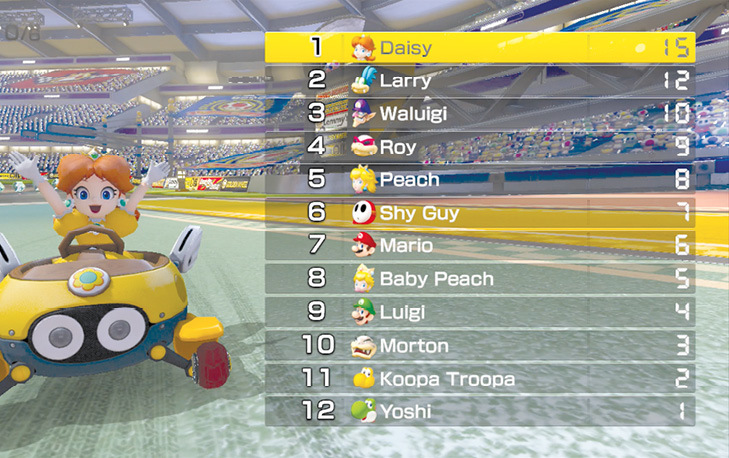
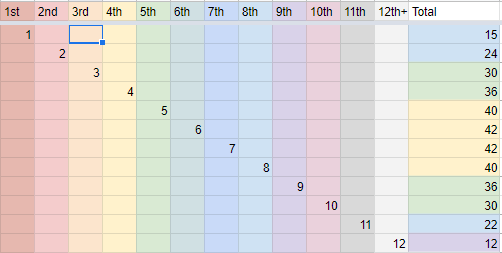
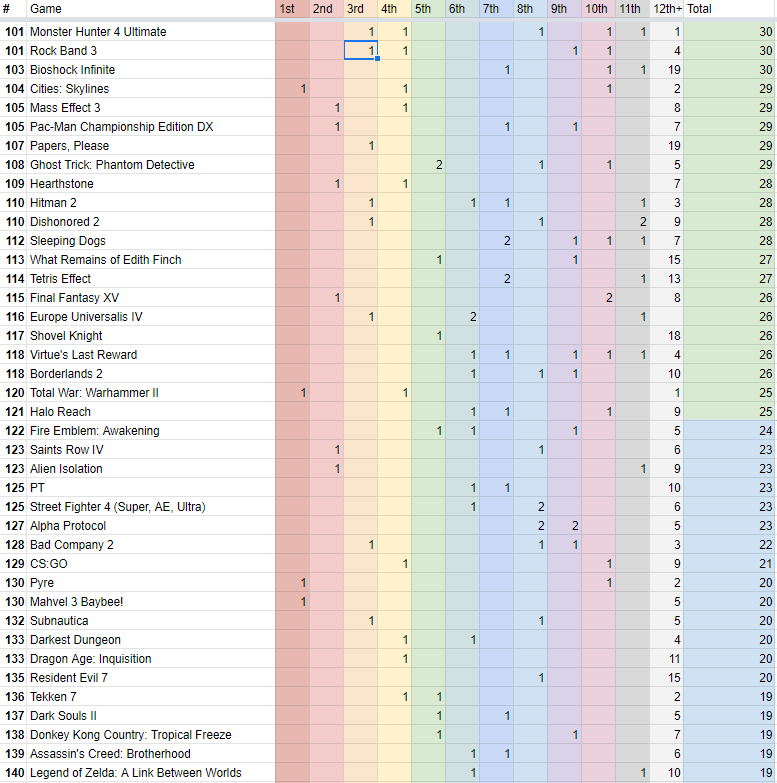
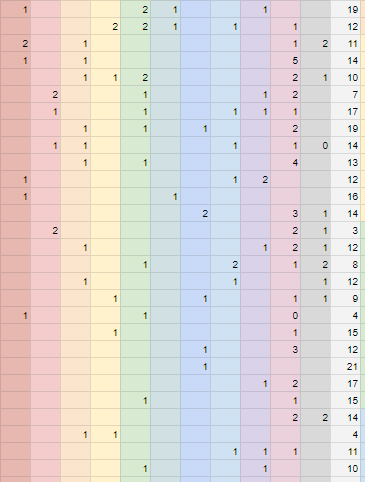


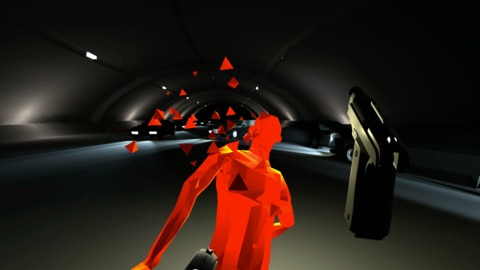


Log in to comment